
How Old Is Too Old for an HVAC System in Glendale, AZ?
How old is too old for an HVAC system depends on the type of equipment you have — but here is the short answer most Glendale homeowners need:
| Equipment Type | Typical Lifespan | Often Too Old At |
|---|---|---|
| Central Air Conditioner | 15-20 years (10-15 in desert climates) | 12-15 years with repairs needed |
| Heat Pump | 10-16 years | 12+ years with frequent issues |
| Gas Furnace | 15-25 years | 20+ years or with major repair needed |
| Boiler | 20-35 years | 25+ years or with safety concerns |
| Ductless Mini-Split | 15-20 years | 15+ years with declining performance |
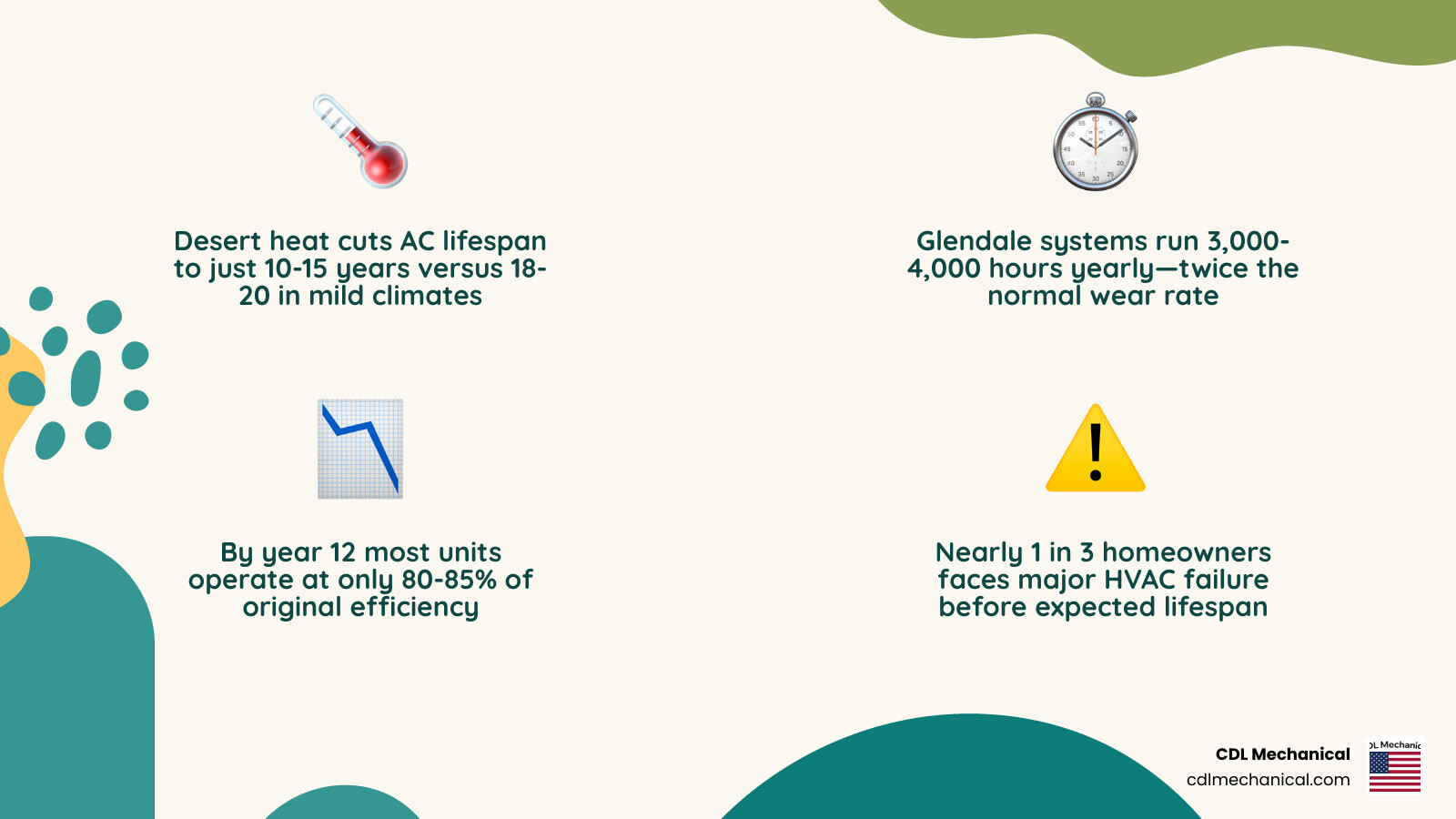
In Glendale, those numbers skew shorter. The Arizona desert pushes AC systems to run 3,000 to 4,000 hours per year — roughly twice what systems in moderate climates endure. That kind of wear adds up fast. A system that might last 18 years in Minnesota could be coasting on borrowed time by year 12 here in the Phoenix metro.
Nearly one in three homeowners faces a major HVAC failure before their system even reaches its expected lifespan. And by year 12, most central air systems are running at only 80 to 85 percent of their original efficiency — meaning you are paying full price for a fraction of the comfort you started with.
Knowing when to repair and when to replace is one of the most important — and most expensive — decisions you will make as a homeowner. Get it right, and you save money, stay comfortable, and avoid emergency breakdowns on the hottest day of the year. Get it wrong, and you risk throwing good money after bad.
I am Joshua Michael Bartlett, owner of CDL Mechanical and a Texas-based HVAC professional with over 20 years of hands-on experience helping homeowners navigate exactly this kind of question about how old is too old for an HVAC system. In this guide, I will walk you through everything you need to know — from lifespan benchmarks by equipment type to repair-vs-replace math — so you can make a confident, informed decision.
Typical Lifespan Expectations by Equipment Type
When we talk about the lifespan of heating and cooling equipment, we are not just talking about when it completely refuses to turn on. In our industry, a system is considered “too old” when it can no longer keep your home comfortable safely, reliably, and efficiently.
While the general rule of thumb is that most systems hit their twilight years between 12 and 20 years of age, different types of equipment age at different rates.
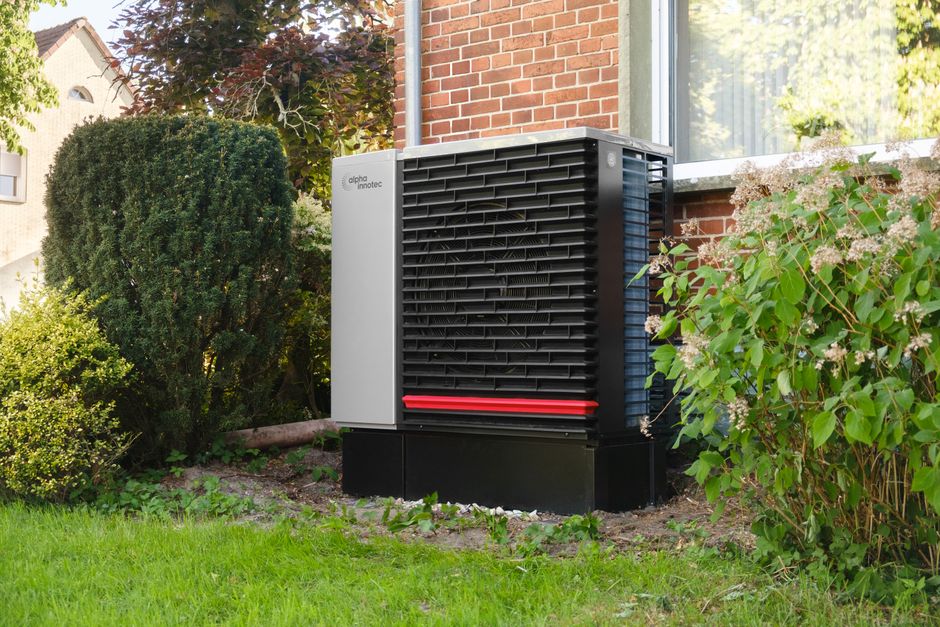
- Central Air Conditioners: Under perfect conditions, a modern central AC can last 15 to 20 years. However, in the harsh climate of Glendale, Peoria, and Sun City, the intense summer heat forces these units to run almost continuously. This relentless operational stress means older units often reach their practical limit around 10 to 12 years. If you want to dive deeper into how our local climate impacts your system, check out our guide on How Long Does an AC Last in the Desert?.
- Gas Furnaces: Gas furnaces generally enjoy a longer lifespan, often lasting 15 to 25 years. Since we only use our heating systems for a few months out of the year in the Phoenix valley, they do not accumulate mechanical wear nearly as fast as our cooling equipment.
- Boilers: Boilers are less common in newer desert builds, but in historic properties across Phoenix and Tempe, cast-iron boilers can easily last 20 to 35 years if they are meticulously maintained.
- Ductless Mini-Splits: These versatile systems typically last 15 to 20 years. Because they use inverter technology to run at variable speeds rather than constantly cycling on and off at full blast, they experience less mechanical fatigue over time.
How Old Is Too Old for an HVAC System When It’s a Heat Pump?
Heat pumps are incredibly popular across Glendale and surrounding areas because they handle both heating and cooling in a single footprint. However, this dual-duty capability comes with a trade-off: year-round operation.
Unlike a furnace that rests all summer, or an air conditioner that sleeps all winter, a heat pump works hard in every season. It cools your home during our blistering July afternoons and reverses its cycle to keep you warm during chilly January desert nights. Because of this continuous, year-round operation, heat pumps accumulate operating hours twice as fast as single-season systems.
This constant mechanical wear means a heat pump’s reliable lifespan typically tops out around 10 to 15 years. By the time a heat pump reaches year 12, it has likely completed thousands of cycles. If you want to keep your system running smoothly through these demanding years, read our expert tips on How to Extend the Life of Your AC in Extreme Heat.
Furnace and Boiler Lifespans in Arizona
Because our winters are mild compared to the rest of the country, heating systems in Arizona live a relatively pampered life. A gas furnace in Glendale might only run for a fraction of the hours that a furnace in the Midwest does.
As a result, it is not uncommon to find working gas furnaces in our service areas—from Surprise to Chandler—that are over 20 years old. However, even if an old furnace still turns on, its efficiency has likely degraded significantly. Older atmospheric-draft furnaces might operate at a low annual fuel utilization efficiency (AFUE), while modern condensing models convert almost all the gas they burn directly into winter comfort.
Additionally, older boilers can suffer from metal fatigue and lack modern electronic ignitions and safety controls, making them less reliable and more expensive to operate as they age.
Key Signs Your Aging System Needs Professional Attention
Your HVAC system will rarely fail without giving you a few warning signs first. If your equipment is entering its second decade, it is important to keep an eye out for these common indicators of system decline.
- Rising Energy Bills: Have you noticed your utility bills climbing month after month, even though your household habits and the local weather have stayed the same? As systems age, friction, dust, and component wear make them work harder to do the same job. A system operating at reduced efficiency will run longer cycles, consuming more power and driving up your monthly bills.
- Uneven Temperatures Room to Room: If your living room feels like an icebox but your master bedroom feels like a sauna, your aging system is struggling to distribute air effectively. This is often a sign of a failing blower motor, compromised ductwork, or a compressor that can no longer maintain the pressure required to move refrigerant efficiently.
- Strange Noises: While no HVAC system is completely silent, you should never hear clanking, squealing, grinding, or banging. Squealing often points to a worn blower belt or failing motor bearings. Clanking or banging usually indicates a loose or broken part inside the compressor or blower assembly.
- Frequent Cycling: If your air conditioner turns on, runs for three minutes, turns off, and then turns back on a few minutes later, it is “short-cycling.” This places immense stress on the compressor and electrical components, accelerating the system’s path to the scrap yard.
If you want to protect your home from sudden breakdowns, keep these symptoms in mind and check out our resource on Warning Signs Your AC Could Fail During a Heat Wave.
Safety Risks of Aging Heating and Cooling Equipment
While high utility bills and uneven temperatures are frustrating, safety risks are a much more serious concern when dealing with aging HVAC equipment.
With gas furnaces, the primary safety hazard is a cracked heat exchanger. The heat exchanger is the metal chamber that prevents toxic combustion byproducts—including carbon monoxide (CO)—from mixing with the clean air blowing into your living spaces. Over decades of heating cycles, the metal expands and contracts. Eventually, this constant thermal stress can cause the metal to crack.
A cracked heat exchanger can allow carbon monoxide to leak into your home, posing a severe health hazard to your family. During our annual safety checks, we pay close attention to the burner flame color; a healthy flame is steady and blue, while a flickering yellow or orange flame can indicate incomplete combustion or a cracked heat exchanger.
On the cooling side, aging air conditioners present electrical risks. Over time, wire insulation can dry out and crack, contactors can pit and stick, and fan motors can overheat. These electrical failures can lead to short circuits, damaged control boards, or even localized electrical fires.
The Math of Replacement: Repair vs. Replace Rules
When a major component fails on an older system, you are faced with a classic homeowner dilemma: do you patch it up one more time, or is it time to invest in a new unit? To take the emotion and guesswork out of this decision, we recommend using a structured decision matrix.
| Decision Factor | Lean Toward Repair | Lean Toward Replacement |
|---|---|---|
| System Age | Under 10 years old | Over 12-15 years old (especially in AZ) |
| Repair Cost vs. Value | Minor repair (e.g., capacitor, contactor) | Single repair exceeds 50% of a new system’s value |
| Repair Frequency | First major issue in several years | Three or more repairs in the last three years |
| Refrigerant Type | Modern R-410A (or newer) | Phased-out R-22 |
| System Efficiency | High efficiency, reasonable utility bills | Low SEER, skyrocketing energy bills |
If you are trying to decide which path is right for your home, you can find a deeper breakdown in our guide: The HVAC Crossroads: When to Patch It Up and When to Move On.
Applying the $5,000 Rule to Determine How Old Is Too Old for an HVAC System
Another highly reliable industry heuristic is the $5,000 Rule. This simple mathematical formula helps you evaluate the economic viability of a repair based on the age of your equipment.
To apply this rule, you simply multiply the age of your system (in years) by the written repair estimate. If the resulting number is under 5,000, repairing the unit is usually a reasonable choice. If the result is over 5,000, the math strongly suggests that replacing the system is the smarter long-term financial decision.
Let’s look at how this plays out in the real world:
- Scenario A: You have a 6-year-old air conditioner that needs a moderate repair. Multiplying the age (6) by the repair score yields a result well under the 5,000 threshold. In this case, repairing the system makes perfect sense; the unit is relatively young and has plenty of useful life ahead.
- Scenario B: You have a 13-year-old air conditioner that experiences a major compressor failure. Multiplying the age (13) by the substantial repair score easily pushes the total far past 5,000. Here, investing in a repair is risky. You would be spending a significant amount of money on a system that is already operating at degraded efficiency and is highly likely to suffer another component failure in the near future.
For a complete breakdown of how to weigh these financial scenarios, read our comprehensive To Fix or to Flip: Your HVAC Repair vs. Replacement Cost Guide.
Regulatory Impacts: Refrigerant Phase-outs and Efficiency Standards
Sometimes, the decision to replace an aging system is accelerated by environmental regulations and industry-wide transitions. The most significant of these involve refrigerant phase-outs.
If your air conditioner was installed before 2010, it almost certainly uses R-22 refrigerant (commonly known as Freon). Because R-22 is an ozone-depleting substance, the EPA completely banned its production and import on January 1, 2020.
While it remains legal to operate an R-22 system, servicing these units has become incredibly challenging. Because the supply of R-22 is limited strictly to reclaimed stock, the cost of this refrigerant has skyrocketed. If an older system develops a refrigerant leak, the combined cost of locating the leak, repairing the copper lines, and recharging the system with scarce R-22 is often financially impractical.
Furthermore, the industry is currently navigating a phasedown of R-410A (the refrigerant that replaced R-22) under the AIM Act, transitioning to newer, more environmentally friendly alternatives like R-454B and R-32. While R-410A remains widely available for servicing existing units, leak repairs on these systems will naturally become more expensive as supply tightens over the coming decade.
At the same time, minimum efficiency standards continue to rise. In 2023, the Department of Energy implemented the SEER2 testing standard, raising the minimum allowable efficiency for new air conditioners in the Southwest to 14.3 SEER2 (equivalent to roughly 15 SEER under the old system).
Upgrading from an older 10-13 SEER system to a modern 17-20+ SEER2 model can reduce your cooling bills by 20% to 40%, helping to offset the cost of replacement through monthly energy savings. For a closer look at how these refrigerant shifts affect your home, read our Can Your Old AC Make It Another Summer? Repair vs. Replace Mini Guide.
Should You Replace the Entire System or Just One Component?
When one part of your HVAC system fails—such as the outdoor compressor—you might wonder if you can save money by replacing only that specific component while keeping your older indoor evaporator coil and furnace.
While this piecemeal approach can seem tempting, it is rarely a good idea. Modern HVAC equipment is engineered to operate as a “matched system.” The outdoor condenser and the indoor evaporator coil must be precisely calibrated to match each other’s capacity, airflow requirements, and refrigerant pressures.
If you connect a brand-new, high-efficiency outdoor unit to an old, dirty indoor coil, you will face several issues:
- Severe Efficiency Loss: Your new unit will be forced to operate at the lower efficiency level of the old component, wasting the energy-saving potential of your investment.
- Premature System Failure: The mismatched components will place extra strain on the compressor, significantly shortening the lifespan of your new equipment.
- Voided Warranties: Most reputable manufacturers will not honor their parts warranties unless the indoor and outdoor units are installed as a certified matched pair.
Replacing both components at the same time ensures peak efficiency, reliable performance, and full warranty protection. To learn more about how a complete system upgrade pays off over time, check out HVAC Repair vs. New Unit: Long-Term Savings 101.
Frequently Asked Questions About How Old Is Too Old for an HVAC System
We hear a lot of questions from homeowners across Glendale, Peoria, and Phoenix about managing aging heating and cooling systems. Here are some of the most common inquiries we receive:
How do I find out the exact age of my HVAC system?
If you did not live in your home when your current HVAC system was installed, finding its exact age is simple:
- Locate the Metal Nameplate: Go to your outdoor condenser unit or your indoor air handler/furnace cabinet. You will find a metal data plate containing technical specifications.
- Find the Serial Number: Look for the “Serial Number” (often abbreviated as S/N or Serial No.).
- Decode the Manufacture Date: For many major brands (like Carrier, Trane, Goodman, or Lennox), the first four digits of the serial number represent the week and year of manufacture. For example, a serial number starting with “1214” often means the unit was manufactured in the 12th week of 2014.
- Use an Online Decoder: If the date isn’t obvious, you can enter your system’s brand and serial number into an online HVAC decoder database to get the exact manufacture date instantly.
Does a 12-year-old AC always need to be replaced in Glendale?
No, a 12-year-old air conditioner does not always need to be replaced. If your system has received regular, professional maintenance throughout its life, is keeping your home perfectly comfortable, and has not required frequent repairs, it may still have several years of reliable service left.
However, year 12 represents a major inflection point for systems operating in the extreme heat of the Phoenix valley. This is the age where mechanical fatigue begins to catch up with the system, and its operating efficiency typically drops to around 80% of its original rating.
While you do not need to rush into a replacement immediately, year 12 is the perfect time to start planning and budgeting for a future upgrade so you are not caught off guard by an emergency breakdown in the middle of July. If you are planning to sell your home soon, you should also consider how an older system might impact your transaction; read more in our article: Is Your Old AC Killing Your Resale Price?.
What incentives are available for upgrading my system in 2026?
Upgrading to a high-efficiency system is more accessible than ever thanks to several financial incentives available in 2026:
- Federal Tax Credits: Under the Inflation Reduction Act, homeowners can claim federal tax credits of up to 30% of the cost (capped at a maximum of $2,000) for qualifying high-efficiency heat pumps, and up to $600 for qualifying high-efficiency central air conditioners and gas furnaces.
- Utility Rebates: Local utility providers like SRP and APS offer substantial rebates for customers who install high-efficiency qualifying heat pumps or central air conditioning systems.
- Manufacturer Promotions: Leading HVAC manufacturers frequently run seasonal promotions, offering extra rebates or favorable financing terms during the spring and fall shoulder seasons.
Conclusion
Determining how old is too old for an HVAC system is all about balancing age, reliability, safety, and operational efficiency. While a well-maintained system can often stretch its lifespan by an extra 3 to 5 years, there comes a point where continuing to repair an aging, inefficient unit simply stops making financial sense.
At CDL Mechanical, we are a family-owned team based right here in Glendale, AZ. We treat our customers like family, which means we will never pressure you into a replacement if a simple, reliable repair is the right choice for your home. We serve communities across the entire Phoenix valley—including Peoria, Phoenix, Surprise, Tolleson, Tempe, and Scottsdale—with honest, expert advice and dependable service.
If your system is entering its golden years and you want an honest, professional assessment of its remaining lifespan, we are here to help. Schedule your professional HVAC evaluation with CDL Mechanical today, and let us help you keep your home comfortable and efficient all year long.