
What an HVAC Maintenance Visit Actually Includes (And Why It Matters in Glendale)
What does an HVAC maintenance visit include is one of the most important questions a Glendale homeowner can ask — especially when your system is working against 115°F summer heat. Here’s a quick breakdown:
- Thermostat calibration — verifying accurate temperature readings and control settings
- Electrical connections — tightening connections and measuring voltage and amperage
- Lubrication — reducing friction on all moving parts
- Condensate drain inspection — clearing clogs that can cause water damage or mold
- Air filter check — inspecting or replacing filters to protect airflow and air quality
- Coil cleaning — removing dirt from evaporator and condenser coils
- Refrigerant level check — confirming proper charge and testing for leaks
- Safety inspections — including heat exchanger, burner combustion, and carbon monoxide checks
- System controls test — confirming the system starts, operates, and shuts down correctly
Most people don’t think about their HVAC system until something goes wrong. By then, what started as a small issue — a clogged drain line, a weakening capacitor, a slow refrigerant leak — has already turned into an expensive repair or an emergency call on the hottest day of the year. In a desert climate like Glendale, where your air conditioner runs harder and longer than almost anywhere else in the country, skipping regular maintenance isn’t just inconvenient. It can cut your system’s lifespan nearly in half and quietly drive up your energy bills every single month.
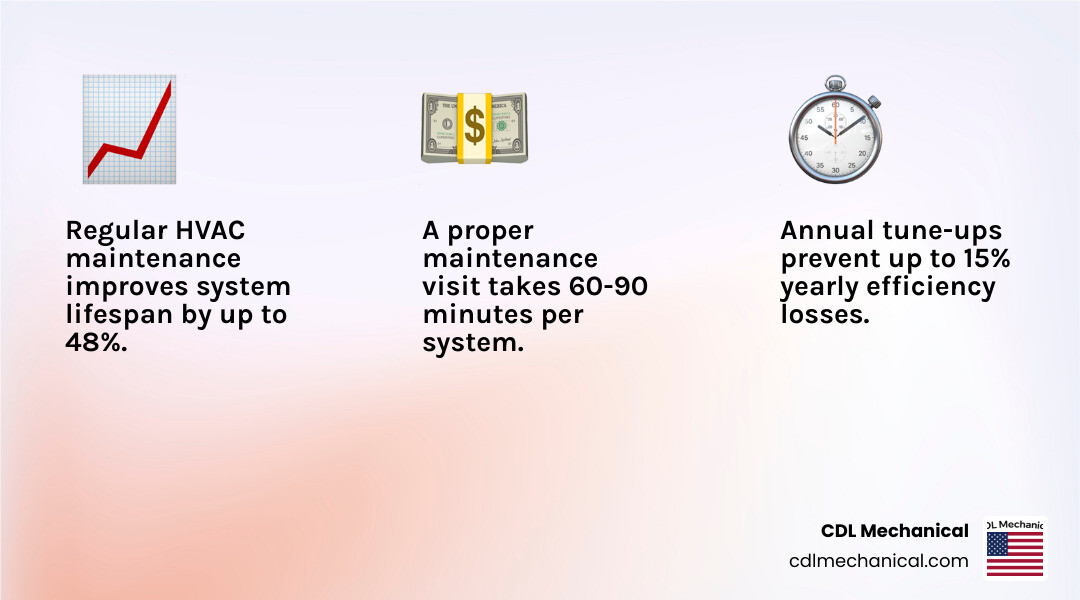
Research consistently backs this up. Regular HVAC maintenance can improve a system’s lifespan by up to 48% and prevent yearly efficiency losses of up to 15%. A thorough maintenance appointment — one where a technician actually cleans, measures, and tests rather than just glancing around — should take between one and one and a half hours per system. Anything significantly shorter is likely a surface-level inspection, not a real tune-up.
I’m Joshua Michael Bartlett, owner of CDL Mechanical and an HVAC professional with over 20 years of hands-on experience, and I’ve seen what understanding what does an HVAC maintenance visit include can mean for a homeowner’s comfort, safety, and budget. In this guide, I’ll walk you through everything your technician should be doing during a proper maintenance visit — so you know exactly what you’re paying for and what to expect.
Common what does an hvac maintenance visit include vocab:
What Does an HVAC Maintenance Visit Include?
When we pull up to a home in Glendale, Peoria, or Surprise, we aren’t just there to swap out a filter and call it a day. A professional tune-up is a comprehensive physical exam for your heating and cooling system.
To help you understand the core tasks, let’s break down the primary phases of our standard service. If you want to dive deeper into the basics of system care, check out our guide on HVAC Maintenance 101 for Every Homeowner.
1. Complete System Inspection and Testing
Before we turn a single wrench, we run the system to observe it under normal operating conditions. This diagnostic phase allows us to listen for unusual noises like squealing or banging, check for uneven airflow throughout the home, and observe the starting cycle. We check that the system turns on smoothly, runs without short-cycling, and shuts down safely.
2. Thermostat Calibration
Your thermostat is the brain of your HVAC system. If it is miscalibrated, your system will run longer than necessary or fail to keep you comfortable. We verify that your thermostat is reading the indoor temperature accurately and communicating correctly with your heating and cooling equipment.
3. Electrical Connections Inspection and Tightening
Loose electrical connections are a major safety hazard and a leading cause of premature component failure. Over time, the vibration of your system running can loosen wire terminals. We inspect all electrical wiring, tighten connections, and measure both voltage and amperage on the motor. High amperage draw is a major red flag that a motor is working too hard and nearing the end of its life.
4. Moving Parts and Lubrication
Friction is the enemy of mechanical efficiency. We inspect all moving parts, including fan blades and blower wheels, and apply high-quality lubrication to the bearings and motors where needed. This simple step keeps your system running quietly and prevents motors from overheating during long summer cycles.
5. Condensate Drain Line Clearing
Your air conditioner doesn’t just cool your home; it also dehumidifies it. As warm air passes over the cold evaporator coil, moisture condenses and drips into a drain pan, exiting your home through a condensate line.
In Arizona, dust, pollen, and algae can quickly clog this line. If the line backs up, it can cause water damage to your drywall, ceilings, or floors, and even trigger an automatic system shutdown. We flush the drain line to ensure water flows freely away from your home.
Cooling vs. Heating: Seasonal Maintenance Tasks
An HVAC system requires different types of care depending on the season. Because our Arizona climate demands heavy cooling for most of the year and light but essential heating during the winter, we split our professional care into two distinct seasonal visits: a spring cooling tune-up and a fall heating check.
Preparing your system before extreme weather hits ensures you aren’t left waiting for an emergency technician during a heatwave or a sudden winter cold snap.
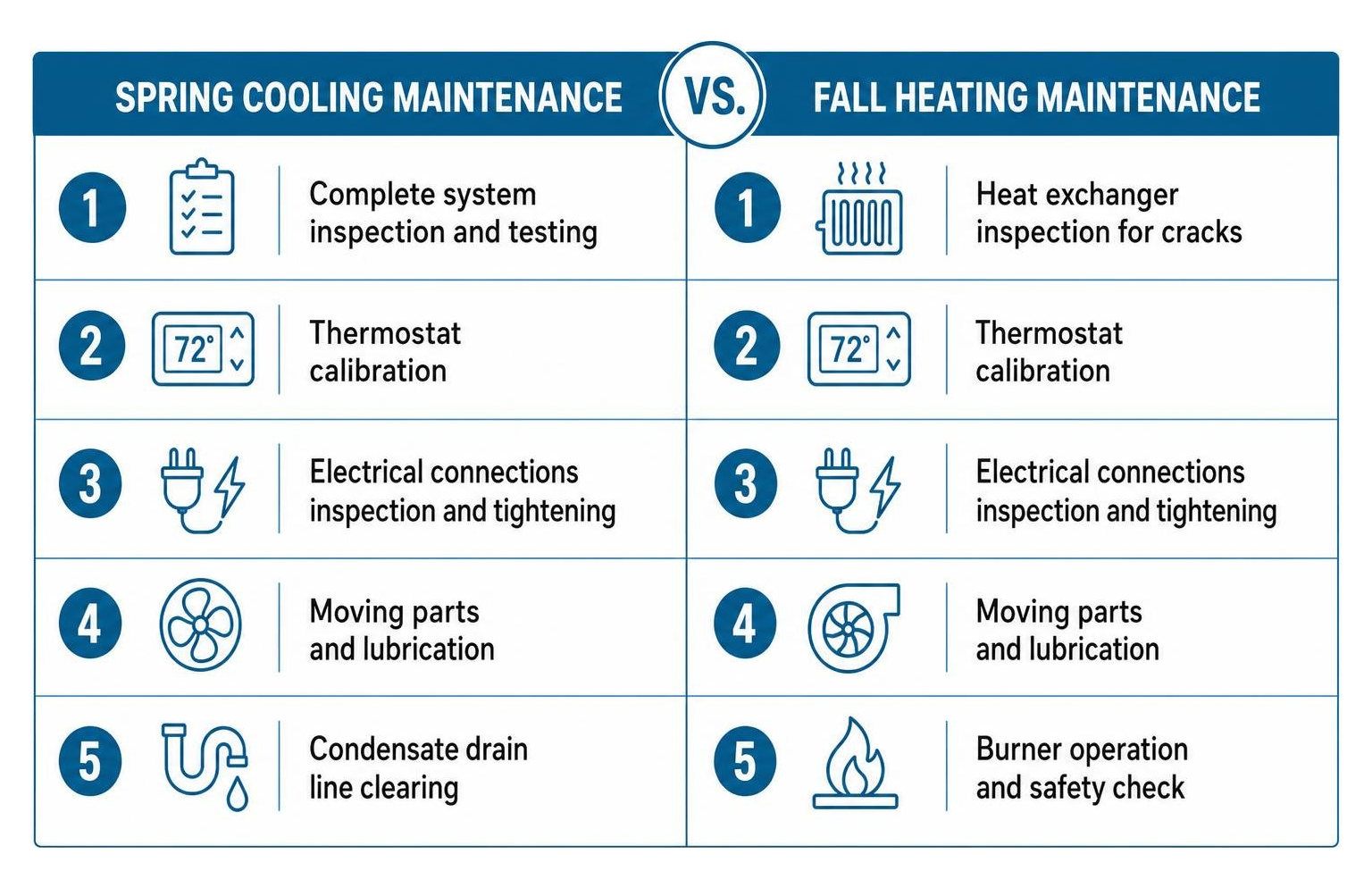
Here is a quick look at how these seasonal visits differ:
| Spring Cooling Maintenance Tasks | Fall Heating Maintenance Tasks |
|---|---|
| Condenser and evaporator coil cleaning | Heat exchanger inspection for cracks |
| Refrigerant charge and leak check | Burner assembly cleaning and adjustment |
| Blower motor and fan belt inspection | Gas pressure and connection safety check |
| Condensate drain flushing and pan treatment | Carbon monoxide and combustion testing |
| Capacitor and contactor performance testing | Limit switch and safety control testing |
What Does an HVAC Maintenance Visit Include for Cooling Systems?
In the Phoenix West Valley, your air conditioner is your home’s lifeline. When we perform a spring cooling visit, we focus heavily on the components that keep your home cold when it’s triple-digits outside. Our specialized checklist protects your system from the unique stressors of our climate, which we detail in our HVAC Maintenance Checklist for Desert Extreme Heat to Prevent Failures.
Here is what we do to keep your AC running strong:
- Coil Cleaning: Dirt acts as an insulator. If your outdoor condenser coil or indoor evaporator coil is coated in desert dust, it can’t release heat efficiently. This forces your system to run longer, increasing your energy bills and putting extra wear on the compressor. We gently clean these coils to restore optimal heat transfer.
- Refrigerant Level Check: Your system does not “consume” refrigerant. If levels are low, it means you have a leak. We use digital gauges to check your refrigerant charge. Even a small variance in refrigerant levels can drop your system’s operating efficiency by 15% or more and eventually ruin the compressor.
- Leak Detection: If we notice low refrigerant levels, we perform leak detection to pinpoint the source of the issue before adding more refrigerant, keeping your system compliant and running efficiently.
- Blower Components Assessment: We inspect the blower wheel and motor, ensuring the fan is clean and balanced. A dusty blower wheel reduces airflow, which can cause your evaporator coil to freeze up and turn into a block of ice.
What Does an HVAC Maintenance Visit Include for Heating Safety?
Even though Glendale winters are mild, you still need your heating system to work safely and reliably when the desert temperatures drop at night. Our fall heating visit is primarily focused on safety and combustion efficiency.
- Heat Exchanger Inspection: This is the most critical safety check of the year. The heat exchanger keeps dangerous combustion gases separate from the clean air circulating through your home. If a heat exchanger develops even a hairline crack, it can leak carbon monoxide into your living space. We use specialized cameras to inspect the heat exchanger thoroughly.
- Gas Connection and Pressure Checks: We test all gas lines leading to your furnace for leaks and verify that the gas pressure is set correctly. Incorrect gas pressure can cause improper combustion and damage the furnace burners.
- Burner Combustion and Ignition Assembly: We clean the burner assembly and flame sensor. A dirty flame sensor will fail to detect the burner flame, causing your furnace to shut down unexpectedly.
- Carbon Monoxide Testing: We run a combustion analysis to ensure your system is venting gases safely out of your home and not releasing carbon monoxide indoors.
- Safety Controls Test: We test all safety limit switches. These switches are designed to shut the furnace down automatically if it overheats, preventing house fires.
HVAC Maintenance Frequency and DIY vs. Professional Care
To keep your system running at peak performance, we recommend scheduling professional service twice a year: once in the spring for your air conditioner, and once in the fall for your furnace or heat pump. This bi-annual schedule is especially important in the Phoenix area, where dust and extreme temperatures put constant stress on your equipment.
For a complete breakdown of when to book your appointments, read The Ultimate Guide to HVAC Service Frequency and review our specific HVAC Maintenance Schedule for Phoenix West Valley Homes.
While professional maintenance is essential, homeowners can perform several basic tasks between visits to keep their systems happy. However, it is vital to know where the DIY line ends and where professional safety requirements begin.
The Homeowner DIY Maintenance Checklist
- Change Air Filters Regularly: This is the single most important thing you can do for your system. We recommend checking your filter monthly. Change standard 1-inch filters every 30 to 60 days, especially if you have pets or allergies.
- Maintain Outdoor Clearance: Keep shrubs, weeds, and debris at least two feet away from your outdoor condenser unit. Your AC needs room to “breathe” to release heat efficiently.
- Keep Vents Clear: Ensure your indoor supply and return vents are not blocked by furniture, rugs, or drapes. Blocking vents restricts airflow and strains your system blower.
- Perform Visual Inspections: Keep an eye out for frozen coils, water pooling around your indoor unit, or strange noises, and call us if you notice anything unusual.
Why Some Tasks Require Professional Expertise
It can be tempting to try to handle all maintenance yourself, but certain tasks carry serious safety and legal risks:
- High Voltage Safety: HVAC systems run on high-voltage electricity. Testing capacitors, contactors, and compressor wiring without proper training and tools can result in severe electrical shock or system damage.
- Refrigerant Handling: Under federal law (EPA Section 608), only certified technicians are legally allowed to handle, measure, or add chemical refrigerant.
- Gas and Combustion Safety: Working on gas lines, burners, and heat exchangers requires specialized diagnostic equipment to prevent gas leaks, explosions, or carbon monoxide poisoning.
The Benefits of a Preventive Maintenance Plan
Many homeowners wonder if signing up for a maintenance agreement is truly worth it. The truth is, proactive care is always more cost-effective than reactive repairs. When you join a maintenance program, you are investing in the long-term health of your home’s most expensive appliance.
If you are considering a service agreement, we highly recommend reading our articles on 5 Benefits of Routine AC Maintenance and Why Your HVAC System Craves a Service Agreement.
Here are the primary benefits of keeping your system under a preventive care plan:
- Lower Energy Bills: A clean, well-calibrated HVAC system operates at peak energy efficiency. Routine maintenance prevents the “spiral of inefficiency,” where dirty coils and worn parts force the system to run longer, saving you up to 15% on your monthly utility bills.
- Extended Equipment Lifespan: An HVAC system is designed to last 15 to 20 years, but neglected systems often fail around the 10-year mark. Regular checkups reduce wear and tear, helping your system reach its maximum lifespan.
- Warranty Protection: Most major HVAC manufacturers require proof of annual professional maintenance to keep your parts warranty valid. If a major component fails and you cannot provide service records, the manufacturer may deny your warranty claim.
- Priority Scheduling and Perks: Maintenance plan members typically enjoy priority scheduling during our busiest seasons, discounts on repairs, and regular service reminders so you never forget a tune-up.
To learn more about how these plans protect your comfort and budget, check out our Maintenance Plan details and explore The Definitive Guide to Maintenance Plan Value.
Frequently Asked Questions About HVAC Maintenance
We believe in keeping our customers informed. Here are the answers to some of the most common questions we receive about professional HVAC maintenance visits.
How long does a typical HVAC maintenance visit take?
A thorough, professional HVAC maintenance visit should take between 60 and 90 minutes per system. If your home has a split system (an outdoor condenser and an indoor air handler), a technician needs this time to perform all physical cleanings, electrical testing, and safety checks properly. If you have multiple systems, expect the visit to take longer.
What are the red flags of poor-quality HVAC maintenance?
Unfortunately, not all maintenance visits are created equal. Watch out for these warning signs of sub-par service:
- The “In-and-Out” Visit: If a technician is done in 20 minutes, they likely performed a quick visual inspection rather than a true tune-up.
- No Tools or Measurements: A technician should always use digital gauges, multimeters, and safety equipment. If they only carry a clipboard, they aren’t checking your system’s actual performance.
- Skipping the Cleaning: Physical cleaning of the outdoor coils and flushing the condensate line are essential parts of maintenance. If these are skipped, your system isn’t truly serviced.
- High-Pressure Sales Tactics: A trustworthy technician will document their findings and explain any concerns clearly, rather than trying to scare you into immediate, expensive upgrades.
Will skipping professional maintenance void my manufacturer warranty?
Yes, in almost all cases. Modern HVAC manufacturers require proof of regular, professional maintenance to keep your equipment warranty active. If your compressor or heat exchanger fails within the warranty period, the manufacturer will often ask for written service reports from a licensed contractor before approving the replacement part. Keeping a file of your annual maintenance visits is your insurance policy against unexpected component costs.
Conclusion
At CDL Mechanical, we are a family-owned HVAC company based right here in Glendale, AZ. We know exactly what our desert climate demands of your heating and cooling systems, and we treat every customer’s home as if it were our own. Our goal is to provide dependable comfort, honest service, and expert care to families across Glendale and our surrounding West Valley communities.
Now that you know exactly what does an HVAC maintenance visit include, you can make an informed decision to protect your home’s comfort, improve your indoor air quality, and keep your energy bills under control.
Don’t wait for the next extreme weather shift to find out if your system is up to the task. Contact us today to schedule your professional Air Conditioning Maintenance and let our family keep your family comfortable all year long.