
Is Your Old AC Quietly Draining Your Home’s Resale Value?
How a new HVAC system increases home value is one of the most practical questions a homeowner can ask before listing — and the answer matters more in Glendale, AZ than almost anywhere else in the country.
Here’s a quick summary of what the data shows:
| Factor | Impact |
|---|---|
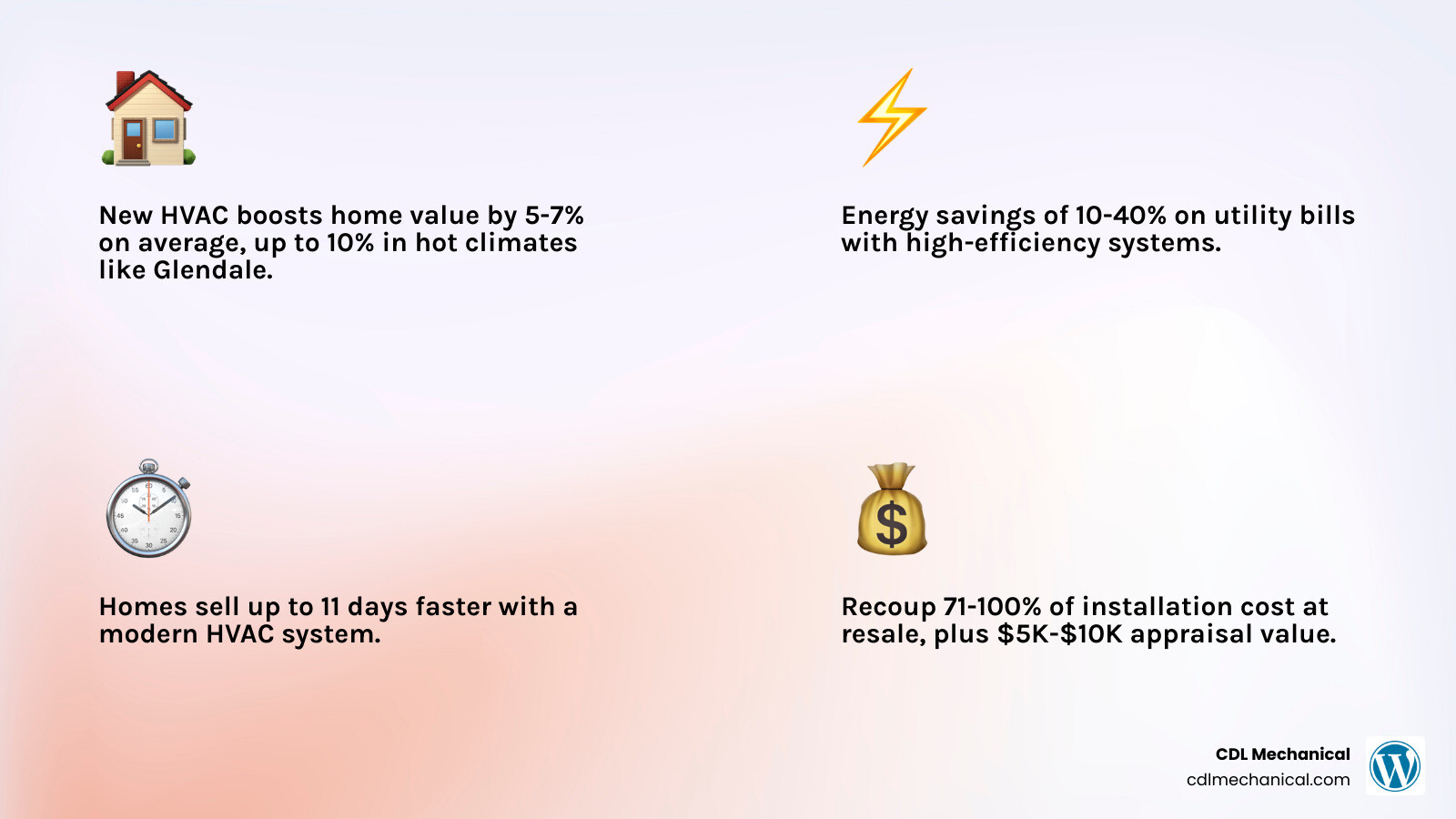
| Average home value increase | 5% to 7% |
| Value boost in hot climates (like Glendale) | Up to 10% |
| Typical ROI on HVAC investment | ~30% |
| Faster time on market | Up to 11 days faster |
| Energy bill reduction with new system | 10% to 40% |
| Appraiser-recognized value added | $5,000 to $10,000 |
| Cost recouped at resale | Up to 71% to 100% of project cost |
A failing or aging HVAC system doesn’t just make your home uncomfortable — it can shrink your buyer pool, trigger inspection red flags, and even block traditional mortgage financing. In a desert market where triple-digit summers are the norm, buyers treat a reliable air conditioning system less like a bonus feature and more like a basic requirement. A home without a dependable, modern HVAC system in the greater Phoenix area isn’t just less appealing — it can be genuinely difficult to sell.
In 2026, buyers are more educated about energy costs than ever. They’re calculating utility bills alongside mortgage payments. They’re using HVAC age as a signal of how well a home has been maintained overall. And in competitive markets, a brand-new system can be the difference between a fast offer and a price reduction.
I’m Joshua Michael Bartlett, founder of CDL Mechanical and an HVAC professional with over 20 years of hands-on experience — and understanding how a new HVAC system increases home value is something I’ve seen play out across hundreds of homes in the Glendale area. In this guide, I’ll walk you through the real numbers, the key decision points, and what actually moves the needle when it comes to your home’s resale price.
How a New HVAC System Increases Home Value in the Desert
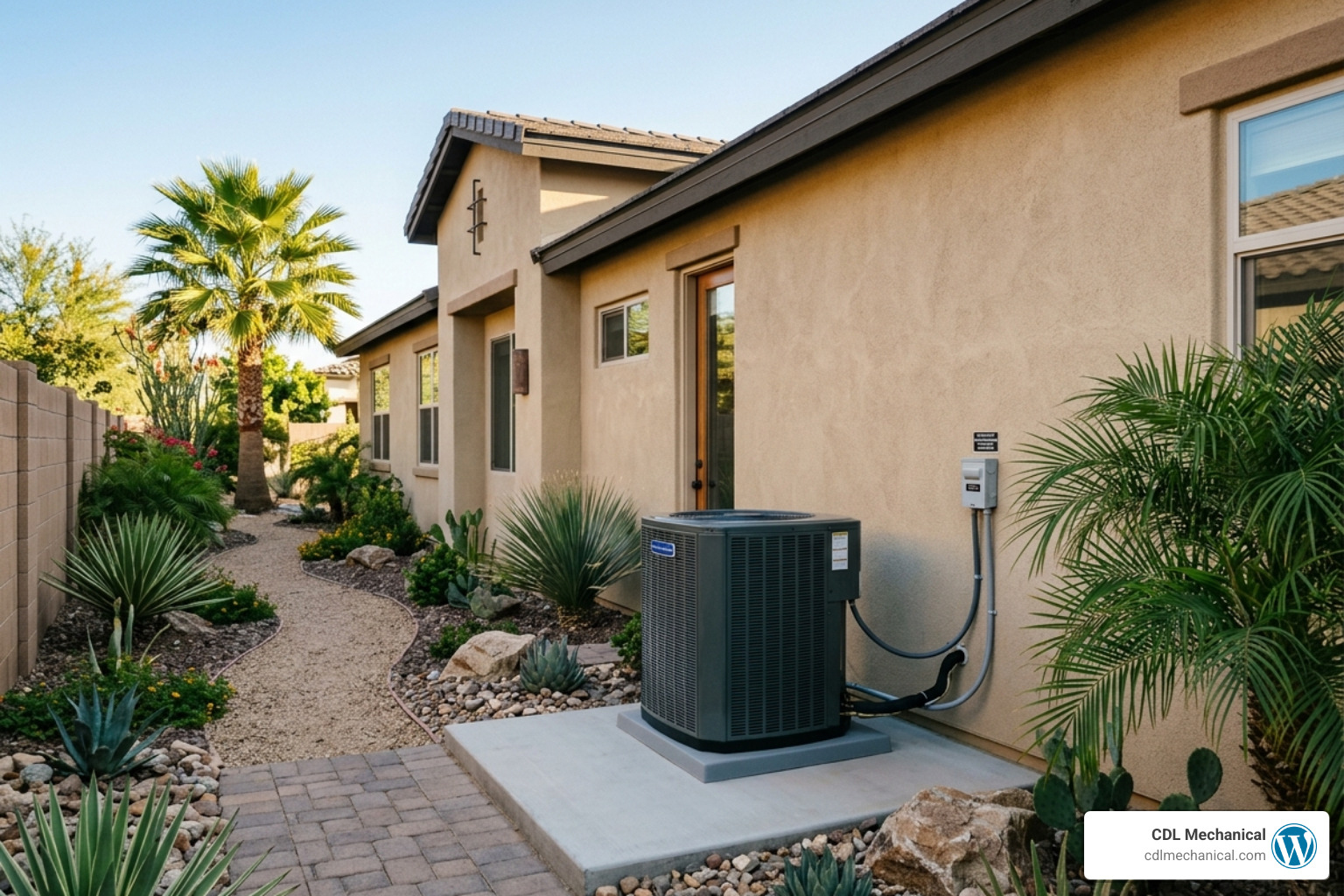
In Glendale, Surprise, and Peoria, our air conditioning systems aren’t just appliances; they are life-support systems. When we talk about how a new HVAC system increases home value, we have to look at it through the lens of a desert buyer. In a milder climate, a 15-year-old furnace might be a “minor concern.” In the Phoenix Valley, a 15-year-old AC unit is a ticking financial time bomb that buyers will use as a massive negotiation hammer.
Direct Appraisal Bump vs. Preventing Value Loss
There is a common debate in real estate: does a new AC add value, or does it simply prevent you from losing it? The truth is both.
While an appraiser might add a specific dollar adjustment (often between $5,000 and $10,000) for a brand-new, high-efficiency system, the real value comes in the “marketability” of the home. A home with an old, R-22 refrigerant system (which is now obsolete and incredibly expensive to service) will often appraise lower because it represents an immediate capital expenditure for the new owner. By opting for professional Air Conditioning Installation & Replacement, you effectively reset the home’s “economic clock.”
The Ultimate Market Tie-Breaker
Imagine two identical houses in Scottsdale. House A has a stunning new kitchen but a 12-year-old AC. House B has a slightly dated kitchen but a brand-new, high-efficiency heat pump with a 10-year transferable warranty. In April 2026, House B is the winner. Why? Because the buyer knows they can remodel a kitchen over time, but they cannot live for one single day in July without a functioning AC.
A new system offers “peace of mind,” which is a psychological trigger that leads to faster offers. Research shows homes with upgraded HVAC systems can sell up to 11 days faster than those without.
Inspection Leverage
The inspection period is where most deals go to die. If an inspector flags an AC unit as “near end of life” or “failing to meet temperature split requirements,” the buyer will almost certainly ask for a massive repair credit. Often, these credits are larger than what the actual replacement would have cost you to do upfront. By replacing the system before you list, you take that weapon out of the buyer’s hands.
Boosting Resale Appeal with Energy Efficiency
In 2026, energy efficiency is no longer a “nice to have” — it is a top priority for 72% of home buyers. With utility rates consistently rising, a system that can cut energy use by 40% is a massive selling point.
When we discuss Understanding SEER Ratings and Their Importance, we explain that the higher the SEER2 rating, the lower the monthly “ownership cost” of the home. Buyers are now savvy enough to ask for the last 12 months of utility bills. If your new system has dropped those bills by $100 or $200 a month, that is a tangible financial benefit you can market in your listing.
Furthermore, many modern systems qualify for significant financial incentives. Knowing What HVAC Systems Qualify for Tax Credits and Rebates? can help you offset the initial investment, making the ROI even more attractive when you eventually sell.
How a New HVAC System Increases Home Value Through Modern Technology
The “smart home” revolution has fundamentally changed buyer expectations. A new HVAC system in 2026 isn’t just a metal box outside; it’s a sophisticated climate control center.
- Smart Thermostats: Integration with Alexa, Google Home, or Apple HomeKit is a standard expectation. It signals to the buyer that the home is modern and well-cared for.
- Zoned Cooling: In larger homes in areas like Paradise Valley or Cave Creek, the ability to cool the master bedroom without chilling the entire house is a luxury feature that adds significant appeal.
- Variable-Speed Compressors: These systems don’t just blast on and off; they ramp up and down, providing much better humidity control and quieter operation — something buyers notice immediately during an open house.
- Indoor Air Quality (IAQ): Post-2020, buyers are hyper-focused on health. Systems that include advanced filtration or UV lights are major selling points. You can learn more about these options at our Indoor Air Quality Glendale, AZ page.
Perhaps most importantly, 2026 buyers are looking for systems that use the latest eco-friendly refrigerants. Following the EPA’s AIM Act, the industry has shifted away from R-410A to newer alternatives like R-454B. If you install a system now, you are future-proofing the home. For more on this, check out What You Need to Know About HVAC Changes in 2025.
Calculating the ROI: Is the Investment Worth It?
When homeowners ask us if the investment is “worth it,” we look at the Return on Investment (ROI) compared to other popular home projects. While a kitchen remodel might be more “fun,” the HVAC system is the “engine” of the home.
ROI Comparison: HVAC vs. Cosmetic Remodels
| Project | Typical ROI | Buyer Priority |
|---|---|---|
| New HVAC System | 30% – 71% | High (Essential) |
| Kitchen Remodel | 60% – 80% | Medium (Subjective) |
| Bathroom Update | 50% – 70% | Medium (Subjective) |
| New Roof | 60% – 75% | High (Essential) |
| Hardwood Floors | 70% – 90% | Low (Aesthetic) |
While the ROI percentage for HVAC might look lower than a kitchen on paper, this is often because HVAC is viewed as a “maintenance” item. However, the risk of not doing it is much higher. A dated kitchen might result in a lower offer; a broken AC in Glendale results in no offer.
If you are wondering if your current unit can limp through one more season, our Can Your Old AC Make It Another Summer? Repair vs. Replace Mini-Guide can help you weigh the ongoing repair costs against the value of a full replacement. Keeping meticulous maintenance records is also key — a buyer who sees a documented history of professional service is much more likely to trust the home’s overall condition.
Strategic Timing: When to Replace Before Listing
Timing is everything in real estate. If your system is over 12-15 years old, you should seriously consider replacement before the “For Sale” sign goes in the yard.
Reliability Signals
A brand-new AC unit is a visual and audible signal of reliability. During a showing, if a buyer hears a loud, clanking old compressor outside, they immediately start deducting thousands of dollars from their mental offer price. Conversely, a quiet, sleek new unit suggests the homeowner hasn’t cut corners on maintenance.
For those in our local area, our guide on AC Replacement in Glendale, AZ: What Every Homeowner Needs to Know covers the specific requirements of our desert climate.
Off-Season Upgrades
If you’re planning to list your home in the spring (the busiest time for Phoenix real estate), consider replacing your HVAC in the “off-season” (late fall or early spring). This often allows for faster scheduling and ensures everything is perfect before the first prospective buyer walks through the door.
How a New HVAC System Increases Home Value During Inspections
The inspection report is a legal document that can make or break your sale. A new HVAC system effectively “cleans” a large portion of that report.
- Avoiding Repair Credits: You won’t have to negotiate over “worn contactors,” “leaking evaporator coils,” or “low refrigerant levels.”
- Financing Viability: For buyers using FHA or VA loans, the home’s primary systems must be in good working order. A non-functional or severely aged AC can actually disqualify the home from certain types of financing, shrinking your pool of potential buyers to cash-heavy investors who will demand a “fixer-upper” discount.
- Warranty Transfers: Most manufacturers offer 10-year warranties. If you install a system a year or two before selling, that warranty is often transferable to the new owner, providing them with immense value.
When you decide to move forward, knowing 5 Things to Expect During HVAC Installation will help you prepare your home for the process so it doesn’t disrupt your listing timeline.
Alternatives to Full Replacement for Sellers
We understand that a full replacement isn’t always in the cards. If your system is less than 10 years old and generally reliable, there are ways to boost its “value” without a total overhaul.
- Professional Maintenance: Have a licensed technician perform a full “pre-listing” tune-up. Keep the invoice to show buyers that the system has been cleared for performance.
- Duct Cleaning: Improving indoor air quality and system airflow can make the home smell fresher and feel cooler during showings.
- Smart Thermostat Upgrade: For a relatively small investment, a modern thermostat can give an older system a “tech facelift.”
- Filter Replacement: It sounds simple, but a filthy filter suggests a neglected system. Always put in a fresh, high-quality pleated filter before any showing.
- Minor Repairs: Fix the small things — a vibrating fan motor or a rusted drain pan — before the inspector finds them.
For more tips on small changes that yield big results, see our article on New Year, Lower Bills: Simple HVAC Tweaks to Cut Winter Energy Costs.
Frequently Asked Questions about HVAC and Home Value
Does a new AC add more value in hot climates like Glendale?
Absolutely. In Glendale, AZ, air conditioning is a matter of safety and survival. In cooler states, it’s a luxury. Locally, appraisers and buyers place a much higher premium on the age and efficiency of the cooling system. A high-efficiency system is the “gold standard” for our market.
Will an old HVAC system prevent a home sale?
It won’t always prevent it, but it will certainly complicate it. If the system is non-functional, most lenders will not approve a traditional mortgage. If it’s just very old, it acts as a “red flag” that often leads to lower offers and aggressive requests for concessions during the inspection period.
Can I just repair the unit instead of replacing it?
You can, but you have to consider the “Buyer Perception” factor. A repaired 18-year-old unit is still an 18-year-old unit. The buyer knows it could fail the day after they move in. A new unit removes that anxiety entirely. Generally, if a repair costs more than 30-40% of a replacement, or if the system is over 12 years old, replacement is the better strategic move for resale.
Conclusion: Trust the Local Experts at CDL Mechanical
At the end of the day, how a new HVAC system increases home value comes down to one word: Trust. Buyers want to trust that their new home will be a sanctuary from the Arizona heat, not a source of unexpected $10,000 bills.
As a family-owned company based right here in Glendale, we treat every home like it belongs to our own family. We know the neighborhoods, we know the climate, and we know exactly what local buyers are looking for in a high-performance cooling system. Whether you are looking to maximize your resale price or just want to enjoy a more comfortable, efficient home while you still live there, we’re here to help.
If you’re ready to see how a modern system can transform your home’s value, contact us today for a consultation. Let’s make sure your home stands out for all the right reasons.