
Is It Cheaper to Repair or Replace Your HVAC System? What Glendale Homeowners Need to Know
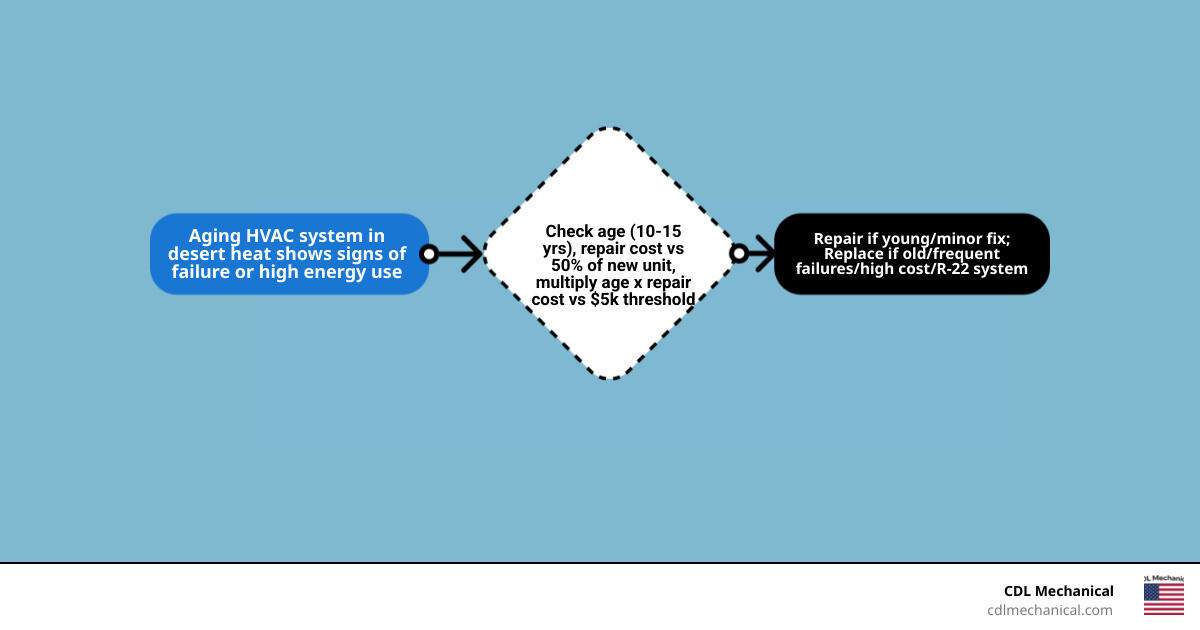
When you’re weighing hvac repair vs new unit long term savings, the short answer is this: if your system is under 10 years old and the repair is minor, fix it. If it’s older than 10-15 years, repairs are frequent, or the repair cost exceeds 50% of a new unit’s price, replacement usually saves you more money over time.
Here’s a quick breakdown to help you decide:
| Situation | Best Move |
|---|---|
| System under 10 years old, minor issue | Repair |
| Repair cost under 50% of new unit price | Repair |
| System age × repair cost under $5,000 | Repair |
| System 12-15+ years old with recurring failures | Replace |
| Repair cost over 50% of new unit price | Replace |
| System age × repair cost exceeds $5,000 | Replace |
| Rising energy bills + frequent breakdowns | Replace |
| R-22 refrigerant system | Replace |
When Arizona summer temperatures push past 110°F, your HVAC system isn’t a luxury — it’s essential. A breakdown forces a fast decision: spend money patching up an aging unit, or invest in a new one that could cut your energy bills for the next 15-20 years. That’s a real financial crossroads, and getting it wrong can cost you thousands.
The frustrating part? There’s no single right answer for every home. The best choice depends on your system’s age, how often it’s broken down, how efficient it currently is, and what the repair actually involves. This guide walks you through the math and the logic so you can make a confident, informed call — not just react to the stress of a hot house.
I’m Joshua Michael Bartlett, founder of CDL Mechanical and a Glendale HVAC professional with over 20 years of hands-on experience helping Texas and Arizona homeowners navigate exactly this kind of hvac repair vs new unit long term savings decision. In that time, I’ve seen how the right choice at the right moment can save a family thousands — and how the wrong one leads to years of frustration and wasted money.
Evaluating HVAC Repair vs New Unit Long-Term Savings
When we look at the typical lifespan of an HVAC system, most units are designed to last between 10 and 15 years. However, here in the desert, our systems work significantly harder than those in milder climates. The relentless heat in places like Peoria, Sun City, and Surprise means your air conditioner might hit its “retirement age” sooner than a unit in the Midwest.
Understanding How Long Does an AC Last in the Desert? is the first step in your evaluation. If your system is approaching the 10-year mark, it’s likely using older technology that consumes 20% to 40% more energy than modern high-efficiency models.
Energy efficiency is measured by SEER2 (Seasonal Energy Efficiency Ratio) ratings. Older systems may have SEER ratings as low as 10 or 13, whereas new units often start at 14.3 SEER2 and go much higher. Understanding SEER Ratings and Their Importance helps you see how a higher rating translates directly into lower monthly utility bills. When you choose a new unit, you aren’t just buying a machine; you’re locking in lower operating costs for the next decade.
Mathematical Frameworks for the Repair vs. Replace Decision
Deciding whether to keep an old unit running shouldn’t be based on a “gut feeling.” We use specific mathematical rules to help our customers in Glendale and Phoenix make objective choices.
The 50% Rule is one of the most reliable benchmarks. If a single repair estimate exceeds 50% of the cost of a brand-new installed system, the math almost always favors replacement. Why? Because a major repair on an old unit doesn’t reset the clock on its other aging components. You might fix the compressor today only to have the fan motor or control board fail next month.
Frequent repairs are another red flag. If you find yourself calling us every summer for a “quick fix,” you are likely trapped in a repair spiral. Our Can Your Old AC Make It Another Summer? Repair vs. Replace Mini Guide dives deeper into these warning signs.
| Factor | Repair Path (3-5 Years) | Replacement Path (3-5 Years) |
|---|---|---|
| Immediate Cost | Lower (Single Repair) | Higher (New Unit) |
| Monthly Energy Bills | Stays High / Increases | Drops by 20-50% |
| Future Repair Risk | Very High | Near Zero (Warranty) |
| Comfort/Air Quality | Often Declining | Improved |
| Home Value | No Change | Increases |
Calculating hvac repair vs new unit long term savings with the 5,000 Rule
Another professional standard we use is the $5,000 Rule. To use this, multiply the age of your system by the repair estimate. If the total exceeds $5,000, it’s time to consider a new unit.
For example, if you have a 12-year-old unit in Goodyear and you’re looking at a $500 repair, the math is 12 x 500 = 6,000. Since 6,000 is greater than 5,000, the long-term savings favor replacement. This rule accounts for the fact that as a system gets older, even smaller repairs become less “worth it” because the remaining life of the unit is so short. For a more detailed look at these scenarios, check out our Residential AC Replacement in Phoenix: A Homeowner’s Survival Guide.
When Efficiency Gains Outweigh Continued Maintenance
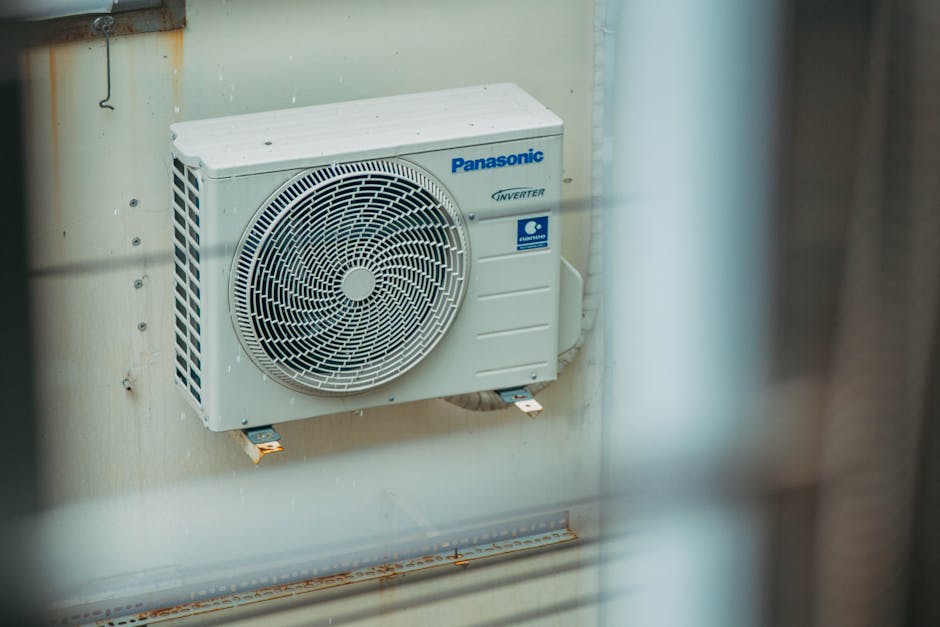
The “cost” of an HVAC system isn’t just the price on the invoice; it’s the cumulative total of your utility bills over several years. High-efficiency HVAC systems can cut utility bills by 20% to 50% compared to older, inefficient units. If your energy bills have been creeping up every summer, your system is likely working harder and longer to achieve the same cooling effect.
A major driver for replacement in May 2026 is the R-22 refrigerant phase-out. If your old system uses R-22 (often called Freon), it is now obsolete. Sourcing this refrigerant for repairs is incredibly expensive and will only get harder. Furthermore, newer systems are designed with the latest environmental standards in mind. Staying informed on What You Need to Know About HVAC Changes in 2025 ensures you don’t invest in a technology that’s being left behind.
Maximizing hvac repair vs new unit long term savings through tax credits
One of the biggest shifts in the hvac repair vs new unit long term savings calculation is the availability of federal and state incentives. The Inflation Reduction Act has made it significantly more affordable to choose high-efficiency equipment.
Homeowners in Buckeye, Litchfield Park, and Scottsdale can take advantage of federal tax credits (like the 25C credit) which can offset a portion of the installation cost. When you combine these with Arizona-specific energy rebates, the “upfront” cost of a new unit drops, making the long-term ROI even more attractive. We recommend reading The Arizona Homeowner’s Guide to Inflation Reduction Act Benefits and The Ultimate Guide to Arizona Energy Rebates for HVAC Upgrades to see exactly how much you can save.
The Role of Maintenance in Extending System Life
Whether you choose to repair your current unit or invest in a new one, maintenance is the key to protecting that investment. Regular maintenance can extend an HVAC system’s life by up to 40% and reduce energy consumption by 5-15%.
In our desert environment, dust and debris can quickly clog coils and filters, forcing the system to overwork. A precision tune-up ensures that airflow is optimized and small issues are caught before they turn into “emergency” replacements during a 115-degree July afternoon.
We’ve outlined the 5 Benefits of Routine AC Maintenance to show you how a small annual investment pays for itself. If you’re unsure how often your system needs professional eyes, The Ultimate Guide to HVAC Service Frequency provides a roadmap for homeowners in the West Valley.
Frequently Asked Questions about HVAC Replacement
How does an old AC affect my home’s resale value?
If you’re planning to sell your home in Glendale or Peoria soon, an aging HVAC system can be a major hurdle. Modern buyers are savvy; they look at the age of the unit and the history of energy bills. An old, failing unit often leads to “repair credits” during closing or can even kill a deal if the buyer isn’t willing to take on the immediate expense of a replacement. We explore this in detail in Is Your Old AC Killing Your Resale Price?.
Are heat pumps a viable option for Arizona homes?
Absolutely. Modern heat pumps are incredibly efficient in our climate, providing both heating for our chilly desert nights and powerful cooling for the summer. Because they move heat rather than generating it, they are often the most efficient choice for year-round comfort. Plus, there are specific incentives available for these upgrades. Learn How to Get Paid for Upgrading to a Heat Pump in Arizona to see if this is the right fit for your home.
What incentives are available for high-efficiency upgrades?
Beyond federal tax credits, many local utility providers offer rebates for installing ENERGY STAR-certified equipment. Additionally, new units come with manufacturer warranties that can cover parts for 10 years or more, providing a level of financial security that a repaired old unit simply can’t match. You can find a list of qualifying equipment in our guide: What HVAC Systems Qualify for Tax Credits and Rebates?.
Conclusion
Navigating the hvac repair vs new unit long term savings dilemma doesn’t have to be stressful. By using frameworks like the 50% Rule and the $5,000 Rule, and factoring in the massive energy savings of modern equipment, the right choice usually becomes clear.
At CDL Mechanical, we are a family-owned company that treats our Glendale neighbors like family. We don’t believe in high-pressure sales; we believe in providing the expert assessment you need to make the best decision for your home and your budget. Whether you need a reliable repair to get through the season or a professional installation of a high-efficiency system, we are here to help.
Ready for an honest assessment of your system? Contact our HVAC Services Glendale AZ team today, and let’s make sure your home stays comfortable and efficient all year long.