
Why Extreme Heat Is Your AC’s Biggest Enemy in Glendale, AZ
If you’re trying to figure out how to extend the life of your AC in extreme heat, here’s the short answer:
- Change your air filter every 30 days during summer — desert dust clogs filters fast.
- Set your thermostat to 78°F when home and raise it 7–10 degrees when you leave.
- Keep 2 feet of clearance around your outdoor condenser unit at all times.
- Schedule a professional tune-up every spring before peak heat hits.
- Seal leaky ducts — you can lose up to 30% of cooled air through gaps.
- Shade your outdoor unit to improve efficiency by up to 10%.
- Close blinds and curtains during the day to block solar heat gain.
- Avoid running heat-generating appliances like ovens and dryers during the hottest afternoon hours.
In Glendale, AZ, summer isn’t just hot — it’s relentless. Outdoor temperatures regularly push past 110°F, and your air conditioner runs nearly around the clock just to keep your home livable. Most residential AC systems are engineered to operate at a design temperature of around 95°F. When the thermometer blows past that every single day for months, the system isn’t just working hard — it’s working beyond what it was built for.
That kind of sustained stress takes a real toll. AC units in hot desert climates like Glendale typically last 10 to 15 years, compared to 15 to 20 years in milder regions. Neglected systems often fail even sooner — between 8 and 10 years. The difference between a system that makes it to 15 years and one that dies at 8 almost always comes down to how well it’s maintained and how much you reduce the load on it during those brutal summer months.
I’m Joshua Michael Bartlett, founder of CDL Mechanical, and with over 20 years of hands-on HVAC experience in Texas and Arizona desert climates, I’ve seen what extreme heat does to air conditioning systems and exactly what it takes to extend the life of your AC in extreme heat. In this guide, I’ll walk you through the practical steps — from simple DIY habits to professional maintenance — that keep your system running longer and stronger.
Essential Maintenance to Extend the Life of Your AC in Extreme Heat
When it’s May 2026 and the forecast shows a string of 115-degree days, your AC is essentially running a marathon while carrying a heavy backpack. The best way to help it cross the finish line is to remove any unnecessary obstacles.

Air Filters: The 30-Day Rule
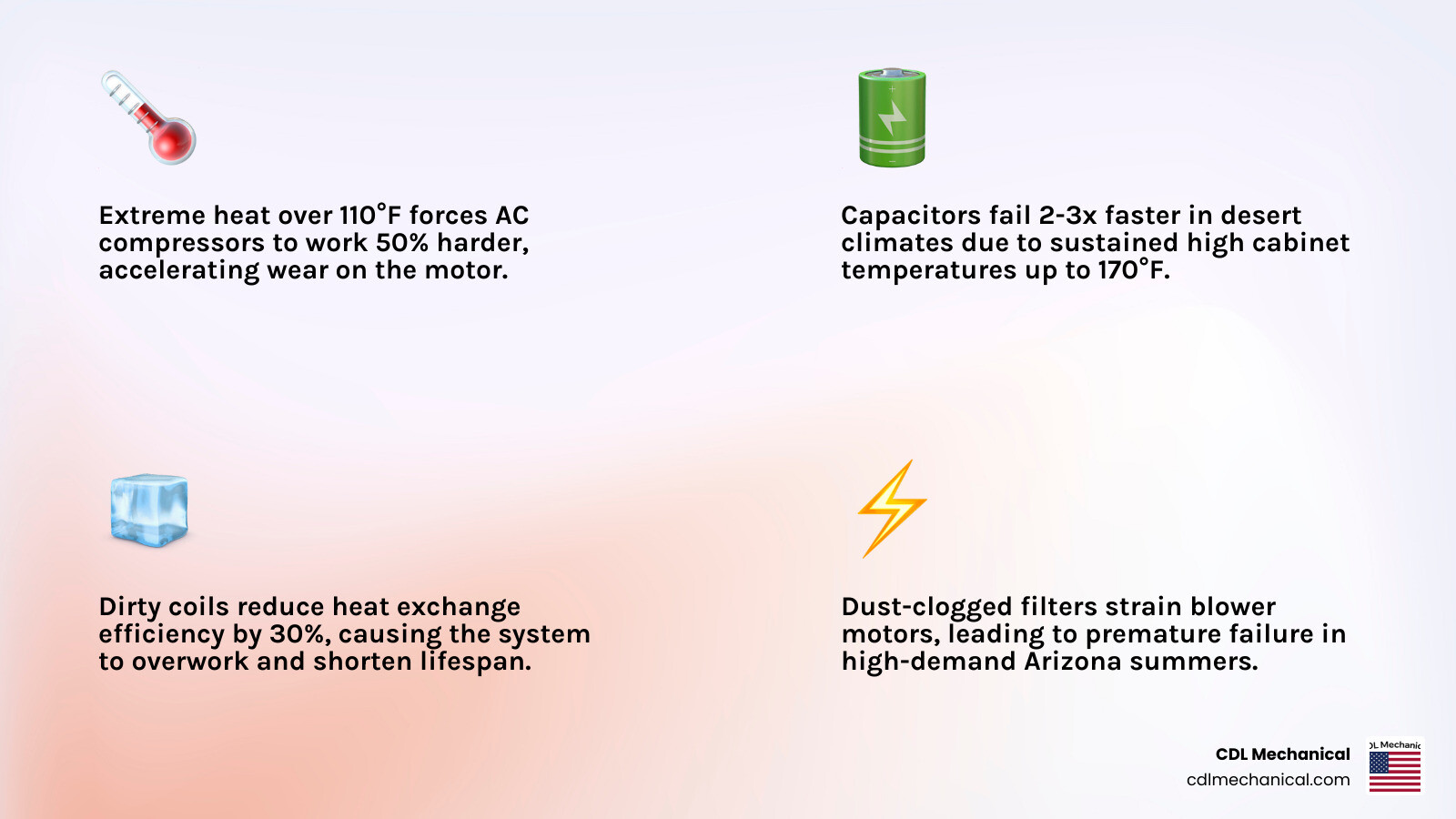
In places like Peoria and Surprise, desert dust and monsoons mean our air is filled with particulates. During the peak of summer, your AC runs for 2,500 to 3,500 hours per season. That is a massive volume of air moving through your filter. We recommend changing your air filters every 30 days during the summer.
A dirty filter acts like a “thermal blanket” or a straw that your system is trying to breathe through. This restriction causes the blower motor to pull more amperage, leading to overheating and premature failure. Understanding how HVAC filters affect indoor air quality is only half the battle; the other half is protecting the mechanical heart of your system from the strain of restricted airflow.
Condenser Clearance and Cleaning
The outdoor unit, or condenser, is where the heat from your home is “dumped” into the outside air. If this unit is crowded by shrubs, weeds, or patio furniture, that heat has nowhere to go. We always tell our neighbors in Buckeye and Goodyear to maintain at least a 2-foot clearance around the unit on all sides and 5 feet above it.
Regularly check for debris like dried leaves or desert “caliche” (a mix of dust and moisture that bakes onto the coils). Keeping these fins clean and straight is a cornerstone of air conditioning maintenance. If the fins are bent or clogged, the compressor has to work twice as hard to move the same amount of heat, which is a surefire way to shorten its life.
Monthly Tasks for Glendale Homeowners
Living in the West Valley means dealing with unique environmental factors. Monthly maintenance should include:
- Checking the Drain Line: High humidity during monsoon season can lead to algae growth in your condensate drain. A simple vinegar flush (one cup of distilled white vinegar) can prevent clogs that cause water damage or system shutdowns.
- Dust Inspection: After a haboob (dust storm), don’t wait for your scheduled service. Rinse the outdoor coils gently with a garden hose to remove the layer of silt.
- Visual Check: Look for frayed wires or signs of “pitting” on electrical contactors.
For residents specifically in the Glendale Luke AFB AZ area, staying on top of these small tasks prevents the “cascade failure” where one small part failing leads to a total system meltdown.
Why Clean Coils Matter in the Desert
Your AC doesn’t “create” cold; it removes heat. This exchange happens at the coils. In Arizona, dust combines with moisture to form a hard crust on the coils. This “thermal blanket effect” insulates the refrigerant, preventing it from releasing heat.
Following a spring AC tune-up checklist ensures your coils are chemically cleaned and ready for the 160-degree temperatures they often reach in direct sunlight. A unit with just 10% coil blockage can lose up to 20% of its efficiency, forcing the compressor to run longer and hotter.
Smart Operational Habits for Arizona Summers
How you use your system is just as important as how you maintain it. Small changes in your daily routine can significantly extend the life of your AC in extreme heat.
The 78-Degree Rule and Airflow
The Department of Energy and most HVAC experts agree: 78°F is the “sweet spot.” Every degree you set the thermostat below 78°F can increase your energy usage by up to 8% and forces the system to run for much longer durations.
To stay comfortable at 78°F, use ceiling fans in a counter-clockwise direction. This creates a “wind-chill” effect that makes the room feel 4 degrees cooler. Fans cool people, not rooms—turn them off when you leave to save energy. Additionally, proper air balancing ensures that every room gets the right amount of airflow, preventing the thermostat from “lying” to the system because one room is heat-soaked while another is freezing.
Using Smart Thermostats to Extend the Life of Your AC in Extreme Heat
Modern smart thermostats are game-changers for Arizona homes. They allow for “load shifting”—cooling the home slightly more in the early morning when the grid is less stressed and the outdoor air is cooler.
Features like geofencing can automatically raise the temperature when you head to work in Phoenix and start the recovery process before you get home. This prevents the “heat-soak” effect where your walls and furniture absorb so much heat that the AC has to run for six hours straight just to catch up. There are 5 benefits of routine AC maintenance that are amplified when paired with a smart thermostat, primarily the reduction in total system runtime.
Managing the 20-Degree Rule
It is a physical reality: most residential AC units are designed to provide a 20-degree difference between the outdoor air and the indoor air. If it is 115°F in Tempe, and your home is 80°F, your AC is actually doing a fantastic job.
Pushing the system to hit 70°F when it’s triple digits outside leads to “heat saturation.” The outdoor air is so hot that the refrigerant can’t dump the heat effectively. This leads to the system running 24/7 without a break, which is the fastest way to burn out a compressor. If you notice hot and cold spots at home, it might be an airflow or insulation issue rather than the AC failing.
Why Professional Tune-Ups are Critical in Glendale
While DIY tasks are great, there are some things only a pro can handle. In the desert, an AC unit is a survival tool, not a luxury.
Refrigerant and Electrical Health
Low refrigerant is never “normal.” AC systems are closed loops; if you are low, you have a micro-leak. Running a system low on charge causes the compressor to overheat because the refrigerant actually helps cool the motor windings.
In Glendale, the electrical cabinet of your outdoor unit can reach 170°F. This is well above the 150°F rating of many standard capacitors. During a professional AC service, we check for bulging capacitors and pitted contactors. Replacing a $100 part during a tune-up prevents a $3,000 compressor failure in July. Our maintenance plan is designed to catch these “weak links” before the heat finds them.
Identifying Signs Your System is Overworking
You should call for air conditioner repair immediately if you notice:
- Short Cycling: The unit turns on and off every few minutes.
- Unusual Noises: Grinding, hissing, or loud “clunks” at startup.
- Ice Formation: Yes, your AC can freeze even in 110-degree heat, usually due to low airflow or refrigerant.
- Utility Spikes: A 20-30% jump in your bill often signals a component is failing.
Knowing what to do when your HVAC breaks down unexpectedly is important, but preventing the breakdown through professional oversight is always the better path.
Professional Solutions for Local Communities
We take pride in serving our neighbors throughout the West Valley. Whether you need AC maintenance in Litchfield Park or are looking for expert service in Goodyear, we bring local expertise to every job. We understand the specific dust patterns in Peoria and the high-demand needs of Avondale. If you are finding the real pros in Phoenix, look for a team that treats you like family.
Improving Home Efficiency to Reduce AC Strain
The less work your AC has to do, the longer it will live. Think of your home as a cooler; if the lid is cracked, the ice melts faster.
Duct Sealing and Insulation
In many Arizona homes, the ductwork is located in the attic, where temperatures can soar to 160°F. If your ducts have leaks, you are essentially trying to cool your attic with expensive electricity.
| Feature | Leaky Ducts | Sealed Ducts |
|---|---|---|
| Airflow Loss | Up to 30% | Less than 5% |
| System Strain | High (runs longer) | Low (cycles normally) |
| Energy Bill | 20-30% Higher | Optimized |
| Air Quality | Pulls in attic dust | Clean and filtered |
Sealing leaks with mastic tape and ensuring your attic has R-38 or better insulation can reduce the cooling load by up to 12%. This is a vital part of demystifying the air balancing process—you can’t balance air that is leaking into the rafters.
Proper Sizing and Variable-Speed Technology
One of the most common mistakes is installing an oversized unit. An oversized AC “short cycles,” meaning it turns on, blasts cold air, and turns off before it can remove humidity. This constant starting and stopping draws 3 to 5 times the running amperage, which kills compressors.
When you choose the right AC system, you should look for variable-speed compressors. These units can “throttle down” to 30% or 40% capacity, running longer at a lower, more efficient speed. This provides consistent comfort and drastically reduces mechanical wear. Understanding SEER ratings is also key, as higher SEER units are better equipped to handle extreme thermal loads.
When to Consider a System Upgrade
In Glendale, an AC unit that is 12 to 15 years old has reached the end of its “efficient” life. If you’re constantly paying for repairs, it might be time to check our repair vs replace mini-guide. Modern units are up to 40% more efficient than those made just a decade ago, meaning an upgrade can pay for itself in energy savings while providing peace of mind during a heatwave.
Frequently Asked Questions about Desert AC Longevity
What is the average lifespan of an AC in Arizona?
In Arizona, the average lifespan is 10 to 15 years. While units in the North might last 20 years, our systems run three times as many hours per year. Regular maintenance is the only way to reach the 15-year mark. If you’re looking for maintenance in Goodyear, starting early in the season is the best way to avoid the mid-summer rush.
How often should I change my filters during a heatwave?
Every 30 days. During a heatwave, your system runs almost 24/7. This means it is filtering three times as much air as it does in the spring. High-demand airflow requires a clean path, or you risk freezing the evaporator coil or burning out the blower motor.
Does shading my outdoor unit actually help?
Yes! Shading your outdoor unit can improve efficiency by up to 10%. By reducing the ambient temperature around the coils, the refrigerant can release heat more easily. Just ensure you maintain 2 feet of side clearance and at least 5 feet of top clearance so you don’t trap the hot air you’re trying to exhaust.
Conclusion
Knowing how to extend the life of your AC in extreme heat is a mixture of good habits, home efficiency, and professional partnership. In Glendale, AZ, we don’t just deal with heat; we deal with a climate that tests the limits of engineering every single day. By changing your filters, managing your thermostat, and keeping your outdoor unit clear, you’re giving your system the best chance to serve your family for years to come.
At CDL Mechanical, we’ve spent decades keeping our neighbors cool from Surprise to Scottsdale and everywhere in between. We are a family-owned company that believes in honest inspections and expert service. If your system is making strange noises or just can’t seem to keep up with the desert sun, don’t wait for a total breakdown. Reach out for professional air conditioner repair or a routine tune-up today. We’ll treat your home like our own and make sure you stay comfortable, no matter how high the mercury climbs.