
Why Learning How to Maintain Your Heating and Cooling System Is Essential
How to maintain your heating and cooling system is one of the most important things you can do as a homeowner — and it doesn’t have to be complicated. Here’s a quick overview of the core tasks:
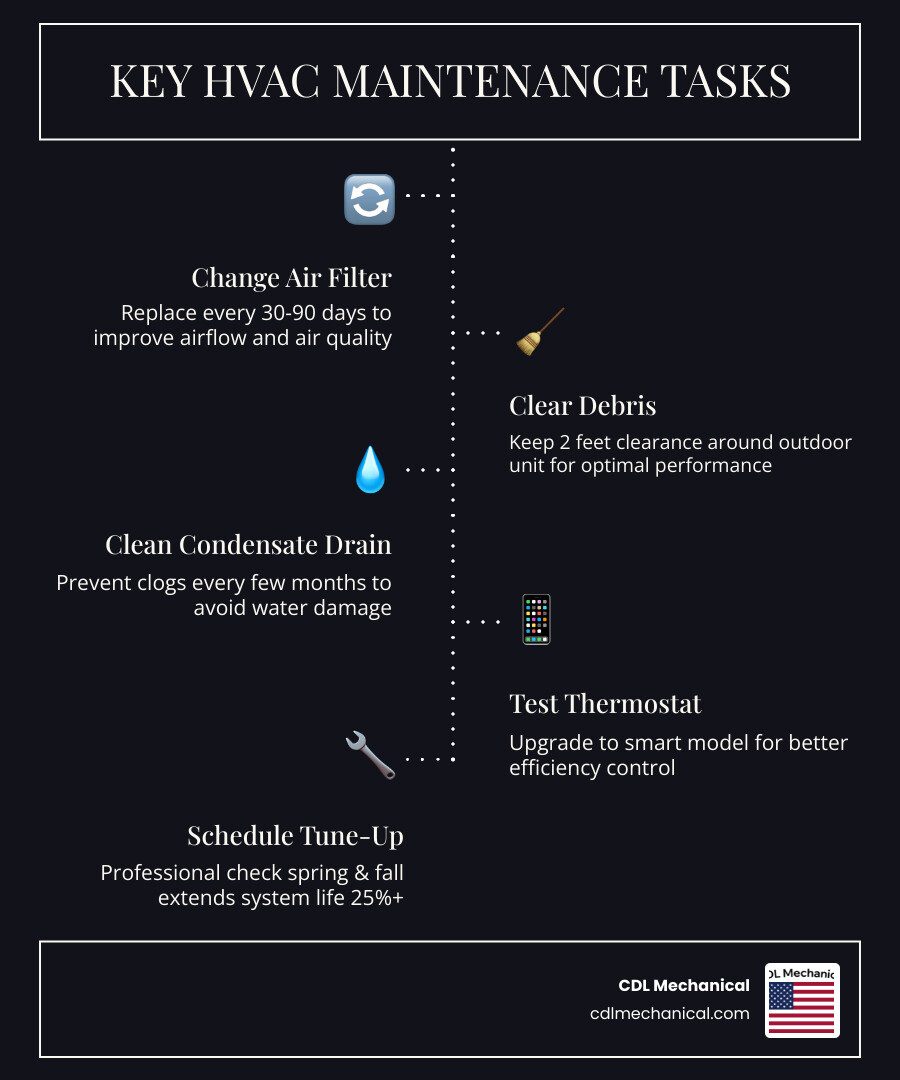
- Change your air filter every 30–90 days (more often with pets or allergies)
- Clear debris from around your outdoor unit and keep at least 2 feet of clearance
- Check and clean the condensate drain line every few months to prevent clogs
- Test your thermostat and consider upgrading to a smart model
- Inspect visible ductwork for leaks or disconnected sections
- Schedule a professional tune-up each spring (for cooling) and each fall (for heating)
- Test carbon monoxide detectors monthly and replace batteries annually
In Glendale, AZ, your HVAC system works harder than almost anywhere else in the country. Summer temperatures regularly push past 110°F, and your air conditioner runs nearly non-stop for months at a time. That kind of demand takes a real toll — and when a system fails during a heat wave, the consequences go beyond just discomfort.
The numbers tell a clear story. The average home spends nearly $1,900 a year on energy bills, with close to half of that going straight to heating and cooling. Routine maintenance can improve your system’s seasonal efficiency by 10–20%, and consistent upkeep can extend your equipment’s lifespan by 25% or more. Despite that, fewer than half of homeowners say they’ve had their HVAC serviced within the last year — and only about 1 in 3 have done even basic cleaning and maintenance.
Whether your system is a central air conditioner, a heat pump, or a furnace, the same principle applies: a little regular attention prevents a lot of expensive problems down the road.
I’m Joshua Michael Bartlett, founder of CDL Mechanical and an HVAC professional with over 20 years of hands-on experience — and knowing how to maintain your heating and cooling system is something I’ve helped countless Glendale homeowners with throughout my career. In this guide, I’ll walk you through everything you need to know, from simple DIY tasks you can do this weekend to the professional services that keep your system running safely and efficiently year-round.
When we talk about HVAC (Heating, Ventilation, and Air Conditioning), we are talking about the lungs of your home. Neglecting these systems is the leading cause of premature failure and inefficiency. By staying on top of maintenance, you aren’t just checking a box; you are protecting one of your home’s most expensive investments.
System Longevity and Energy Bill Reduction
A well-maintained system typically lasts between 15 to 25 years. Furnaces usually see 15–20 years, while air conditioners in our harsh desert climate often last 10–15 years. Regular care can extend this lifespan by as much as 25%. Furthermore, dirt and neglect are the primary enemies of efficiency. Airflow problems alone can reduce efficiency by 15%, causing your utility bills to skyrocket. Understanding the secret to a lean, mean, green HVAC machine starts with basic upkeep.
Indoor Air Quality and Health
Your HVAC system doesn’t just change the temperature; it filters the air you breathe. If your system is dirty, it can circulate dust, pollen, and mold throughout your house. Many people find themselves asking, is your home’s air quality worse than outside? The answer is often “yes” if the filters and coils are neglected. Beyond allergies, there are 5 benefits of routine AC maintenance that directly impact your family’s comfort and health.
Safety and Warranty Protection
For those with gas furnaces, maintenance is a matter of safety. Cracked heat exchangers or faulty gas connections are serious fire hazards and can lead to carbon monoxide leaks. Most manufacturers also require proof of annual maintenance to honor warranty claims. If a major component fails and you haven’t had a professional inspection, you might find yourself paying out of pocket for a repair that should have been covered.
I’m looking for a seasonal HVAC checklist. What should I do for my Glendale, AZ home?
Living in the Phoenix Valley means our “seasons” look a little different than the rest of the country. However, the timing of your maintenance is still critical. We recommend checking your cooling system in the spring (before the May heat hits) and your heating system in the fall (before the November chill).
Spring Cooling Prep
Before the blistering summer arrives, you need to ensure your AC is ready for the marathon. A thorough spring AC tune-up checklist includes checking refrigerant levels, cleaning coils, and ensuring the blower motor is operating at the correct speed. In April 2026, as the temperatures begin to climb, this is the most important appointment on your calendar.
Fall Heating Readiness
Even in the desert, we need reliable heat during those cold winter nights. Heating maintenance in Litchfield Park, AZ and surrounding areas focuses on burner combustion, heat exchanger integrity, and thermostat calibration. It’s best to handle this in late September or October before contractors get slammed with emergency calls.
Arid Climate Considerations
Our local environment presents unique challenges. The extreme dust in places like Buckeye and Surprise means your filters will clog much faster than the national average. We also deal with monsoon debris that can get sucked into your outdoor unit, potentially damaging the delicate fins on the condenser.
DIY Steps for How to Maintain Your Heating and Cooling System in Summer
During the peak of summer, your DIY efforts should focus on airflow and cleanliness.
- Air Filter Replacement: This is the single most important DIY task. How HVAC filters affect indoor air quality is a major factor in home health. In the summer, check these every 30 days.
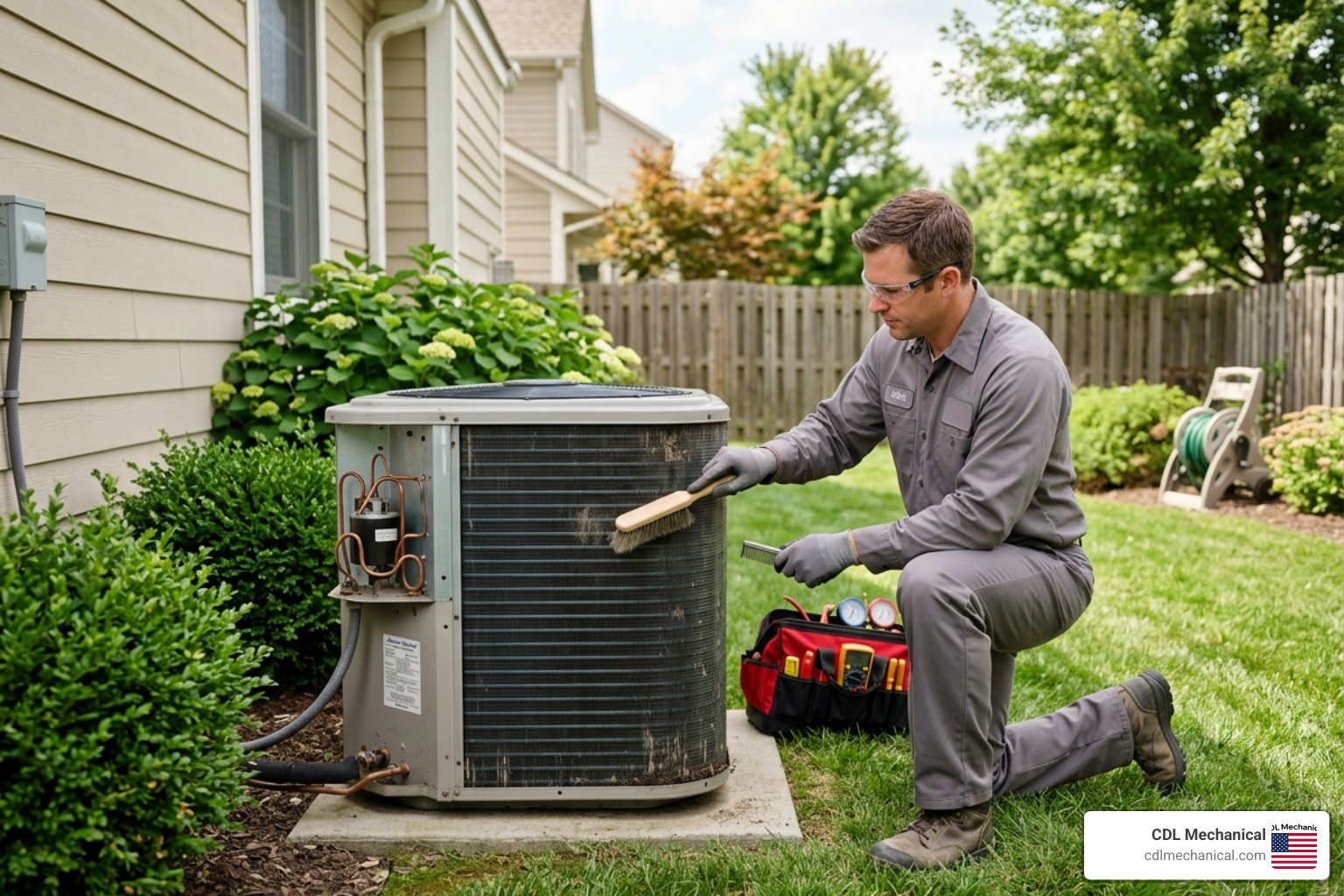
- Outdoor Unit Clearance: Ensure there is at least a 2-foot “no-fly zone” around your condenser. Trim back shrubs, remove weeds, and clear away any wind-blown trash.
- Condenser Coil Debris: Gently wash off the outdoor coils with a garden hose (never a pressure washer!) to remove dust and dirt that traps heat. This is a staple of AC maintenance in Goodyear, AZ.
Professional Tasks for How to Maintain Your Heating and Cooling System in Winter
While you can handle the basics, some tasks require a pro.
- Heat Exchanger Inspection: We use specialized tools to look for microscopic cracks that could leak carbon monoxide. This is a core part of furnace maintenance.
- Gas Line Safety: We check all connections for leaks and ensure the gas pressure is set correctly for efficient combustion.
- Electrical Terminal Tightening: Heat causes wires to expand and contract, which can loosen connections over time. We tighten these to prevent electrical shorts or fires.
- Heat Pump Specifics: If you use a heat pump, we verify the reversing valve is working and the defrost cycle is functional. If you’re in Peoria, you can find more details in our neighborhood guide to heat pump service.
Critical Maintenance Tasks You Can Do Yourself
You don’t need a tool belt full of specialized equipment to make a big difference in your system’s performance. Here are the high-impact tasks you can manage on your own.
Filter Frequency and Your Environment
The standard “change it every 3 months” rule doesn’t always apply in Arizona.
- Pets and Allergies: If you have shedding pets or suffer from seasonal allergies, you should be changing your filters every 30 to 45 days.
- Filter Types: Use high-efficiency pleated filters (MERV 8–11). Avoid the ultra-cheap fiberglass filters that look like blue spiderwebs; they don’t catch much. If you want to take it a step further, consider air purifier services for hospital-grade air in your home.
Condensate Drain Clearing
Your AC removes a massive amount of moisture from the air. This water exits through a drain line. Over time, algae and “sludge” can grow in the pipe, leading to a backup.
- The Vinegar Flush: Every three months, pour a cup of distilled white vinegar down the drain line to kill any growth.
- The Warning Signs: If you see water in your secondary drain pan or around the indoor unit, you likely have a clog. Learning how to handle a leaking air conditioner quickly can save you thousands in water damage repairs to your drywall and flooring.
Smart Thermostat Optimization
In 2026, there is no reason to still be using a manual slider thermostat. Properly installed smart thermostats reduce cooling use by 8–15%.
- Set It and Forget It: Avoid “playing musical chairs” with the temperature. Constantly changing the setting by 5 or 10 degrees makes the system work harder.
- Remote Monitoring: Many smart models will alert you if the system isn’t reaching the target temperature, giving you a head start on a potential repair. Check out our thermostat control tips for more ways to save.
Experiencing weak airflow in Phoenix. When should I call for professional ductwork services?
Sometimes, the problem isn’t the machine itself, but the “veins” that carry the air. If you notice some rooms are freezing while others are sweltering, you likely have airflow issues.
Airflow Restriction and Duct Leaks
About 20 to 30 percent of the air moving through a typical duct system is lost due to leaks, holes, and poor connections. This is literally throwing money away. If you have “hot spots” in your home, our ductwork services can identify where the air is escaping. We also provide air balancing services to ensure every room gets the exact amount of air it needs for total comfort.
Refrigerant Leaks and Unusual Noises
Your HVAC system is a closed loop. It should never “run out” of refrigerant. If it’s low, you have a leak.
- The Hissing Sound: A hissing or bubbling noise near the indoor or outdoor unit often indicates a refrigerant leak.
- Mechanical Groans: Squealing, grinding, or banging noises are cries for help from your blower motor or compressor. Turn the system off and call us immediately to prevent a total meltdown.
Warning Smells
If you turn on your heater for the first time in the fall and smell a slight dusty odor, that’s usually just dust burning off the heat strips. However, burning smells from your heater that smell like electrical plastic or ozone are a major red flag. Similarly, a “rotten egg” smell indicates a gas leak—evacuate the home and call the gas company and an HVAC pro right away.
Frequently Asked Questions about HVAC Care
How often should I change my air filters in the Phoenix area?
Because of our frequent dust storms and high pollen counts, we recommend checking your filter every 30 days. If it looks gray or fuzzy, change it. Even if it looks okay, don’t let it go longer than 90 days. Keeping your filters fresh is the easiest way to improve indoor air quality in Glendale, AZ.
Can a smart thermostat really lower my energy bills in 2026?
Yes! By 2026, smart thermostats have become incredibly efficient at learning your habits. They can automatically adjust the temperature when you leave for work or head to the grocery store. For those looking to save, popular thermostat control for summer can shave a significant percentage off your monthly cooling costs.
What are the warning signs that my system needs immediate repair?
- Short Cycling: If your system turns on and off every few minutes without finishing a full cooling cycle.
- Frozen Coils: If you see ice on the copper lines or the indoor evaporator coil, even when it’s 110°F outside.
- Hot and Cold Spots: When one room feels like a sauna while the next is an icebox. Knowing how to fix hot and cold spots at home often involves professional calibration or duct repair.
Conclusion
At CDL Mechanical, we’ve spent years perfecting the art of desert climate HVAC care. As a family-owned company based right here in Glendale, we treat every home like it belongs to our own neighbors. We know that knowing how to maintain your heating and cooling system can feel overwhelming, but you don’t have to do it alone.
By combining consistent DIY habits—like changing those filters and clearing debris—with our professional expertise, you can enjoy a home that is cool, safe, and energy-efficient all year long. If you want to take the guesswork out of your home maintenance, consider joining our maintenance plan. We’ll handle the heavy lifting, the safety checks, and the precision tuning so you can focus on enjoying your home.
Ready to ensure your system is in peak condition? Contact us today for comprehensive air conditioning maintenance and let our family take care of yours. Whether you are in Phoenix, Surprise, or right here in Glendale, we are ready to help you keep your cool.