
The Gold Standard: How Often Should You Service Your HVAC System?
How often should you service your HVAC system? For most homeowners, the answer is twice a year — once in the spring before cooling season and once in the fall before heating season. If you’re in Glendale, AZ, where your AC works harder and longer than almost anywhere else in the country, sticking to that schedule isn’t just a good idea — it’s essential.
Here’s a quick-reference breakdown:
| HVAC System Type | Recommended Service Frequency |
|---|---|
| Central AC | Once per year (spring) |
| Gas Furnace | Once per year (fall) |
| Heat Pump | Twice per year (spring and fall) |
| Older Systems (11+ years) | Every 3-4 months |
| Arizona / Desert Climate | At minimum twice per year |
Filters: Replace every 1-3 months regardless of system type.
Think about it like this: your HVAC system is one of the most hardworking — and most expensive — pieces of equipment in your home. It runs quietly in the background, and most people don’t give it a second thought until something goes wrong. By then, a simple tune-up has turned into an emergency repair call on the hottest day of the year, with a multi-day wait for a technician.
The data backs this up. Regular professional maintenance prevents 70-80% of HVAC breakdowns and can cut energy use by 10-30% compared to a neglected system. A well-maintained system also lasts 5-7 years longer on average — meaning the difference between replacing your unit at year 12 or year 20.
This guide covers everything you need to know: when to schedule service, what’s actually included in a professional visit, how factors like your home’s age, your pets, and Glendale’s extreme desert heat affect how often you should book a tune-up — and the warning signs that mean you shouldn’t wait for your next scheduled visit.
I’m Joshua Michael Bartlett, owner of CDL Mechanical and a hands-on HVAC professional with over 20 years in the trade — and knowing how often should you service your HVAC is one of the most common and most important questions I answer for homeowners across the Phoenix area. Whether your system is brand new or pushing 15 years, the right maintenance schedule makes all the difference in comfort, reliability, and long-term cost.
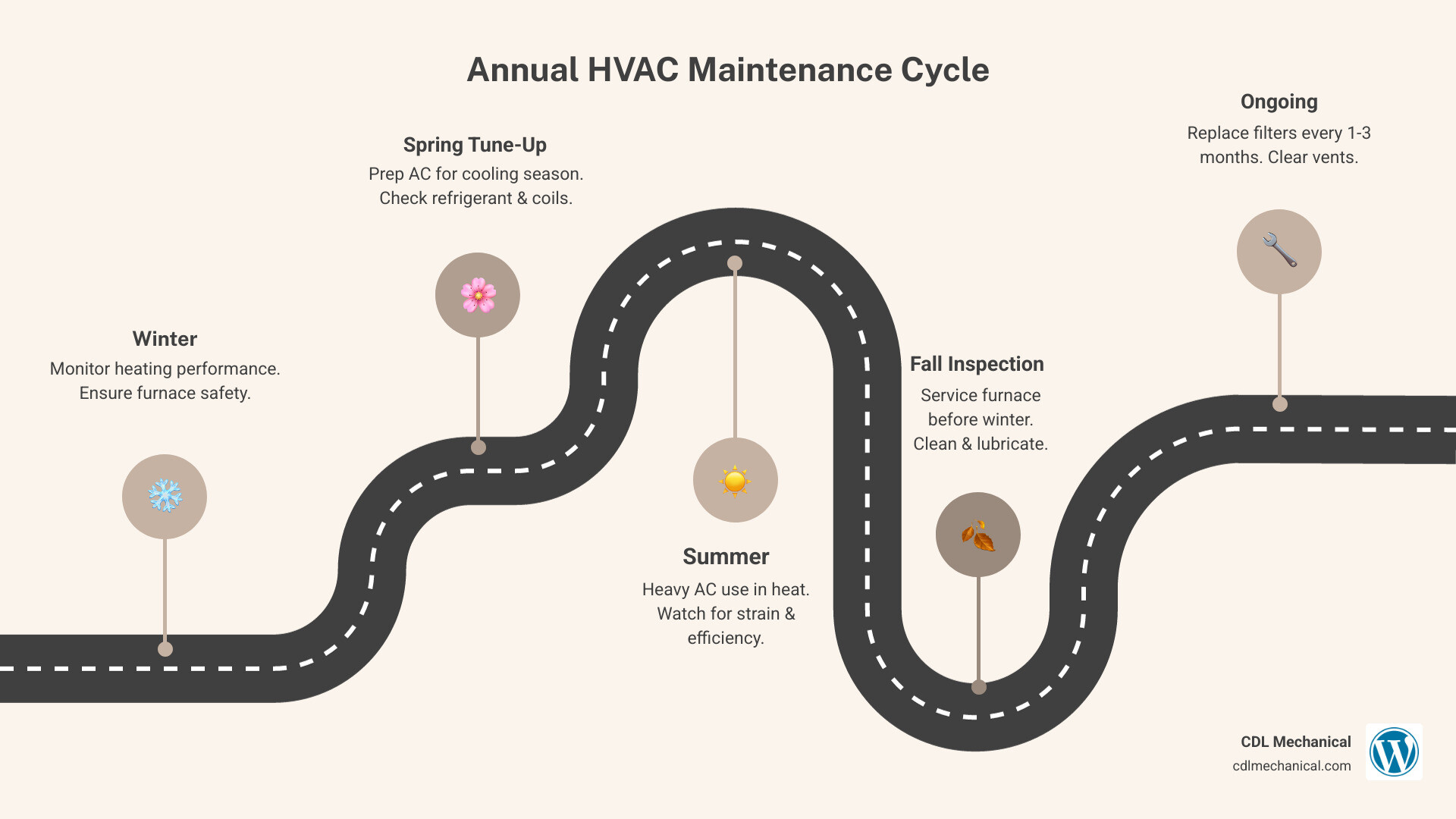

When we talk about the “gold standard” of maintenance, we are referring to a bi-annual schedule. For most homes in our service area—from Peoria to Scottsdale—this means two professional visits per year.
If you have a separate furnace and air conditioner, each unit needs its own dedicated check-up. If you use a heat pump, which handles both heating and cooling, it still requires two visits because it essentially works double-time throughout the year. While an annual minimum is better than nothing, skipping a seasonal visit often leads to efficiency drops. In fact, dirty coils alone can reduce your system’s efficiency by 15% to 25%.
Adhering to a professional Air Conditioning Maintenance schedule ensures that your system is ready for the specific demands of the upcoming season. Similarly, Furnace Maintenance in the later months ensures that when the desert floor finally cools down, your heater won’t let you down.
How often should you service your HVAC in the Arizona desert?
The Arizona desert isn’t just “warm”—it’s an environment of extremes. In cities like Goodyear, Litchfield Park, and Surprise, your air conditioner might run for 8 to 10 months out of the year. This heavy usage puts immense strain on mechanical components, capacitors, and fan motors.
Furthermore, our region is prone to dust storms and high levels of particulate matter. This dust accumulates on outdoor condenser coils and indoor evaporator coils, acting like a thermal blanket that prevents your system from releasing heat. Because of this, we strongly recommend that you Keep Your Cool with Local AC Maintenance in Glendale Luke AFB AZ by sticking to a strict six-month interval. If you are looking for AC Maintenance Litchfield Park AZ, the desert climate essentially doubles the “wear and tear” age of your system compared to homes in milder climates.
How often should you service your HVAC to keep your warranty valid?
Many homeowners don’t realize that their manufacturer’s warranty is a two-way street. While the manufacturer promises to cover parts for 5 to 10 years, they typically require proof of regular professional maintenance to honor those claims.
If a major component like a compressor fails, the manufacturer may ask for service records. If you haven’t had a professional tune-up in three years, they may deny the claim, citing “neglect.” Joining a Maintenance Plan is the easiest way to ensure you have a documented paper trail of professional care, keeping your warranty fully compliant and protecting you from massive out-of-pocket expenses.
Seasonal Timing: When to Schedule Your Maintenance
Timing is everything. You wouldn’t wait until you’re in the middle of a road trip to check your car’s oil, and you shouldn’t wait for a 110-degree day to check your AC. Scheduling during the “shoulder seasons”—spring and fall—offers several advantages. Not only is it easier to find a convenient appointment time, but it also ensures your system is primed before the peak demand hits. Using a Spring AC Tune-Up Checklist in March or April and scheduling Heating Maintenance in Goodyear AZ in October or November is the most strategic way to manage your home comfort.
The best time for cooling system tune-ups
The ideal window for AC service in the Phoenix valley is between March and May. During this time, we can verify refrigerant levels and ensure the system is capable of reaching the necessary “temperature split” to cool your home effectively.
Getting your AC Maintenance Goodyear AZ done early helps you avoid the “summer rush” when technicians are often booked out for days with emergency repairs. If you are searching for How to Find Affordable AC Maintenance in Goodyear Without the Heat, the answer is simple: schedule in the early spring before the first heatwave drives up demand.
Preparing your heating system for winter
While we are famous for our heat, winter nights in places like Buckeye and Wickenburg can drop below freezing. September through November is the time to focus on your furnace or the heating side of your heat pump.
Professional Heating Maintenance in Litchfield Park AZ includes critical safety inspections. For gas furnaces, we check the heat exchanger for micro-cracks that could leak carbon monoxide into your home. For heat pumps, we ensure the reversing valve and defrost cycle are functioning so you aren’t left with an iced-over outdoor unit in December.
Why Frequency Matters: The Benefits of Regular Tune-Ups
Consistency pays off. There are 5 Benefits of Routine AC Maintenance that directly impact your wallet and your quality of life: lower bills, fewer repairs, better air, longer lifespan, and peace of mind.
| Feature | Maintained System | Neglected System |
|---|---|---|
| Energy Consumption | 10-30% Lower | Standard or High |
| Breakdown Risk | Low (70-80% prevented) | High |
| Airflow | Optimized | Restricted (up to 50%) |
| Lifespan | 15-20+ Years | 10-12 Years |
| Humidity Control | Excellent | Poor |
Improving indoor air quality and comfort
Your HVAC system is the primary filtration system for your home. When you service your system frequently, you are removing the buildup of dust, pollen, and pet dander that otherwise circulates through your rooms. This is especially vital for Affordable Avondale AC Maintenance That Won’t Blow Your Budget; clean coils and blowers mean the system doesn’t have to work as hard to move air, which also helps manage indoor humidity levels—keeping you feeling cooler even at higher temperatures.
Preventing emergency breakdowns
There is nothing worse than an AC failure on a Friday afternoon in July. Regular maintenance identifies “weak links” like a bulging capacitor or a frayed fan belt before they snap. By catching these issues early, we can prevent about 80% of the common causes of system failure. If you are looking for The Best AC Maintenance Deals in Peoria AZ for Budget-Friendly Cooling, preventive care is always the most cost-effective “deal” you can find.
Factors That Influence How Often You Should Service Your HVAC
While the bi-annual rule is a great baseline, your specific situation might require more frequent attention. No two homes in Glendale are exactly alike, and neither are their HVAC needs.
How system age affects service needs
As a system enters its “half-life” (around 7 to 10 years), it naturally loses 5% to 10% of its efficiency. Older units are more prone to refrigerant leaks and electrical component failure. If your system is over 11 years old, we often recommend quarterly checks. These frequent inspections allow us to monitor the compressor and motors more closely, helping you squeeze every possible year of life out of the unit before a replacement becomes necessary.
Household factors and environmental demands
Several lifestyle factors can increase your service frequency:
- Pets: If you have dogs or cats that shed, your filters and coils will clog much faster.
- Allergies: Sufferers often benefit from quarterly maintenance and specialized high-MERV filters to keep indoor air pristine.
- Construction: If you live in a developing area like parts of Buckeye or Surprise, construction dust can quickly overwhelm your system’s outdoor unit.
- Heavy Loads: If you keep your home at 68 degrees year-round, your system is working harder than a neighbor who keeps theirs at 78. Higher usage equals more frequent maintenance needs.
Professional vs. DIY: What’s Included in a Service Visit?
We love proactive homeowners! There is a lot you can do to support your system between our visits. However, it’s important to distinguish between “maintenance” (which you can do) and “technical servicing” (which requires our specialized tools and training).
Homeowner maintenance tasks between visits
- Filter Changes: This is the #1 thing you can do. Check them monthly. If they look gray or fuzzy, swap them out. Clogged filters reduce airflow by over 50% and are the leading cause of “frozen” AC coils.
- Clear Debris: Keep at least two feet of clearance around your outdoor unit. Trim back bushes and remove weeds or “desert broom” that might be blocking airflow.
- Visual Inspection: Periodically check your indoor vents to ensure furniture or curtains aren’t blocking them.
- Drain Line Care: Pouring a cup of vinegar down your condensate drain line once a month can help prevent algae clogs that lead to water damage.
What happens during a professional tune-up?
When we come out for a professional visit, we go far beyond what a homeowner can safely do. Our 60-to-90-minute visit includes:
- Electrical Tightening: We check all connections and measure the “amp draw” of your motors.
- Refrigerant Check: We use gauges to ensure your system has the exact charge required. A system low on refrigerant by just 10% can see a 20% drop in efficiency.
- Coil Cleaning: We clean the outdoor condenser coils to ensure maximum heat transfer.
- Safety Testing: We test all limit switches and safety controls to ensure the system shuts down properly if an error occurs.
- Lubrication: We grease moving parts to reduce friction and noise.
Frequently Asked Questions about HVAC Maintenance Frequency
What are the signs I need service before my scheduled visit?
Don’t wait for your appointment if you notice:
- Strange Noises: Squealing, banging, or grinding sounds.
- Short-Cycling: The system turns on and off every few minutes without cooling the house.
- Weak Airflow: You can hear the fan, but barely feel air coming from the vents.
- Spiking Bills: An unexplained jump in your electric bill usually means a component is failing or the system is filthy.
- Odors: Musty smells (mold) or burning smells (electrical issues) require immediate attention.
Does a new HVAC system really need annual maintenance?
Yes! Just like a brand-new car needs its first few oil changes to keep the engine healthy, a new HVAC system needs to be calibrated. Early maintenance ensures the installation was perfect and catches any minor factory defects before they cause a breakdown. Plus, as mentioned before, it’s required for your warranty.
Is a maintenance contract worth the investment?
Absolutely. Maintenance contracts usually offer the best value because they bundle your two annual visits at a lower rate and often include perks like priority scheduling during the busy season. It takes the guesswork out of remembering how often should you service your hvac because we handle the scheduling for you.
Conclusion
At CDL Mechanical, we are a family-owned company that believes in treating your home like our own. We know that in the Glendale heat, your HVAC system isn’t just a luxury—it’s a necessity for your family’s safety and comfort. By following the bi-annual “gold standard” for maintenance, you aren’t just spending money; you’re investing in lower utility bills, a longer-lasting system, and the peace of mind that comes with knowing your home is ready for whatever the Arizona sky throws at it.
Don’t wait for the next record-breaking heatwave to find out if your system is up to the task. Schedule your professional Air Conditioning Maintenance today and let us help you keep your home comfortable all year long.