
Understanding the Mechanics of a Maintenance Plan
When we talk about a Maintenance Plan, we aren’t just talking about a quick visual check. In modern HVAC, especially as we head into the peak of 2026, these plans are comprehensive service agreements designed to keep your system running at peak performance. Think of it like a gym membership for your air conditioner—regular activity keeps it healthy so you can avoid a massive “hospital bill” later.
Typically, a professional plan includes two major visits per year: one in the spring to prep for the brutal Arizona summer and one in the fall to ensure your heating system or heat pump is ready for those chilly desert nights. During these visits, our technicians perform a series of technical tasks that go far beyond what a homeowner can do with a screwdriver and a garden hose.
Key services included in a high-quality plan are:
- System Diagnostics: We use specialized tools to measure refrigerant levels and test the performance of the compressor and motors.
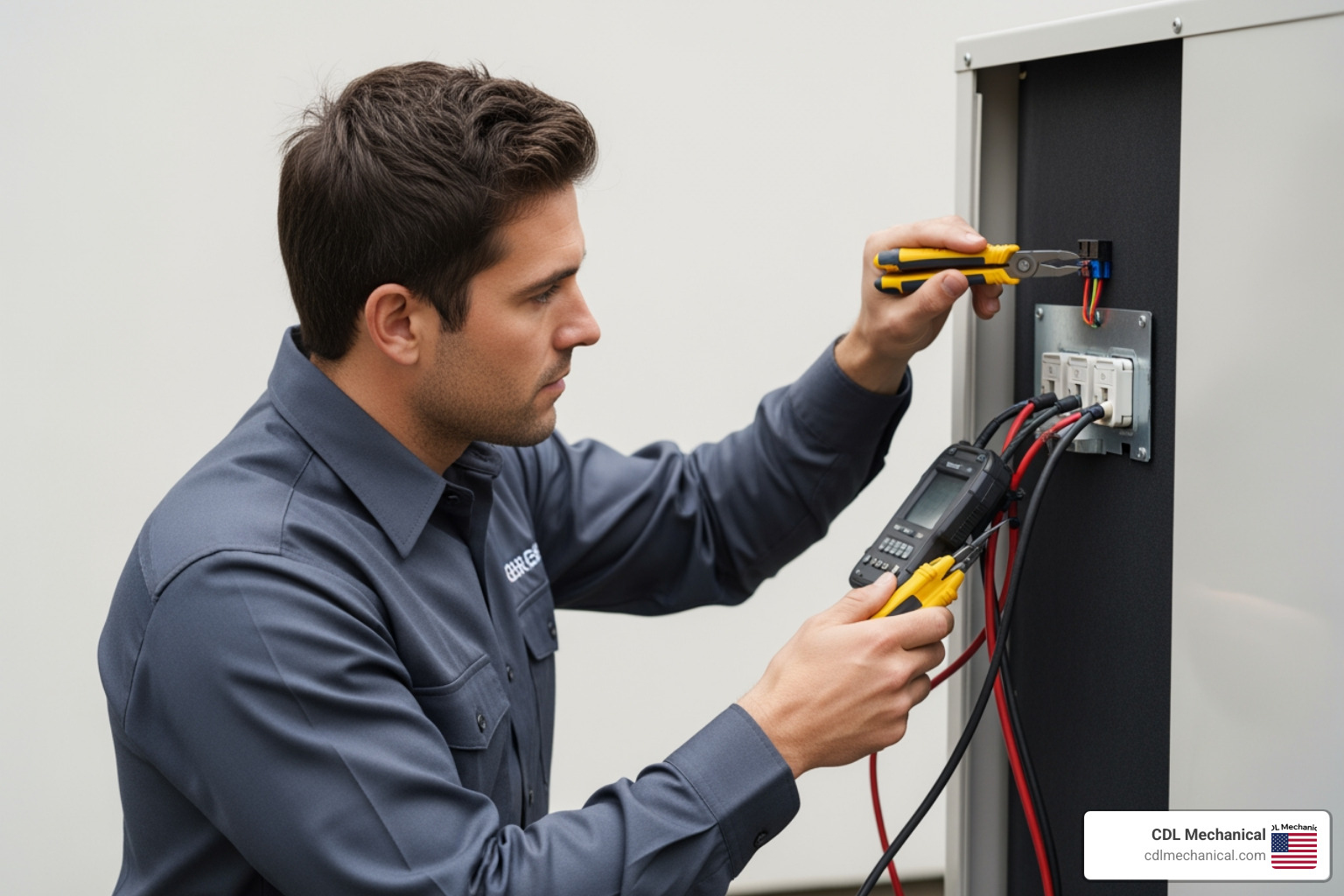
- Electrical Tightening: Heat causes wires to expand and contract, which can loosen connections over time. We tighten every terminal to prevent arcing and component burnout.
- Coil Cleaning: In Glendale, dust and particulate matter are constant battles. Dirty coils make your system work twice as hard to move heat, which spikes your bills.
- Moving Part Lubrication: Reducing friction in your fans and motors extends their lifespan and keeps the system quiet.
- Filter Management: While you should change your own filters monthly, we inspect the housing and duct connections to ensure no “unfiltered” air is bypassing the system.
By bundling these services, you ensure that nothing is overlooked. It’s the difference between reactive “firefighting” and proactive care.
Do maintenance plans save money through efficiency and longevity?
This is where the math starts to get very interesting for your wallet. To truly answer the question, do maintenance plans save money, we have to look at the two biggest financial drains: monthly utility costs and premature system replacement.
In our experience serving areas from Peoria to Scottsdale, a neglected system doesn’t just stop working one day; it slowly “dies” over years by becoming less and less efficient. Research shows that energy efficiency remains near the factory rating for maintained systems, whereas neglected units can drop by 5% every single year.
| System Metric | Well-Maintained System | Neglected System |
|---|---|---|
| Average Lifespan | 15–18 Years | 9–12 Years |
| Major Failure Risk | Low | 40% higher in first 10 years |
| Energy Efficiency | High (15% reduction in use) | Declining (5% drop per year) |
| Repair Costs | Predictable/Discounted | Emergency/Full Price |
The 5 Benefits of Routine AC Maintenance extend far beyond just avoiding a hot house. When your system operates with clean coils and proper refrigerant levels, it can reduce energy use by up to 15%. Over a long Glendale summer, that 15% adds up to hundreds of dollars in savings on your monthly utility bills.
Furthermore, longevity is the “whole game” in home equipment value. If a maintenance plan helps your system last 18 years instead of 10, you are essentially delaying a five-figure replacement cost for nearly a decade. That is the single largest “saving” a maintenance plan provides.
Calculating the Real-World Value of Prepaid Service
Many homeowners wonder why they should pay upfront for a plan instead of just calling us when they need a tune-up. The value of a prepaid plan lies in the “extras” that protect you from market volatility and scheduling headaches.
First, consider inflation hedging. By signing up for a plan in May 2026, you are often locking in current labor rates. As the cost of specialized tools and technician training rises, your plan remains a fixed, predictable expense in your budget. It provides financial predictability in an unpredictable world.
Second, there is the benefit of priority scheduling. During an Arizona heatwave, every HVAC company in the valley gets hundreds of calls a day. Maintenance plan members move to the front of the line. When it’s 115 degrees outside, being a “priority” isn’t just a perk—it’s a necessity for your family’s comfort and safety.
We also offer repair discounts to our plan members. If a part does fail, having a 10% or 15% discount on the repair can often cover the entire annual cost of the maintenance plan in a single visit. To understand how often you should be seeing us, check out The Ultimate Guide to HVAC Service Frequency.
Why do maintenance plans save money on emergency repairs?
Emergency repairs are the most expensive way to maintain a home. They often involve after-hours rates, diagnostic fees, and the stress of a system that has completely quit. Do maintenance plans save money in these scenarios? Absolutely, by catching the “small stuff” before it causes a chain reaction.
A classic example we see in Glendale is the capacitor. This small, relatively inexpensive component helps start your motors. During a routine maintenance visit, we test the “strength” of your capacitor. If it’s failing, we replace it for a modest fee. If you don’t have a plan and that capacitor dies on a Saturday afternoon, it can cause the fan motor or even the compressor to burn out. Replacing a compressor can cost ten times more than a simple capacitor.
By using Specials and early detection, you avoid the “death spiral” of neglected components.
Factors That Influence Your Return on Investment
Not all maintenance plans are created equal, and your specific situation in the Phoenix metro area will dictate your ROI. One of the biggest factors is system age. While some think plans are only for old units, they are actually vital for newer systems to protect the manufacturer’s warranty.
Another factor is heat stress. If you live in a particularly dusty area like Buckeye or Wittmann, your system faces more “particulate stress” than a unit in a lush, landscaped part of Paradise Valley. More dust means more frequent coil cleaning is required to maintain that 15% energy efficiency gain.
We also focus on transferability. If you decide to move, a documented history of professional maintenance can actually increase your home’s resale value. It proves to the buyer that the HVAC system—one of the most expensive parts of the house—has been cared for like family. This is one of the 5 Benefits of AC Repair Service; knowing the system is in top shape provides peace of mind to everyone involved.
When do maintenance plans save money for new systems?
If you just bought a new system in 2026, you might think you’re “safe” for a few years. However, almost all manufacturers (like Trane, Lennox, or Carrier) require documented annual professional maintenance to keep their 10-year parts warranties valid. If a major component fails in year five and you cannot prove the system was serviced, the manufacturer can deny your claim.
A maintenance plan ensures you have a paper trail. It also helps catch factory defects early while the labor is still covered under the initial installation warranty. For those looking at a new installation, we offer Financing options to help make the initial investment more manageable, but the maintenance plan is what protects that investment for the next two decades.
Conclusion
At CDL Mechanical, we’ve spent years perfecting our approach to home comfort in Glendale and the surrounding valley. As a family-owned business, we don’t look at maintenance plans as just a “contract.” We look at them as a way to treat our customers like family—looking out for your budget, your comfort, and your peace of mind.
Our members enjoy perks like:
- Two comprehensive precision tune-ups per year
- Priority service during peak summer and winter months
- Discounts on repairs and parts
- No “surprise” diagnostic fees in many cases
- Locked-in labor rates for future services

Whether you are in Surprise, Tempe, or right here in Glendale, a Maintenance Plan is the smartest financial move you can make for your home’s mechanical systems.
Can I perform HVAC maintenance myself instead of buying a plan?
While we encourage homeowners to change their filters and keep the area around the outdoor unit clear of weeds and debris, DIY maintenance has its limits. Modern HVAC systems are complex, high-voltage machines that require specialized tools like manifold gauges, multimeters, and combustion analyzers to service safely. Furthermore, DIY work does not provide the “documented professional service” required to keep your manufacturer’s warranty valid. For the sake of safety and your warranty, leave the technical inspections to the pros.
What happens to my maintenance plan if I sell my home?
Most of our agreements are fully transferable to the new homeowner. This is a massive selling point! When a potential buyer sees a binder full of service records from a reputable local company like CDL Mechanical, they feel much more confident making a high offer on your home. It shows the home has been meticulously cared for, which can significantly boost your resale value.
Are maintenance plans worth it for older systems?
Actually, they might be more worth it for older systems. For a unit that is 10-12 years old, we use maintenance visits for predictive monitoring. We can see when a motor is starting to draw too much amperage or when a contactor is pitting. This allows you to plan for a replacement on your own terms and budget, rather than being forced into an emergency replacement in the middle of a July heatwave. Maintenance prevents the “catastrophic” failure that often leads to expensive, unplanned replacements.