
Will a Mini Split Save You More Money Than Central AC in Glendale, AZ?
The mini split vs central ac cost comparison comes down to one critical question: does your home already have ductwork — and is it in good shape?
Here is a quick breakdown to answer the most common questions upfront:
| Factor | Mini Split | Central AC |
|---|---|---|
| Best for homes without ducts | Yes | No — adds significant cost |
| Best for homes with existing ducts | Depends on zones needed | Yes |
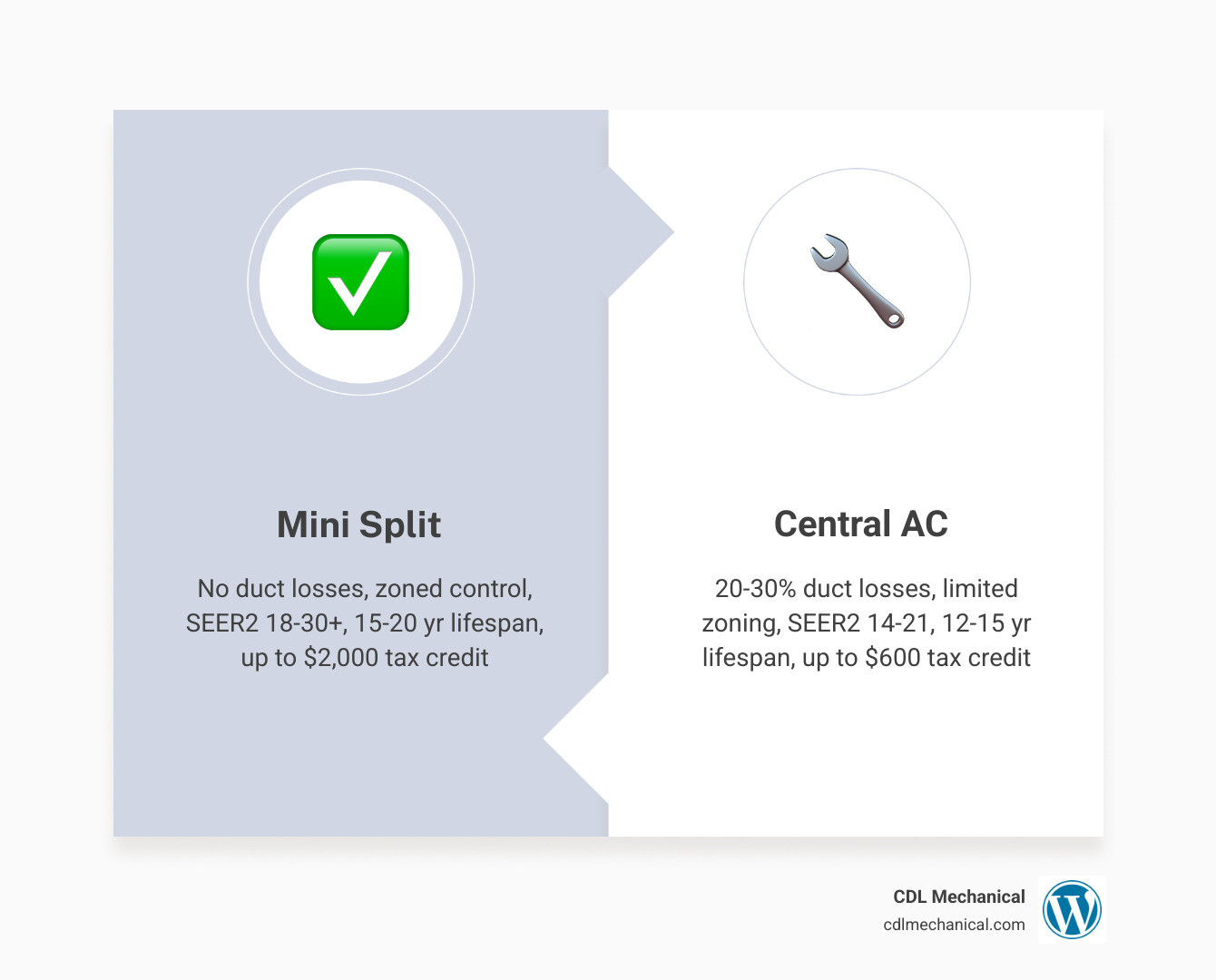
| Energy efficiency (SEER2) | 18–30+ | 14–21 |
| Duct energy loss | None | 20–30% |
| Zoned temperature control | Yes, by design | Limited |
| Lifespan | 15–20 years | 12–15 years |
| Federal tax credit available | Up to $2,000 (heat pump) | Up to $600 |
| Works as both heating and cooling | Yes | No — needs separate heater |
The short answer: If your Glendale home already has solid, well-sealed ductwork, central AC is often the more straightforward choice. If your home lacks ducts, has rooms that never cool evenly, or you want room-by-room control, a mini split system will almost certainly save you more money over time — especially with Arizona’s brutal cooling season driving up energy bills month after month.
Living in the greater Phoenix area, you already know the HVAC stakes are high. Your system runs hard from April through October, and even a 20–30% loss of cooled air through leaky ducts adds up fast. That kind of waste hits differently when your air conditioner is fighting 115-degree summer heat.
I’m Joshua Michael Bartlett, founder of CDL Mechanical and a Glendale-based HVAC professional with over 20 years in the trade — and the mini split vs central ac cost comparison is one of the most common conversations I have with homeowners trying to make a smart, long-term investment in their home comfort. Let’s walk through exactly what drives the real costs on both sides so you can make a confident decision.
Installation Variables for Glendale Properties
When we step into a home in Glendale or Peoria, the first thing we look at isn’t the unit outside; it’s what’s happening behind your walls and up in your attic. The physical infrastructure of your home is the single biggest factor in your initial mini split vs central ac cost comparison.
The Ductwork Dilemma
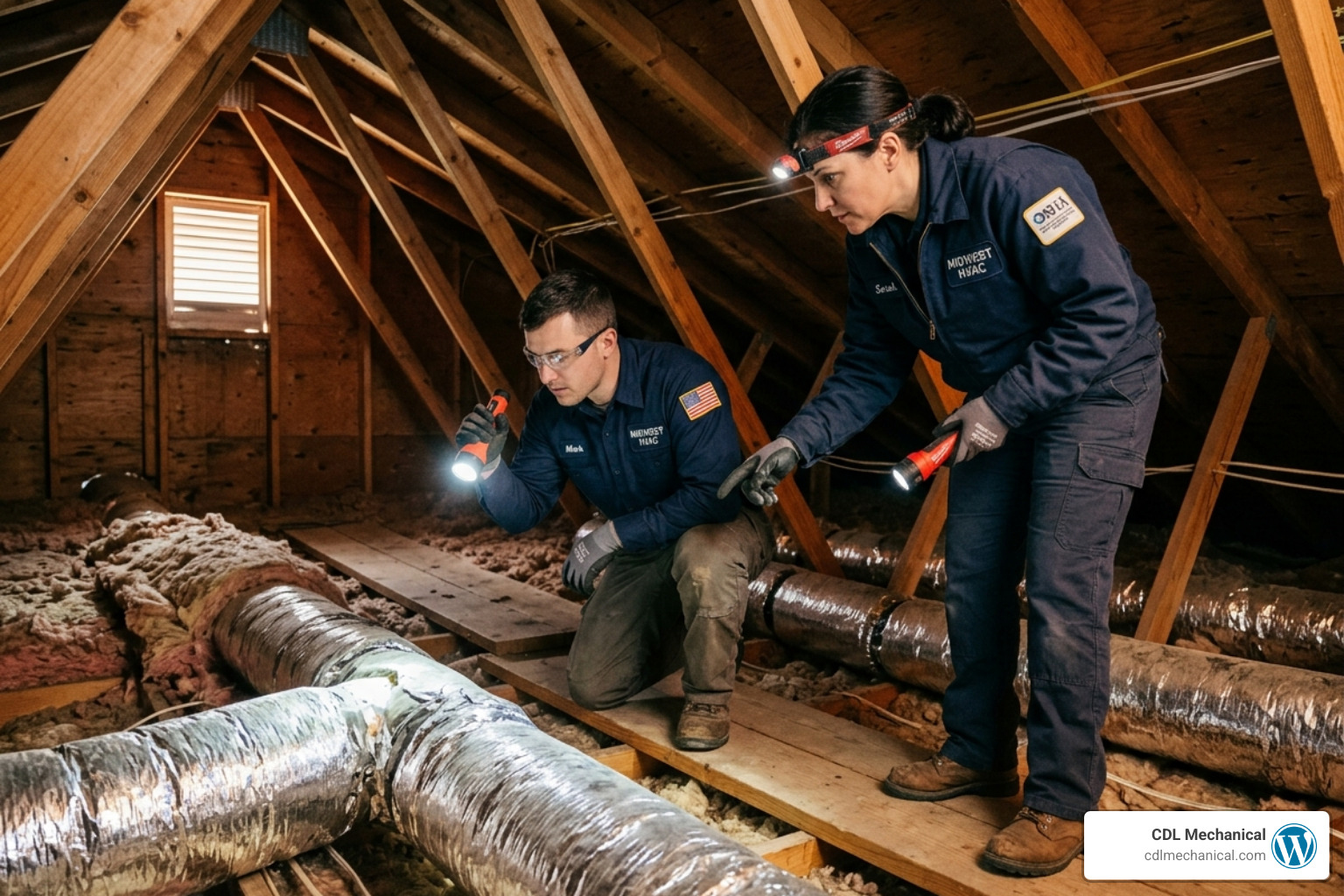
If you live in a newer build in Surprise or Goodyear, you likely have a central HVAC system with existing ductwork. In this scenario, replacing a central AC unit is a relatively streamlined process. However, if those ducts are aging, undersized, or falling apart, simply “swapping the box” won’t solve your comfort issues.
For older homes in historic Phoenix districts or slab-on-grade homes in Litchfield Park that were never built with central air, the “hidden” installation requirements can be overwhelming. Installing new ducts often requires:
- Cutting into drywall or ceilings.
- Sacrificing closet space for air handlers.
- Extensive structural modifications to fit large trunk lines.
Mini Split Flexibility
Ductless mini splits, on the other hand, require only a small three-inch hole in the exterior wall to connect the indoor “head” to the outdoor compressor. This simplicity makes them a favorite for retrofitting older homes or cooling specific additions. When we talk to homeowners about How To Choose The Right Ac System, we emphasize that labor requirements for mini splits are often concentrated on precision electrical and refrigerant work rather than heavy construction and carpentry.
| Installation Requirement | Central AC (Existing Ducts) | Central AC (New Ducts) | Multi-Zone Mini Split |
|---|---|---|---|
| Drywall Work | Minimal | High | Minimal |
| Attic Access Needed | Yes | Extensive | Minimal |
| Footprint | Large (Ducts + Unit) | Massive | Small (Wall/Floor Units) |
| Labor Intensity | Moderate | Very High | Moderate to High |
Mini Split vs Central AC Cost Comparison: Analyzing Long-Term Value
While the upfront installation is the first hurdle, the real mini split vs central ac cost comparison happens over the next 15 years on your utility bills. In the Arizona desert, efficiency isn’t just a buzzword; it’s a survival tactic for your bank account.
SEER2 Ratings and Inverter Technology
As of 2026, the industry has fully transitioned to SEER2 (Seasonal Energy Efficiency Ratio 2) standards, which more accurately reflect real-world performance in harsh climates like ours. Modern Mini Split Ductless Units consistently outperform central systems in this category.
Why? It comes down to the “Inverter” compressor. Traditional central AC units are often like a light switch—they are either 100% on or 100% off. This constant cycling consumes massive amounts of energy. Mini splits use variable-speed inverter technology, which acts more like a dimmer switch. The system ramps up to cool the room and then drops down to a low-power “sip” of energy to maintain that temperature.
This operational efficiency is why a mini split can often reduce monthly cooling costs by up to 40% compared to an older central system. Furthermore, proper Air Balancing ensures that every ounce of that efficiency is felt by the occupants, rather than being wasted in an empty hallway.
Impact of Duct Leakage on Your Mini Split vs Central AC Cost Comparison
One of the most frustrating aspects of central air is “thermal loss.” In a typical Glendale home, your ductwork lives in the attic. During a Phoenix July, your attic can easily reach 150 degrees Fahrenheit.
Even if your central AC is highly efficient, it has to push cold air through those scorching pipes. According to the Department of Energy, the average central system loses 20% to 30% of its cooling capacity through duct leaks and poor insulation before the air ever reaches your vents. With a Ductless Ac Litchfield Park Az installation, that waste is eliminated. The cooling happens directly in the room, providing airtight delivery and ensuring you aren’t paying to cool your attic insulation.
Zoned Cooling Benefits in a Mini Split vs Central AC Cost Comparison
Think about your lighting for a second. You wouldn’t have one single light switch that turns on every light in your house at once, right? That would be crazy. Yet, that is exactly how most central AC systems work. If you want to cool your bedroom at night, you have to cool the kitchen, the laundry room, and the guest bath too.
Mini splits offer “zoned comfort” by design. Each indoor unit operates independently. If you are spending your afternoon in the home office in Peoria, you can set that unit to 75 degrees while leaving the rest of the house at 80. This customized comfort leads to massive energy conservation. By only cooling the spaces you are actually using, you drastically tip the mini split vs central ac cost comparison in favor of ductless technology.
Many modern units even feature occupancy sensors that can detect when a room is empty and automatically shift into an eco-mode. This level of multi-zone flexibility is something traditional central systems struggle to match without expensive and complex motorized damper systems.
Maintenance and Lifespan in the Arizona Climate
In Glendale, our biggest HVAC enemy isn’t just the heat—it’s the dust. Whether it’s a haboob rolling through or just the daily desert grit, your system’s longevity depends on how well it’s maintained.
Desert Dust and Filter Care
Maintenance for a mini split is a bit different than for a central system. Because the indoor heads are right there in the room with you, the filters are very easy to access. We recommend our customers in Glendale and Phoenix wash their mini split filters every two to four weeks during the peak of summer. It takes five minutes at the sink, but it saves your system from straining against a wall of dust.
Central AC systems rely on a main return filter (or several). While these are also easy to change, the ductwork itself can accumulate dust, dander, and allergens over time. If you’re looking for Expert Help Your Guide To Every Mini Split Ductless Company In Glendale Az, you’ll find that professional tune-ups are non-negotiable for both systems.
System Longevity
A well-maintained mini split can last 15 to 20 years, whereas a central AC unit in the harsh Arizona sun often starts to flag around the 12 to 15-year mark. The lack of ductwork also means you don’t have to worry about the long-term cost of duct cleaning, sealing, or eventual replacement, which can be a significant hidden expense in the mini split vs central ac cost comparison.
Strategic Use Cases for Ductless Technology
While mini splits are fantastic for whole-home cooling, there are specific scenarios where they are the undisputed champions of cost-effectiveness.
1. The Garage Conversion
In cities like Goodyear and Avondale, converting a garage into a gym, workshop, or “man cave” is incredibly popular. Extending central ductwork into a garage is often against local building codes (due to carbon monoxide concerns) and would put a massive strain on your existing AC. A single-zone mini split is the perfect solution here.
2. Historic and Slab-on-Grade Homes
If you live in a beautiful historic home in Phoenix or a slab-on-grade property in Litchfield Park, you simply don’t have the “real estate” for ducts. Rather than tearing down plaster walls or building unsightly soffits, Ductless Ac Goodyear Az allows you to preserve the character of your home while enjoying modern cooling.
3. Guest Houses and Casitas
For a detached guest house or “casita,” running underground ductwork from the main house is inefficient and expensive. A mini split provides independent control for your guests without impacting your main home’s utility bill. Check out our Best Mini Split Ductless Guide Avondale Az for more on how these units handle smaller, detached spaces.
4. Heat Pump Functionality
Most modern mini splits are actually heat pumps. This means they don’t just cool; they provide highly efficient heating during those chilly Glendale January nights. Unlike a central system that might require a separate gas furnace or expensive electric heat strips, a mini split handles both jobs with one piece of equipment, further simplifying your mini split vs central ac cost comparison.
Frequently Asked Questions about HVAC Efficiency
Which system is better for a home without existing ducts?
Hands down, the mini split is the winner. Retrofitting a ducted system into a home that wasn’t designed for it is a massive undertaking. It involves significant construction, higher labor costs, and a loss of living space. Ductless systems offer a faster installation and maintain the structural integrity of your home. If you’re wondering Which Mini Split Is Best For Your Phoenix Home, it usually comes down to the number of zones you need to cover.
How do SEER2 ratings impact monthly utility bills?
Think of SEER2 like the “miles per gallon” for your air conditioner. The higher the number, the less electricity the unit uses to produce the same amount of cooling. While a higher SEER2 unit may have a higher initial purchase price, the long-term savings on your Glendale utility bills usually pay for the difference within a few years. In our desert climate, we generally recommend looking for a SEER2 of at least 18 for mini splits and 15 for central systems.
Are there federal tax credits for high-efficiency cooling?
Yes! Thanks to the Inflation Reduction Act, homeowners can often claim a federal tax credit of up to $2,000 for qualifying heat pump (mini split) installations. Central AC units may also qualify for credits, but they are typically capped at a much lower amount (around $600). These incentives significantly lower the “effective cost” of a mini split, making them even more competitive in a mini split vs central ac cost comparison.
Conclusion: Making the Right Choice for Your Glendale Home
At the end of the day, there is no “one-size-fits-all” answer. Every home in the Valley is unique. If your home has a perfectly functioning duct system, upgrading to a high-efficiency central unit is a great way to stay cool. But if you’re dealing with hot spots, high energy bills, or a home that wasn’t built for ducts, the mini split is a game-changer.
At CDL Mechanical, we take pride in our Glendale roots. We’re a family-owned company, and we treat our customers like family. That means giving you the straight talk about what system will actually save you money and keep you comfortable when the Arizona sun is at its worst. We don’t just install boxes; we design comfort solutions that fit your lifestyle and your budget.
If you’re ready to see how the mini split vs central ac cost comparison looks for your specific property, we’re here to help. From Litchfield Park to Scottsdale, we provide the dependable desert comfort you deserve.
Before you make a move, check out The Ultimate Checklist For Hiring A Mini Split Ductless Company In Avondale Az to ensure you’re getting the best service possible. And if you’re still curious about the mechanics of traditional systems, you can Learn more about how central systems work here.
Stay cool, Glendale! Give us a call at CDL Mechanical, and let’s get your home feeling like an oasis again.