
Why Your Summer AC Bill Feels Out of Control in Glendale, AZ
If you’re looking for ways to how to lower ac bills during summer, you’re not alone — and in Glendale, AZ, where temperatures regularly push past 110°F, this is one of the most pressing concerns homeowners face every year. Cooling alone can account for up to 50% of your home’s total summer power bill, and the average American household spends around $422 across the June-to-August cooling season. That number hits even harder in the desert Southwest, where your AC isn’t just running on the hottest days — it’s running almost constantly for months.
Here’s a quick overview of the most effective ways to lower your AC bill this summer:
| Strategy | Potential Savings |
|---|---|
| Set thermostat to 78°F when home, 85°F when away | Up to 3-5% per degree |
| Replace air filters every 30-60 days | 5-15% energy reduction |
| Seal air leaks around doors and windows | Up to 20% savings |
| Use ceiling fans to supplement cooling | Up to 40% savings on cooling |
| Schedule a professional AC tune-up | 5-12% efficiency improvement |
| Seal leaky ductwork | Recover 20-30% of lost conditioned air |
| Add or upgrade attic insulation | 15-25% reduction in cooling costs |
| Close blinds and curtains during peak heat | Reduce window heat gain by 45%+ |
The good news is that most of these fixes are straightforward, and many cost little to nothing. This guide walks you through every major strategy — from thermostat habits to equipment upgrades — so you can make smart decisions for your home and your wallet this summer.
I’m Joshua Michael Bartlett, founder of CDL Mechanical and an HVAC professional with over 20 years of hands-on experience helping Glendale homeowners figure out how to lower ac bills during summer without sacrificing comfort. I’ve seen which strategies actually move the needle and which ones are just noise — and I’ll share all of it with you here.
Master Your Thermostat: How to Lower AC Bills During Summer
When it comes to learning how to lower ac bills during summer, your thermostat is your first line of defense. Many homeowners treat their thermostat like a volume knob, cranking it down to an icy setting when they feel warm, only to push it back up when they start shivering. This erratic behavior places an immense amount of strain on your cooling system and drives your energy consumption through the roof.
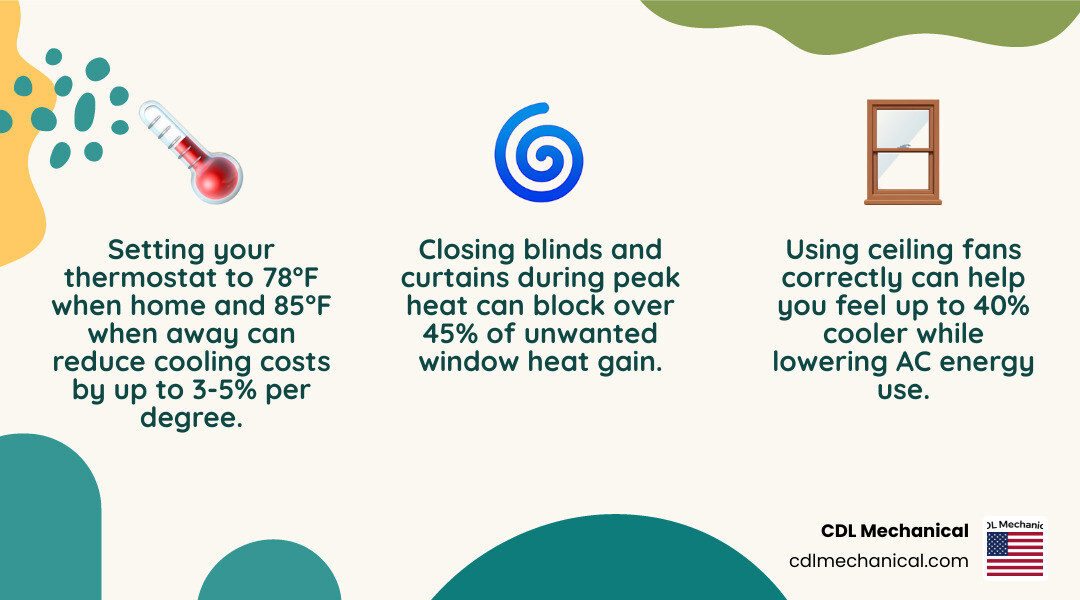
The U.S. Department of Energy recommends setting your thermostat to 78°F when you are at home and awake. While 78°F might sound warm to those who aren’t used to desert living, it is the ideal sweet spot that balances indoor comfort with reasonable energy bills. For every single degree you raise your thermostat above 75°F, you can save between 10% and 15% on your cooling energy usage. Furthermore, if you can tolerate setting your thermostat above 80°F, you could save up to an additional 3% on cooling costs for each degree raised.
When you leave your house for work or a weekend trip, there is no reason to keep cooling an empty space. Setting your thermostat to 85°F while you are away prevents your AC from running unnecessarily, yet keeps the indoor temperature within a safe range for your furniture and plants. To dive deeper into managing your indoor climate efficiently, check out our guide on the Best Thermostat Settings for Staying Cool Without Higher Power Bills.
Smart Thermostat Upgrades and Placement
If you are still using an old manual or basic programmable thermostat, upgrading to a smart model is one of the smartest moves you can make. A properly configured smart thermostat can save you roughly 8% to 10% annually on your cooling bills. These devices learn your daily schedule, track your energy habits, and automatically adjust the temperature when you leave the house.
However, a smart thermostat is only as good as its placement. If your thermostat is installed on an exterior wall, near a drafty window, or directly in the path of hot afternoon sunlight, it will register an artificially high temperature. This causes your air conditioner to run much longer and more frequently than necessary. For the most accurate readings, your thermostat should always be installed on an interior wall in a frequently used room with good natural airflow. For more tips on selecting and installing the right controls, read about Popular Thermostat Control for Summer to Save Money.
Why You Should Stop Playing Musical Chairs with Your Thermostat
One of the most persistent cooling myths is that setting your thermostat to 60°F will cool your home down faster. In reality, your air conditioner cools at the exact same rate regardless of how low you set the temperature. Setting it extremely low only forces the compressor to run longer, overcooling your home and wasting valuable energy.
We recommend adopting the “4-by-4 Rule”: if you plan to be away from your home for more than four hours, raise your thermostat by at least four degrees. This simple, automated habit prevents your system from fighting the outdoor heat when nobody is home, yet ensures it won’t take too long to cool the house back down when you return. Learn why consistency is key by reading our article to Stop Playing Musical Chairs with Your Thermostat.
Essential AC Maintenance for Peak Efficiency
An air conditioner is a highly complex mechanical system that requires regular attention to perform at its best. Just like a car, your AC will lose efficiency and eventually break down if you neglect basic maintenance. In fact, a poorly maintained air conditioner can operate up to 40% below its rated efficiency, quietly draining your bank account month after month.
Scheduling a professional HVAC tune-up in the spring is the single most effective maintenance task you can perform. During a professional tune-up, a technician will clean the outdoor condenser coil, inspect the indoor evaporator coil, check refrigerant levels, and clean the condensate drain line. A dirty evaporator coil alone can reduce system efficiency by more than 20% because the buildup of dust acts as an insulator, preventing the refrigerant from absorbing heat from your indoor air. Clearing the condensate drain is equally critical; a clogged drain line can back up and cause severe water damage to your home or trigger a system shutdown in the middle of a July heatwave. Discover the full value of professional service in our post on the 5 Benefits of Routine AC Maintenance.
How to Lower AC Bills During Summer with Regular Filter Changes
If you want to know how to lower ac bills during summer with the least amount of effort, look no further than your air filter. Your HVAC system’s air filter is designed to catch dust, pet dander, and airborne debris before it can settle on the sensitive internal components of your AC. Over time, this filter becomes clogged, restricting airflow and forcing your system’s blower motor to work twice as hard to circulate air.
Simply clearing or replacing a clogged air filter can reduce your air conditioner’s energy consumption by 5% to 15%. During the peak Arizona summer, we recommend checking your air filter every 30 days. If you have shedding pets or live in a dusty area, you may need to replace fiberglass filters monthly, while high-quality pleated filters can typically last up to 60 days. Keeping your filters clean does more than just lower your power bills; it also prevents dust from recirculating through your living spaces. Learn more about this connection in our detailed article on How HVAC Filters Affect Indoor Air Quality.
The Impact of Duct Sealing and Attic Insulation
Many homeowners focus entirely on their air conditioning unit while completely ignoring the network of ducts that distributes the cool air. According to energy experts, the average home loses about 20% to 30% of the conditioned air moving through its ductwork due to leaks, loose connections, and poor seals. When your ducts are leaking in a hot attic, you are essentially paying to cool an unoccupied attic space while your living areas remain warm.
Sealing your ductwork with mastic or specialized metal tape keeps that cool air where it belongs. Additionally, because attic temperatures in Glendale can easily exceed 140°F in the summer, adequate attic insulation is vital. About 90% of single-family homes in the United States are under-insulated. Upgrading your attic insulation to recommended levels (R-38 to R-60) can reduce your overall cooling costs by up to 20%. To understand how these invisible elements work together to save you money, read about The Secret to a Lean Mean Green HVAC Machine.
Passive Cooling Strategies to Keep the Heat Out
Your air conditioner doesn’t have to do all the heavy lifting on its own. By implementing passive cooling strategies, you can prevent outdoor heat from entering your home in the first place, drastically reducing the load on your AC system.
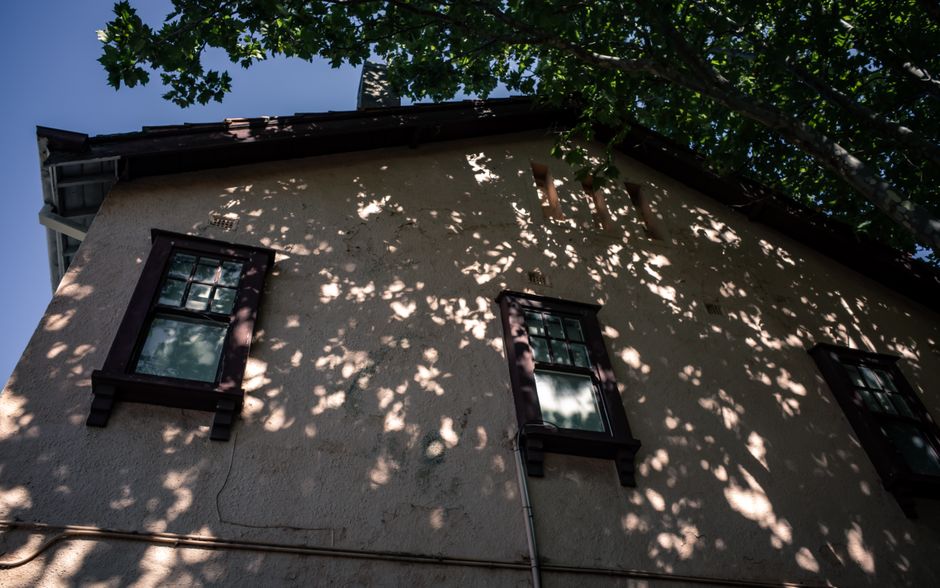
Windows are the single largest source of heat gain in a residential home. Sunlight streaming through clear, unprotected glass can quickly turn your living room into a greenhouse. Installing high-quality window treatments—such as light-colored blinds, cellular shades, or heavy drapes—and keeping them closed during the peak sun hours of 10 AM to 5 PM can reduce solar heat gain by up to 45%.
For even greater protection, consider installing exterior solar screens or planting deciduous shade trees on the south and west sides of your home. The Department of Energy notes that planting trees to shade your home and your outdoor AC unit can increase your system’s operating efficiency by up to 10%.
Air Sealing and Weatherstripping
Even if your windows are covered, hot outdoor air can still find its way inside through tiny cracks and gaps around your doors, windows, and utility penetrations. This process, known as air infiltration, constantly introduces heat and humidity into your home, forcing your AC to run longer.
Applying caulk to seal gaps around window frames and installing fresh weatherstripping on exterior doors is an inexpensive, highly effective weekend project. Proper air sealing throughout your home can reduce your heating and cooling costs by up to 20%, ensuring that the cold air you pay for stays inside where you can enjoy it.
Smart Daily Habits and Behavioral Changes
A few simple adjustments to your daily routine can yield surprising savings on your monthly utility bills. For example, knowing when to run your major appliances can prevent unnecessary heat buildup inside your home.
Using your oven or stovetop on a 110°F day releases a massive amount of heat directly into your kitchen, which your air conditioner then has to work to remove. Instead, consider cooking outdoors on a grill, using a microwave, or preparing cold meals during the hottest parts of the day. Additionally, because water heating accounts for about 18% of the average home’s energy consumption, washing your laundry in cold water and running your dishwasher only when fully loaded (and preferably after 9 PM during off-peak hours) will keep both your water heating and cooling costs in check.
The Power of Ceiling Fans
Ceiling fans are an incredibly efficient way to stay comfortable without lowering your thermostat. A typical ceiling fan uses roughly 1/60th of the energy consumed by a central air conditioner. When running, a ceiling fan creates a wind-chill effect on your skin, making the room feel up to four degrees cooler than it actually is. This allows you to raise your thermostat setting without any loss of personal comfort, potentially saving you up to 40% on your electricity costs.
Just remember the golden rule of fans: fans cool people, not rooms. Because they work by evaporating moisture from your skin rather than actually lowering the air temperature, you should always turn ceiling fans off when you leave a room to avoid wasting electricity.
Debunking Common Summer Cooling Myths
There are several widely shared “energy-saving tips” that actually end up costing you more money in the long run. The most common of these is the practice of closing supply vents in unused rooms.
Many homeowners assume that closing vents in an empty guest room redirects the cool air to the rest of the house and saves energy. However, modern central HVAC systems are designed and balanced to move a specific volume of air throughout your entire home. Closing vents increases the static pressure inside your ductwork, which can cause air leaks to expand, reduce system airflow, and even cause your evaporator coil to freeze up. To keep your system running safely and efficiently, always keep all supply vents open and completely unobstructed by furniture or drapes. To learn more about how proper airflow keeps your system healthy, read Don’t Let the Dust Settle on Your AC Performance.
When to Upgrade to a High-Efficiency AC System
While maintenance and behavioral changes can work wonders, there comes a point where continuing to repair an old, inefficient air conditioner no longer makes financial sense. If your cooling system is more than 10 to 15 years old and requires frequent repairs, it is likely time to consider an upgrade.
Air conditioner efficiency is measured by the Seasonal Energy Efficiency Ratio (SEER). Older systems installed in the early 2000s often have SEER ratings as low as 10 or 12. Upgrading from an old 10 SEER system to a modern 16 SEER system can reduce your cooling energy consumption by an impressive 38%. Modern variable-speed systems are even more efficient; instead of constantly turning completely on and off (which wastes a massive amount of electricity), variable-speed compressors modulate their capacity between 30% and 100% to match your home’s exact cooling needs. To understand how these ratings affect your monthly bills, take a look at our guide on Understanding SEER Ratings and Their Importance.
How to Lower AC Bills During Summer by Choosing the Right System
When upgrading your system, bigger is not always better. An oversized air conditioner will cool your home too quickly, leading to “short-cycling.” Short-cycling prevents the system from running long enough to properly dehumidify your indoor air, leaving your home feeling sticky and uncomfortable, while also causing premature wear on the compressor.
Working with an experienced professional ensures your new system is sized perfectly for your home’s square footage, insulation levels, and window orientations. Choosing an ENERGY STAR certified system ensures your unit meets strict federal energy efficiency guidelines, giving you peace of mind and lower bills for years to come. For insight into how often your system should be serviced to maintain this peak efficiency, consult The Ultimate Guide to HVAC Service Frequency.
Frequently Asked Questions about Summer Cooling
What is the most effective thermostat setting for a Glendale summer?
The U.S. Department of Energy recommends setting your thermostat to 78°F when you are at home and raising it to 85°F when you are away. For every degree you set your thermostat above 75°F, you can save between 10% and 15% on your cooling costs.
Does closing vents in unused rooms actually save money?
No. Closing vents increases the static pressure in your ductwork, which can force your blower motor to work harder, increase duct leaks, and potentially cause your evaporator coil to freeze. Keep all vents open and clear of obstructions to maintain proper system airflow.
How often should I change my AC filter if I have pets?
If you have shedding pets, you should check your air filter every 30 days. Pet hair and dander clog filters much faster than normal dust, which restricts airflow and forces your air conditioner to work harder, raising your monthly energy bills.
Conclusion
Figuring out how to lower ac bills during summer doesn’t have to mean suffering through the Arizona heat. By combining smart thermostat habits, basic monthly maintenance, passive cooling techniques, and professional system care, you can enjoy a cool, comfortable home all summer long without breaking the bank.
At CDL Mechanical, we are a family-owned HVAC company based right here in Glendale, AZ. We specialize in keeping desert homes cool and comfortable, and our core mission is treating our customers like family. Whether you need a seasonal tune-up to boost your system’s efficiency or a free quote on a new high-efficiency AC replacement, our team is here to help. Reach out to us today to schedule your service and keep your home comfortable all summer long with our professional AC Services.