
Why Is My AC Blowing Warm Air? Here’s What’s Going On
If you’re wondering why is my AC blowing warm air, you’re not alone — and the good news is that most causes come down to a handful of well-known problems you can actually check yourself.
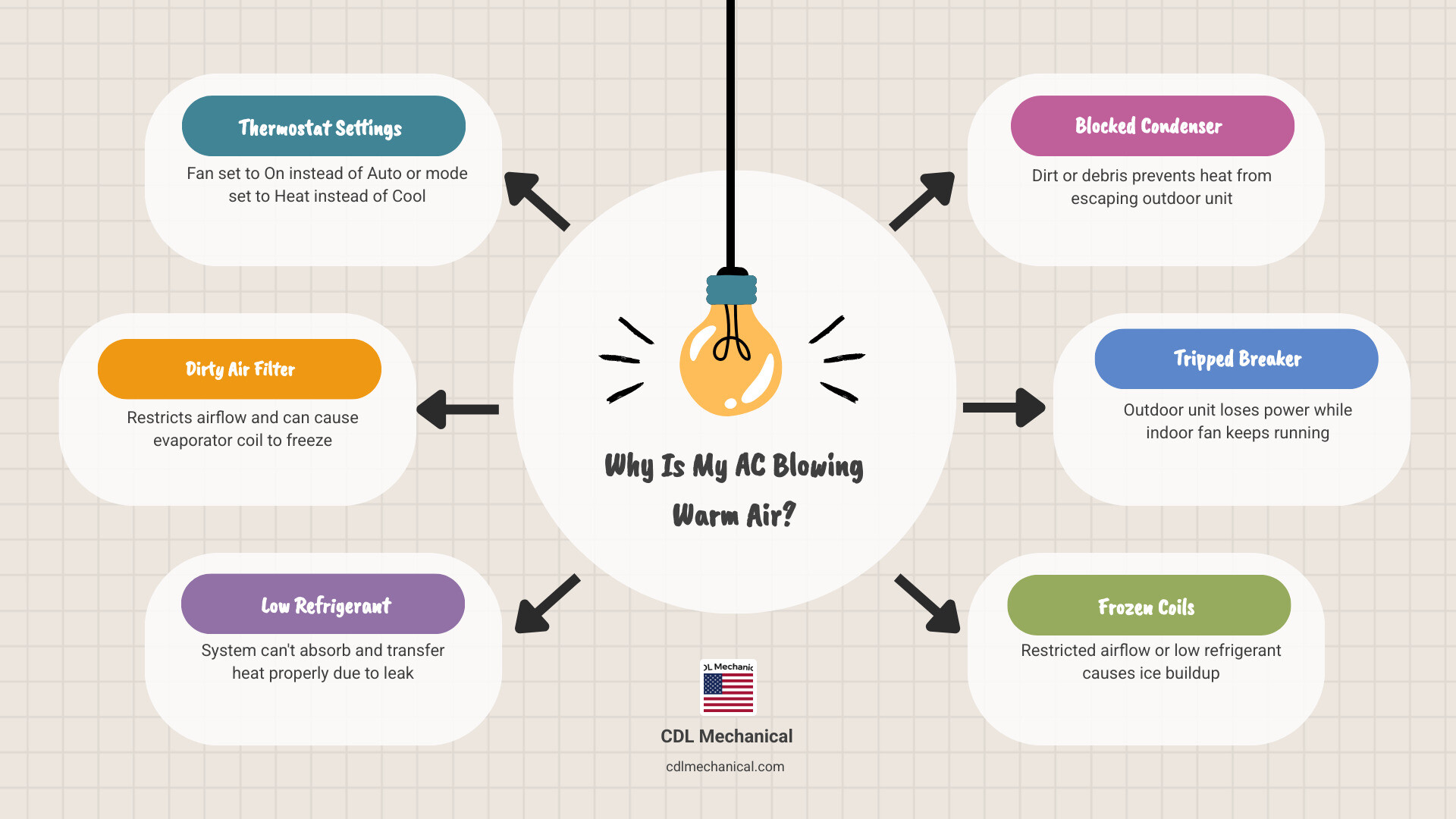
Most common reasons your AC is blowing warm air:
- Thermostat set incorrectly — Fan is set to “On” instead of “Auto,” or mode is set to “Heat” instead of “Cool”
- Dirty or clogged air filter — Restricts airflow and can cause the evaporator coil to freeze
- Low refrigerant or a refrigerant leak — The system can’t absorb and transfer heat properly
- Dirty or blocked outdoor condenser unit — Heat can’t escape the system, so cool air can’t be produced
- Tripped circuit breaker — The outdoor unit loses power while the indoor fan keeps running
- Frozen evaporator coils — Caused by restricted airflow or low refrigerant
- Failing compressor or faulty capacitor — Key mechanical components break down over time
- Clogged condensate drain line — Can trigger a safety shutoff that stops cooling
In fact, research consistently points to the outdoor condenser unit as the root cause in roughly 90% of warm air complaints — so that’s often the first place worth checking.
Picture this: it’s a scorching afternoon in Glendale, AZ, and you walk through your front door expecting that familiar rush of cool air — only to feel a wave of warm, humid air blowing from every vent. In the Arizona desert heat, that’s not just uncomfortable, it can become a real health concern fast.
I’m Joshua Michael Bartlett, founder of CDL Mechanical, and with over 20 years of hands-on experience in the HVAC trade, I’ve diagnosed and solved why is my AC blowing warm air more times than I can count. In this guide, I’ll walk you through the most common causes and what you can do about them — starting with the simplest checks.
Common Reasons Why Is My AC Blowing Warm Air
When your cooling system breaks down, it helps to understand how it is supposed to work. An air conditioner does not actually create “cold.” Instead, it functions as a heat mover. It absorbs heat from the indoor air and transfers it outside, leaving you with cooler, less humid air inside.
This magic happens via the refrigerant cycle. Refrigerant (a specialized chemical fluid) continuously cycles between your indoor evaporator coils and your outdoor condenser unit. As it travels, it changes states from a low-pressure gas to a high-pressure liquid, absorbing thermal energy from your living room and expelling it into the hot desert air outside.
If something breaks this delicate cooling chain, the heat-transfer process stops. However, your indoor blower motor will keep running, pushing uncooled, room-temperature (or even warm) air through your vents. Because about 90% of the cooling work is executed by the outdoor system, any failure in the outdoor condenser means your indoor air handler is essentially acting as a giant, glorified window fan. When this occurs, you need professional Air Conditioner Repair to restore the cycle and bring back the chill.
Thermostat Settings and Why Is My AC Blowing Warm Air
Before you panic and assume you need a brand-new system, we always recommend checking the simplest culprit: your thermostat. It is incredibly common for a thermostat setting to be bumped accidentally during cleaning or by a curious child.
- The “ON” vs. “AUTO” Fan Setting: If your thermostat fan setting is set to “ON,” the indoor blower fan runs continuously 24/7, even when the actual cooling cycle is resting. When the AC compressor turns off, the fan continues to blow room-temperature air through your ducts, making it feel like why is my AC blowing warm air is happening in waves. Switching this setting to “AUTO” ensures the fan only blows when the system is actively cooling.
- The Mode Selector: Double-check that your system is firmly set to “COOL” and not “HEAT” or “FAN.”
- Low Batteries: A fading battery in a digital thermostat can cause the device to lose connection with your outdoor unit, meaning the indoor fan runs, but the outdoor unit never gets the signal to turn on and cool the air. Replace the batteries annually to avoid this simple headache.
Dirty Air Filters and Why Is My AC Blowing Warm Air
If your thermostat is set correctly, the next step is checking your indoor air filter. A dirty, clogged air filter is the single most common maintenance issue we encounter in Glendale, AZ.
When a filter is packed with dust, pet dander, and desert pollen, it restricts airflow across the indoor evaporator coil. Without enough warm indoor air blowing over the coil, the refrigerant inside gets too cold, causing any condensation on the coil to freeze solid. Once a block of ice encases your evaporator coil, air cannot pass through it effectively, and the system can no longer absorb heat. The result? Warm air blowing out of your supply registers.
Changing your filter is the easiest maintenance step you can take. In our dusty Arizona climate, we recommend replacing your standard 1-inch filters every 30 to 60 days to protect your system from freezing up. If you’ve let it go too long and suspect a frozen coil, turn your system off completely to let it thaw, and consider reading about Finding the Best Professional AC Repair in Glendale AZ to ensure no permanent damage was done to your system.
Mechanical and Electrical Issues Causing Warm Air
If your thermostat is set correctly and your filter is sparkling clean, the problem likely lies deeper within the mechanical or electrical components of your HVAC system.
- Tripped Circuit Breakers: Your central AC system actually runs on two separate power supplies. The indoor air handler runs on one breaker, while the outdoor condenser runs on a larger, double-pole breaker. If the outdoor breaker trips due to an electrical surge or overheat, your indoor fan will keep blowing warm air, completely unaware that the outdoor unit has lost power.
- Faulty Capacitors: Think of the capacitor as a giant battery that gives your compressor and outdoor fan motor the high-voltage jolt they need to start running. In extreme desert heat, these capacitors are under immense strain and frequently fail. If you hear your outdoor unit humming but the fan isn’t spinning, a blown capacitor is the likely culprit.
- Clogged Condensate Drain Line: As your AC cools, it pulls moisture out of the air. This water collects in a drain pan and flows out through a PVC condensate line. If algae, mold, or desert dust clogs this line, the water will back up. Modern systems feature a safety float switch that automatically shuts down the cooling cycle to prevent water damage to your home, while leaving the blower fan running. For more on managing water issues, check out our guide on How to Handle a Leaking Air Conditioner.
- Compressor Failure: Often called the “heart” of your AC, the compressor pumps refrigerant through the system. If the compressor fails, the refrigerant cannot cycle, and no heat exchange can occur. A failing compressor is a serious mechanical issue that requires professional diagnostic tools to identify and address.
Low Refrigerant and Leaks
Refrigerant does not get “used up” like gasoline in a car. It operates in a closed, pressurized loop. If your system is low on refrigerant, it means you have a leak.
When refrigerant levels drop, the system cannot absorb enough heat from your home, leading to poor cooling performance and, eventually, warm air blowing from your vents. Low refrigerant also causes the pressure in your system to drop, which frequently leads to the indoor evaporator coil freezing over.
If you suspect a leak, look for these telltale signs:
- A bubbling or hissing sound coming from the indoor air handler or outdoor copper lines.
- Ice buildup on the brass refrigerant valves on your outdoor unit.
- The AC running constantly without ever reaching your thermostat’s target temperature.
Finding and sealing a refrigerant leak requires specialized EPA certification, sensitive leak detection equipment, and proper handling of chemical refrigerants. If you live in the East Valley, our experts offering AC Repair Goodyear AZ can locate the leak, repair the copper line, and recharge your system safely.
Outdoor Condenser Unit Blockages
Because your outdoor condenser unit is responsible for releasing the heat absorbed from inside your home, it needs plenty of breathing room. If the condenser coils are caked in dirt, mud, or surrounded by overgrown desert landscaping, the heat has nowhere to go.
When heat cannot escape, the compressor has to work twice as hard, running hotter and drawing more electrical current. Eventually, this thermal overload will cause the compressor to shut down entirely to protect itself from burning out, leaving your indoor system blowing warm, uncooled air.
Maintaining at least two feet of clear space around your outdoor condenser unit is vital. If you are in the West Valley, keeping your outdoor unit clear of debris is a key step, and our team specializing in AC Repair Litchfield Park AZ can help perform professional coil cleanings to keep your system breathing easy all summer long.
Simple DIY Troubleshooting Steps for Homeowners
Before you pick up the phone to call us, there are a few safe, simple troubleshooting steps you can try to see if you can resolve the issue yourself.

- Perform a Thermostat Check: Make sure the system is set to “COOL” and the fan is set to “AUTO.” Lower the temperature setting 3 to 5 degrees below the current room temperature to see if the outdoor unit kicks on. Replace the batteries if the display is blank or fading.
- Inspect the Air Filter: Pull out your return air filter. Hold it up to a light source. If you cannot see light passing through the fibers, it is clogged and needs to be replaced immediately. If you find ice on your indoor or outdoor lines, turn the AC off and switch the fan to “ON” for a few hours to let the ice melt before putting in a new filter.
- Check Your Electrical Panel: Locate your home’s main electrical panel. Look for the circuit breakers labeled “AC,” “Air Conditioner,” or “Condenser.” If a breaker has tripped, it will be sitting in the middle position between “ON” and “OFF.” Flip it completely to the “OFF” position first, then flip it back to “ON.” Note: If the breaker trips again immediately, do not reset it a second time. This indicates a direct electrical short, and resetting it repeatedly can damage your system or cause an electrical fire.
- Inspect and Clean the Outdoor Unit: Walk outside and look at your condenser. Remove any leaves, weeds, or trash blowing against the metal fins. If the coils look visibly dirty or dusty, turn off the AC power at the outdoor disconnect switch and gently rinse the coils with a garden hose using low pressure (never use a high-pressure washer, as this will bend and ruin the delicate aluminum fins).
If you have tried these steps and your system is still blowing warm air, it is time to turn the unit off to prevent further damage and consult our guide on What to Do When Your HVAC Breaks Down Unexpectedly.
Frequently Asked Questions About AC Cooling Issues
Why is my AC running but not cooling the house?
This usually means your indoor blower motor is working perfectly, but the refrigeration cycle has been interrupted. The most common reasons include a tripped outdoor breaker (powering down the compressor while the indoor fan keeps running), a severe refrigerant leak, or a failing compressor. When the refrigeration cycle stops, no heat is removed from your home, but the fan will keep circulating warm room-temperature air. To understand how getting this fixed helps your home, read about the 5 Benefits of AC Repair Service.
Can a dirty air filter cause warm air?
Yes, absolutely. A severely clogged air filter restricts the airflow your system needs to function. Without warm air passing over the cold evaporator coils, the moisture on the coils freezes. This block of ice acts as an insulator, stopping the refrigerant from absorbing heat. The air blowing into your home will quickly turn warm, and the restricted airflow puts massive mechanical strain on your blower motor and compressor. For homeowners in the Peoria area, you can learn more about keeping your system running efficiently by checking out How to Find Affordable AC Repair in Peoria AZ.
How do I know if my AC has a refrigerant leak?
Common signs of a refrigerant leak include a noticeable drop in cooling performance, a hissing or gurgling sound near your indoor air handler or outdoor copper lines, and ice building up on the copper lines or indoor evaporator coil. Because low refrigerant causes the compressor to run hotter and longer, ignoring a leak can lead to complete compressor failure. If you are trying to decide whether to patch up a leak or invest in a new system, take a look at our Can Your Old AC Make It Another Summer Repair vs Replace Mini Guide.
Conclusion
When your air conditioner starts blowing warm air in the middle of a hot summer, it can feel incredibly stressful. However, by understanding the common culprits — from simple thermostat settings and dirty filters to more complex electrical or refrigerant issues — you can approach the situation with confidence.
At CDL Mechanical, we are a family-owned HVAC company based right here in Glendale, AZ. We live and work in the same desert heat you do, and our ultimate goal is to treat every customer like a member of our own family. We pride ourselves on providing honest, reliable, and expert service without any hidden catches.
If you have walked through the basic troubleshooting steps and your AC is still blowing warm air, don’t sweat it out alone. Let our family take care of yours. If you are in the Goodyear area, you can learn How to Find Affordable AC Repair in Goodyear AZ Today or reach out directly to schedule a professional Air Conditioner Repair with our experienced team. We are here to get your cool air flowing again quickly and dependably!