
Why Arizona Homeowners Can’t Afford to Miss Out on HVAC Rebates in 2026
Arizona energy rebates for HVAC upgrades can put thousands of dollars back in your pocket — and in 2026, more programs are available than ever before. Between federal tax credits, the state-run Efficiency Arizona program, and local utility rebates from providers like SRP and APS, eligible homeowners can access up to $14,000 or more in combined savings when upgrading to a high-efficiency heating and cooling system.
Here’s a quick look at what’s available:
| Program | Who It’s For | Max Benefit |
|---|---|---|
| Federal 25C Tax Credit | Most homeowners | Up to $2,000/year for heat pumps |
| Efficiency Arizona (HEAR) | Low-to-moderate income | Up to $8,000 for heat pumps |
| Efficiency Arizona (HOMES) | Performance-based savings | Up to $4,000–$8,000 |
| SRP Rebates | SRP customers | Up to $1,125 for AC units |
| APS Rebates | APS customers | Varies by upgrade type |
Living in Glendale and the greater Phoenix area means your HVAC system runs harder and longer than almost anywhere else in the country. Triple-digit summers push aging systems to their limits — and the energy bills that follow can feel overwhelming. One homeowner near Tucson reported their electric bills dropped by 40% after upgrading through a state-backed energy program. That kind of savings is exactly what these rebates are designed to make possible.
The challenge is that most homeowners don’t know these programs exist. In fact, only around 800 rebates have been issued statewide through Efficiency Arizona — meaning thousands of eligible households are leaving serious money on the table.
This guide breaks down every major rebate and tax credit available to Arizona homeowners in 2026, how to qualify, and how to combine programs for maximum savings.
I’m Joshua Michael Bartlett, founder of CDL Mechanical and an HVAC professional with over 20 years of hands-on experience in the trade — including helping homeowners in the Glendale area navigate arizona energy rebates for HVAC upgrades to make smart, lasting investments in their homes. Whether you’re replacing an aging system or exploring electrification for the first time, I’ll walk you through everything you need to know.
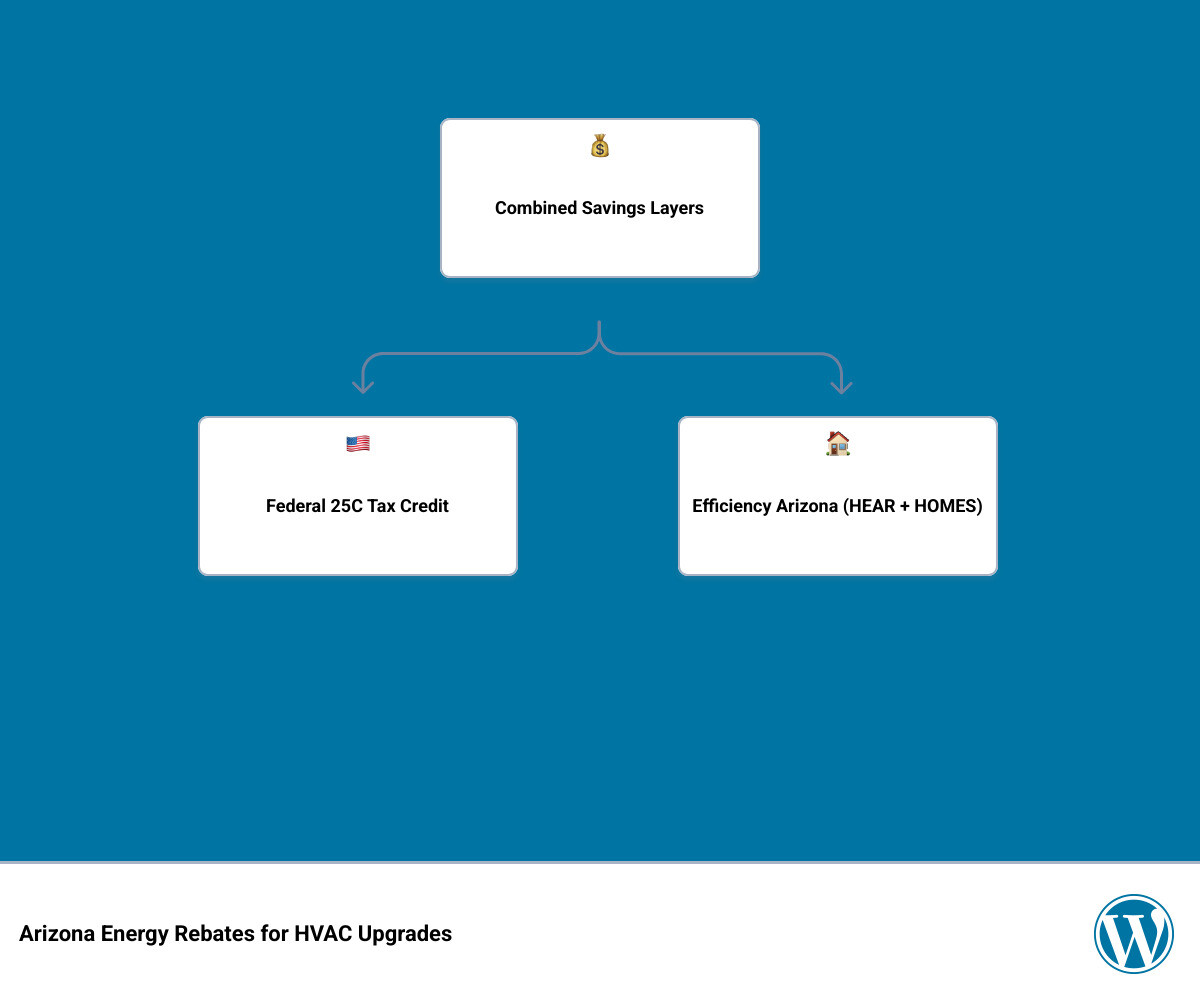
Navigating Arizona Energy Rebates for HVAC Upgrades in 2026
When we talk about upgrading your home’s comfort, we aren’t just talking about swapping out an old box for a new one. In 2026, the landscape of home heating and cooling has shifted toward high-efficiency electrification. For us here in the Valley, that primarily means the rise of advanced heat pumps and high-SEER2 central air conditioners.

A heat pump is often the “star of the show” for these rebate programs. Unlike traditional units that create heat, a heat pump moves it. In the summer, it pulls heat out of your home; in our mild Arizona winters, it reverses the process. Because these systems are incredibly efficient, they qualify for the largest portion of available funding.
To qualify for most arizona energy rebates for HVAC upgrades, your new equipment must meet specific efficiency standards. Since January 2023, the industry has moved to SEER2 (Seasonal Energy Efficiency Ratio 2) ratings, which are more stringent than the old SEER standards. Generally, to see the big rebate dollars, you’ll want to look for ENERGY STAR® certified equipment. If you’re curious about how these numbers impact your wallet, Understanding Seer Ratings And Their Importance is a great place to start.
Eligibility Requirements for Arizona Energy Rebates for HVAC Upgrades
Eligibility isn’t a “one size fits all” situation. Most programs determine your rebate amount based on three main factors:
- Area Median Income (AMI): This is a big one for the Efficiency Arizona program. Your household income compared to the median for your county (like Maricopa or Pinal) determines if you get 100% of costs covered, 50% covered, or if you should focus on tax credits instead.
- Property Type: Most rebates are for existing primary residences. While some programs have recently expanded to include renters and landlords, new construction is typically excluded from the 25C tax credit.
- Equipment Specifications: To get the rebate, the unit must be high-efficiency. For example, a central AC unit might need to meet a specific SEER2 rating, while a heat pump must be ENERGY STAR certified. You can find more details on What Hvac Systems Qualify For Tax Credits And Rebates to ensure your chosen system meets the mark.
Benefits of High-Efficiency Upgrades
Beyond the immediate “cash back” from rebates, why should you care about high-efficiency?
- Lower Bills: Replacing an HVAC system that is 10 to 15 years old with a modern ENERGY STAR unit can reduce your cooling costs by 20% to 40%.
- Improved Comfort: Modern systems often use variable-speed technology. Instead of blasting on and off like a jet engine, they ramp up and down smoothly, maintaining a consistent temperature and better humidity control.
- Environmental Impact: High-efficiency systems use less electricity and often utilize newer refrigerants with lower environmental impact, reducing your home’s carbon footprint.
- Durability: Units built for high efficiency often feature better components that can withstand the 115-degree Glendale afternoons with less wear and tear.
Maximizing Federal Tax Credits Under Section 25C
While rebates are “point-of-sale” or “cash-back,” tax credits are claimed when you file your annual returns. The Energy Efficient Home Improvement Credit (Section 25C) is a homeowner’s best friend through 2032.
Under Section 25C, you can claim a tax credit of 30% of the total cost of qualified energy-efficient improvements. There is an annual cap of $3,200, but the “sub-limits” are what matter for HVAC:
- Heat Pumps: You can claim up to $2,000 per year.
- Central Air Conditioners: You can claim up to $600.
- Heat Pump Water Heaters: Also eligible for up to $2,000.
One of the best things about the 25C credit is that it resets every year. If you install a heat pump this year and a heat pump water heater next year, you can claim the $2,000 credit both times! For a deeper dive into how these federal changes affect you, check out What You Need To Know About Hvac Changes In 2025.
Understanding the 25D Residential Clean Energy Credit
If you are going “all in” on green energy, the Section 25D credit covers 30% of the cost for solar-powered HVAC systems and geothermal heat pumps. Unlike the 25C credit, Section 25D has no annual dollar limit and can even cover battery storage if you’re looking to keep your AC running during a summer blackout.
The Efficiency Arizona Program: HEAR and HOMES Rebates
The state-administered Efficiency Arizona program is the “heavy hitter” for arizona energy rebates for HVAC upgrades. Funded by the Inflation Reduction Act, this program offers up to $14,000 in total rebates per household.
The program is split into two main pathways:
- Low-Income Households (Below 80% AMI): You can have 100% of the cost of a heat pump covered, up to $8,000.
- Mid-Income Households (80% to 150% AMI): You can have 50% of the cost covered, up to $8,000.
The Home Electrification and Appliance Rebate (HEAR)
HEAR is all about moving away from gas and toward efficient electric appliances. These are often point-of-sale discounts, meaning the money comes off the price right at the start.
- Heat Pump for Space Cooling/Heating: Up to $8,000.
- Heat Pump Water Heater: Up to $1,750.
- Electric Load Service Center (Breaker Box): Up to $4,000.
- Electric Wiring: Up to $2,500.
- Weatherization (Insulation/Air Sealing): Up to $1,600.
This is a massive opportunity for residents in cities like Peoria or Surprise to modernize their homes without the massive upfront burden.
The Home Efficiency Rebates (HOMES) Program
The HOMES program is slightly different. Instead of being tied to a specific appliance, it’s based on performance. If you do a whole-home retrofit that reduces your energy usage by 20% to 35% (modeled or measured), you can qualify for rebates ranging from $2,000 to $8,000 depending on your income level and the amount of energy saved. This is particularly useful for multi-family property owners or those doing extensive renovations.
Local Utility Incentives for Glendale and Phoenix Homeowners
Even if you don’t qualify for the income-based state rebates, our local utility companies offer fantastic “stackable” incentives.
SRP (Salt River Project)
SRP is very active in helping customers reduce demand. Their Cool Cash program is a staple for Glendale residents.
- Air Conditioning Rebate: Up to $1,125 for new energy-efficient units.
- Duct Repair: Up to $400. This is vital because leaky ducts in Glendale attics (which can hit 140°F!) can waste 20% to 30% of your cooled air.
- Insulation: Up to $600.
- Smart Thermostats: Up to $100 through the “Bring Your Own Thermostat” program.
APS (Arizona Public Service)
APS offers similar incentives focused on system “tune-ups” and high-efficiency replacements. They prioritize duct sealing and attic insulation, which are the first lines of defense against the desert sun.
Other Arizona Utilities
- TEP/UES: Offer rebates for heat pumps and AC tune-ups for customers in the Tucson and surrounding areas.
- Mohave Electric: Provides specific incentives for mini-split systems, which are perfect for sunrooms or home offices.
When choosing your new system, it’s important to know How To Choose The Right Ac System so you pick one that qualifies for these specific utility checks.
How to Stack Incentives and Apply for Savings
One of the most common questions we get at CDL Mechanical is: “Can I use more than one?” The answer is a resounding YES, with a few rules.
You can typically “stack” a utility rebate (like SRP) with a federal tax credit (25C). For example, if you install a qualifying heat pump, you might get $1,125 back from SRP and a $2,000 tax credit from the IRS.
However, if you are using the Efficiency Arizona (HEAR) rebate, you must subtract that rebate amount from the total cost before calculating your 30% federal tax credit. Even with that rule, the total out-of-pocket cost is significantly lower. We also offer financing options to help cover the remaining balance, making these upgrades accessible for almost any budget.
How to Apply for Arizona Energy Rebates for HVAC Upgrades
The application process depends on the “pathway” you choose:
- The Contractor Pathway (Recommended): This is for major upgrades like HVAC. You’ll work with an approved contractor (like us!) who helps you submit the application to the Efficiency Arizona portal. We’ll perform an assessment, complete the work, and ensure a post-installation inspection is scheduled.
- The Retail Pathway: This is mostly for appliances like heat pump dryers. You fill out a Retail Interest Form, receive a coupon, and use it at a participating store.
- Documentation: Keep everything. You will need your utility bills, proof of income (for HEAR), equipment invoices, and the AHRI certificate for your new unit.
- Timeline: For utility rebates, you usually have about six months from the date of installation to apply. For state rebates, it’s best to get pre-approved before the work begins.
Frequently Asked Questions about Arizona HVAC Rebates
Can renters or landlords utilize these energy rebates?
Yes! The Efficiency Arizona program specifically includes pathways for renters (with landlord approval) and owners of rental properties. Landlords can utilize these rebates to improve their property value while lowering the energy burden on their tenants.
Is it possible to combine utility rebates with federal tax credits?
Absolutely. This is the most common way our customers save money. Just remember that the tax credit is based on the final price you paid after any “instant” rebates were applied.
What equipment ratings are required for 2026 rebate eligibility?
For most programs in 2026, equipment must be ENERGY STAR® certified. For air conditioners, this usually means a SEER2 rating of 16 or higher, though specific utility programs may have different requirements. Always check the AHRI (Air Conditioning, Heating, and Refrigeration Institute) certificate to confirm the rating of the specific “match” of indoor and outdoor units.
Conclusion
Upgrading your HVAC system in the Arizona desert is a major decision, but with arizona energy rebates for HVAC upgrades, it doesn’t have to be a financial burden. By layering federal tax credits, state rebates, and utility incentives, you can transform your home into a high-efficiency sanctuary.
At CDL Mechanical, we’ve spent years serving Glendale, Peoria, Scottsdale, and the entire Phoenix metro area. We’re a family-owned business, and we treat our customers like family. That means we don’t just install a unit and leave; we help you navigate the paperwork and technical requirements to ensure you get every dollar you’re entitled to.
If your AC is over 10 years old, or if you’re tired of those $500 summer electric bills, now is the time to act. With only a few hundred rebates claimed so far in a state of millions, the funding is there — you just have to grab it. If you’re ready to see What Hvac Systems Qualify For Tax Credits And Rebates for your specific home, give us a call. Let’s keep you cool while keeping your money where it belongs: in your pocket.