
The Cold Hard Truth About How High Efficiency Systems Reduce Summer Costs in Glendale, AZ
How high efficiency systems reduce summer costs comes down to one simple idea: they do more cooling while using less electricity — and in Glendale’s brutal summer heat, that difference shows up fast on your utility bill.
Here is a quick breakdown of how it works:
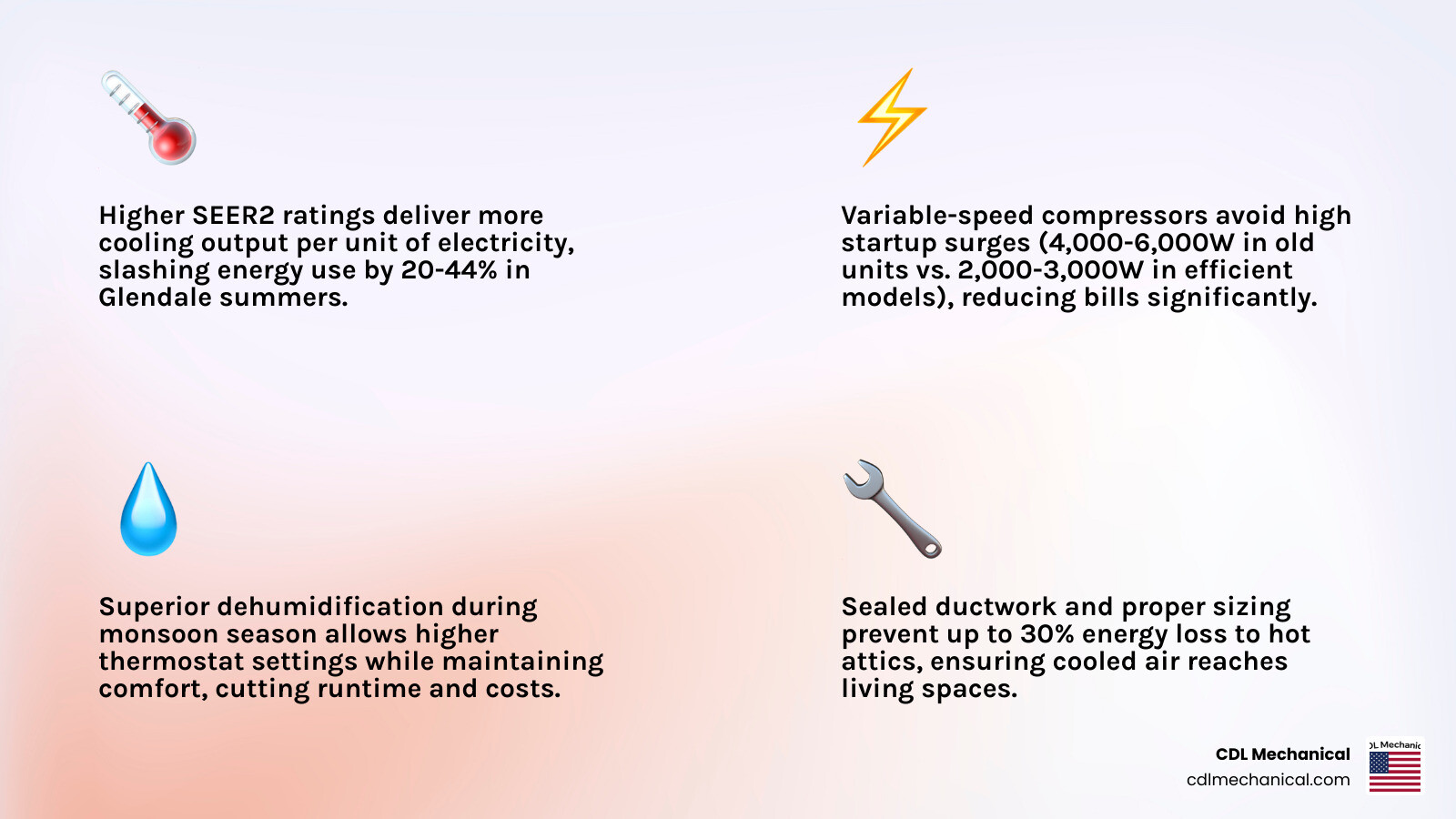
- Higher SEER2 ratings mean the system produces more cooling per unit of electricity used
- Variable-speed compressors run at lower power levels instead of cycling on and off at full blast, cutting startup energy spikes
- Better dehumidification means you do not need to crank the thermostat down as far to feel comfortable
- Smart thermostat integration automatically adjusts temperatures based on when you are home, saving energy around the clock
- Less frequent cycling reduces wear and the high-wattage surges that drive up your bill (up to 4,000–6,000W at startup for older units vs. 2,000–3,000W for high-efficiency models)
- Proper sizing and sealed ductwork ensure conditioned air actually reaches your living space instead of leaking into a 140°F attic
When you add it all up, upgrading from an older, low-efficiency system to a modern high-efficiency unit can reduce your monthly cooling costs by 20% to 44% — a meaningful number when your AC is running nearly non-stop from May through September.
Nearly half of your home’s total energy use goes straight to heating and cooling. In Glendale, where air conditioning can account for 40% to 70% of your summer electricity bill, the efficiency of your system is not a small detail. It is the single biggest lever you have on your energy costs.
I’m Joshua Michael Bartlett, founder of CDL Mechanical, and with over 20 years in the HVAC trade — much of it spent in Arizona’s extreme desert climate — I have seen how understanding how high efficiency systems reduce summer costs can transform what a homeowner pays every single month. In the sections below, I will walk you through everything you need to know to make a smart, informed decision for your home.
How high efficiency systems reduce summer costs in Glendale
Living in the West Valley, from Surprise to Avondale and everywhere in between, we all know that the sun is relentless. By the time May 2026 rolls around, we are already bracing for those triple-digit afternoons. When we talk about how high efficiency systems reduce summer costs, we are looking at the evolution of cooling technology.
In the past, an air conditioner was either “on” or “off.” It was like driving a car that only had two settings: parked or floor-it. Modern high-efficiency systems are much smarter. They use advanced engineering to maintain a steady, comfortable temperature without the massive energy spikes associated with older units.
Why SEER2 ratings are key to how high efficiency systems reduce summer costs
If you have been researching new units, you have likely seen the term SEER2. This stands for Seasonal Energy Efficiency Ratio 2. It is basically the “miles per gallon” rating for your air conditioner. The higher the number, the more efficient the unit.
As of 2025 and moving into 2026, the Department of Energy has tightened the rules. In the Southwest, the minimum standard is now SEER 15, but to truly see a return on your investment, we often recommend looking at SEER 16, 18, or even 20+.
Understanding SEER Ratings and Their Importance is the first step in realizing that a system with a SEER rating of 20 can cut your cooling costs nearly in half compared to a 10-year-old unit. When you consider that your AC is responsible for up to 70% of your summer power bill, that 50% reduction is massive. To stay ahead of the curve, it is vital to stay informed on What You Need to Know About HVAC Changes in 2025 as these standards continue to evolve.
Managing humidity and how high efficiency systems reduce summer costs
While we often joke that “it’s a dry heat,” anyone who has lived through a Glendale monsoon knows that humidity can make 105°F feel much worse. High-efficiency systems are significantly better at moisture removal.
Standard units often cycle off before they have had a chance to properly dehumidify the air. This leaves you feeling “sticky,” which usually leads to you lowering the thermostat even further. Every degree you drop that thermostat can increase your energy costs by 10% to 15%. High-efficiency systems with variable-speed compressors run for longer cycles at lower speeds, which pulls more moisture out of the air. This allows you to feel comfortable at 78°F instead of 72°F, which is a major factor in how high efficiency systems reduce summer costs.
High-Performance Features That Slash Utility Bills
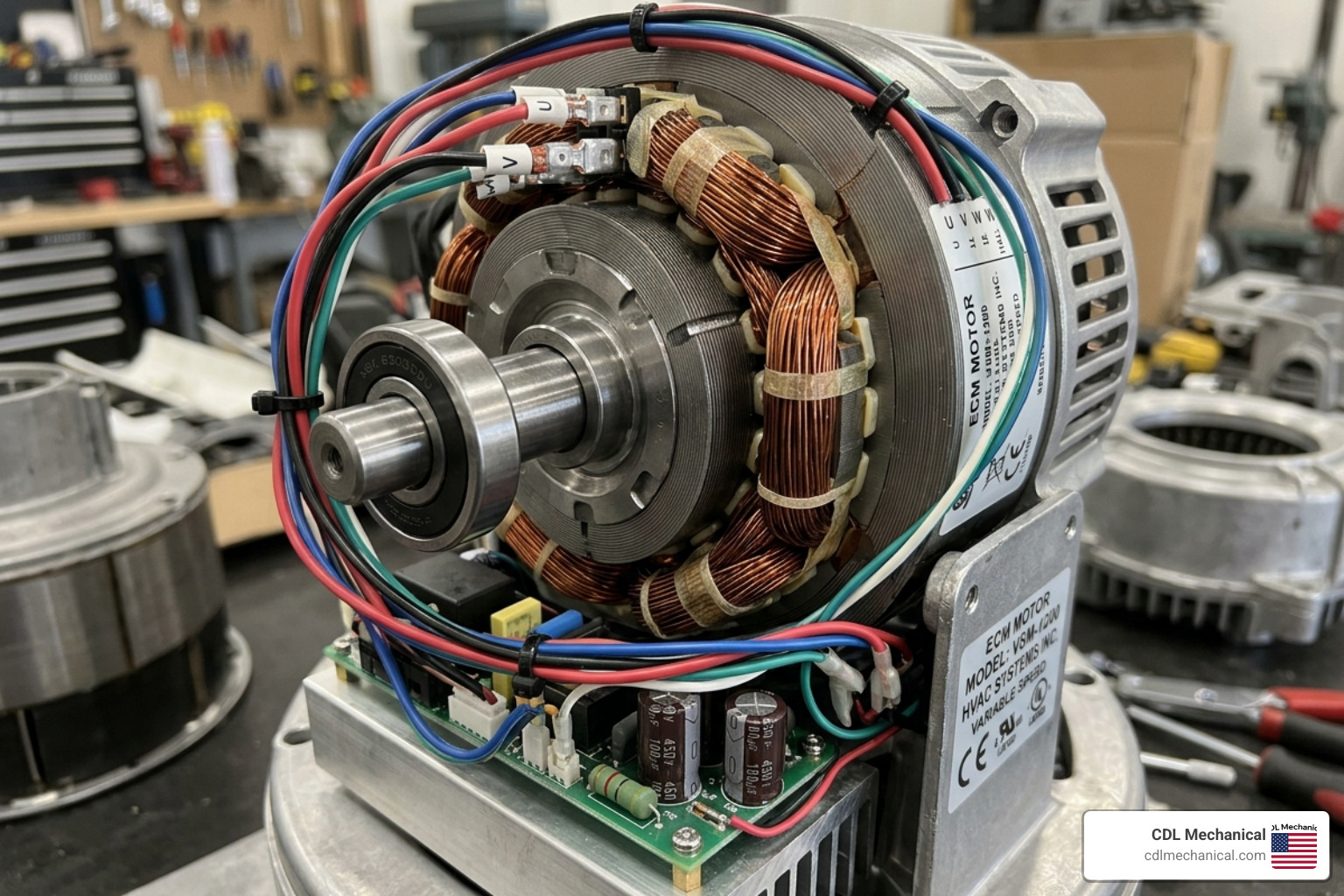
What actually makes these machines “high efficiency”? It isn’t just a sticker on the side of the box. It is the technology inside that does the heavy lifting.
- Variable-Speed Technology: This is the “secret sauce.” Instead of running at 100% capacity all the time, a variable-speed motor can drop down to 25% or 30% of its maximum speed. This uses 75-80% less energy when the full cooling power isn’t needed.
- Two-Stage Cooling: Think of this as having a “high” and “low” gear. On a 90-degree day in Peoria, the unit stays in low. When it hits 115°F in Phoenix, it shifts into high.
- Smart Thermostats: These are the brains of the operation. By learning your schedule and using geofencing to know when you’ve left the house, they can save the average high-usage home about $100 per year.
Finding the Best Thermostat Settings for Staying Cool Without Higher Power Bills is a game-changer. Pairing your new system with a Popular Thermostat Control for Summer to Save Money ensures that you aren’t paying to cool an empty house while you’re at work in Scottsdale or Tempe.
Maximizing Efficiency Through Proper Installation and Maintenance
You could buy the most expensive, high-efficiency unit on the market, but if it is installed poorly, you might as well be throwing money out the window. Proper installation and sizing are critical. An oversized system will “short-cycle,” turning on and off too quickly, which kills efficiency and wears out the parts.
We perform detailed load calculations that factor in your square footage, the number of windows you have, and your insulation levels. This ensures your system is the “Goldilocks” fit—just right.
Furthermore, we can’t talk about how high efficiency systems reduce summer costs without mentioning the “envelope” of your home.
- Duct Sealing: Leaky ducts can waste 20% to 30% of your conditioned air. In Arizona, where attics can reach 150°F, a leak in the ductwork is a disaster for your wallet.
- Attic Insulation: This is your home’s thermal barrier. If your insulation is thin, your high-efficiency AC has to work twice as hard to fight the heat radiating through the ceiling.
Maintaining these components is The Secret to a Lean Mean Green HVAC Machine. Check out the comparison below to see the real-world impact of efficiency:
| Feature | Standard System (10+ Years Old) | High-Efficiency System (2026 Model) |
|---|---|---|
| SEER/SEER2 Rating | 10 – 13 SEER | 16 – 22+ SEER2 |
| Compressor Type | Single-Stage (On/Off) | Variable-Speed or Two-Stage |
| Startup Wattage | 4,000 – 6,000 Watts | 2,000 – 3,000 Watts |
| Humidity Control | Poor (Short Cycles) | Excellent (Longer, slower cycles) |
| Estimated Savings | Baseline | 20% to 44% Monthly Reduction |
| Lifespan | 10 – 15 Years | 15 – 20 Years (with maintenance) |
Leveraging Arizona Rebates and Federal Tax Credits
One of the biggest hurdles to upgrading is the initial investment. However, in 2026, there are more ways than ever to offset those costs. Between federal programs and local utility incentives, you can get a significant portion of your upgrade “paid for” through savings and credits.
- Inflation Reduction Act (IRA): This federal program provides substantial tax credits for high-efficiency HVAC upgrades. You can often claim up to $600 for high-efficiency central AC or up to $2,000 for qualified heat pumps.
- APS and SRP Rebates: Local utilities in the Phoenix metro area want you to use less energy because it reduces the strain on the grid. They offer various rebates for duct sealing, smart thermostats, and high-efficiency unit installations.
Navigating these can be tricky, which is why we’ve put together The Arizona Homeowners Guide to Inflation Reduction Act Benefits and The Ultimate Guide to Arizona Energy Rebates for HVAC Upgrades. If you’re considering a transition to a more versatile system, you should also look into How to Get Paid for Upgrading to a Heat Pump in Arizona. Knowing What HVAC Systems Qualify for Tax Credits and Rebates before you buy ensures you don’t leave money on the table.
Frequently Asked Questions about High-Efficiency Cooling
How much can I save by upgrading to a high-efficiency AC?
While every home is different, the data shows that switching from a SEER 13 unit to a SEER 20 unit can cut your cooling costs by nearly 50%. For a typical 2,000-square-foot home in Glendale, this can equate to roughly $80 to $100 in savings per month during the peak of summer. Over five years, that is $5,000 back in your pocket.
What is the best SEER2 rating for the Glendale climate?
For our extreme heat, we generally recommend a minimum of SEER2 16. However, if you plan on staying in your home for more than five years, jumping to an 18 or 20 SEER2 unit provides a much faster return on investment because our cooling season is so long and intense.
Do high-efficiency systems last longer than standard units?
Yes, generally they do. Because high-efficiency systems use variable-speed motors, they don’t experience the “clunk” and mechanical stress of slamming on and off dozens of times a day. They ramp up and down smoothly, which leads to less wear and tear on the compressor and fan motors. With proper maintenance, these systems often last 15 to 20 years.
Conclusion
At CDL Mechanical, we aren’t just technicians; we are your neighbors. As a family-owned business in Glendale, AZ, we understand the stress that a rising summer power bill can put on a household. We’ve seen the “sticker shock” of July electricity statements, and we take pride in helping our community find relief.
Understanding how high efficiency systems reduce summer costs is about more than just numbers—it’s about peace of mind. It’s about knowing that you can keep your family cool and comfortable without dreading the mail carrier’s arrival. Whether you are in Buckeye, Sun City, or Chandler, we are here to treat you like family and ensure your home is a desert oasis.
If you are ready to stop overpaying for the privilege of staying cool, we are ready to help. For more information or to see how we can transform your home’s comfort, check out our Glendale AC services and let’s get your home running at peak efficiency.