
Why Glendale Homeowners Can’t Afford to Skip Spring AC Prep
Getting your cooling system ready for warm weather is one of the most important things you can do as a homeowner in Glendale, AZ — and the window to do it right is shorter than most people think.
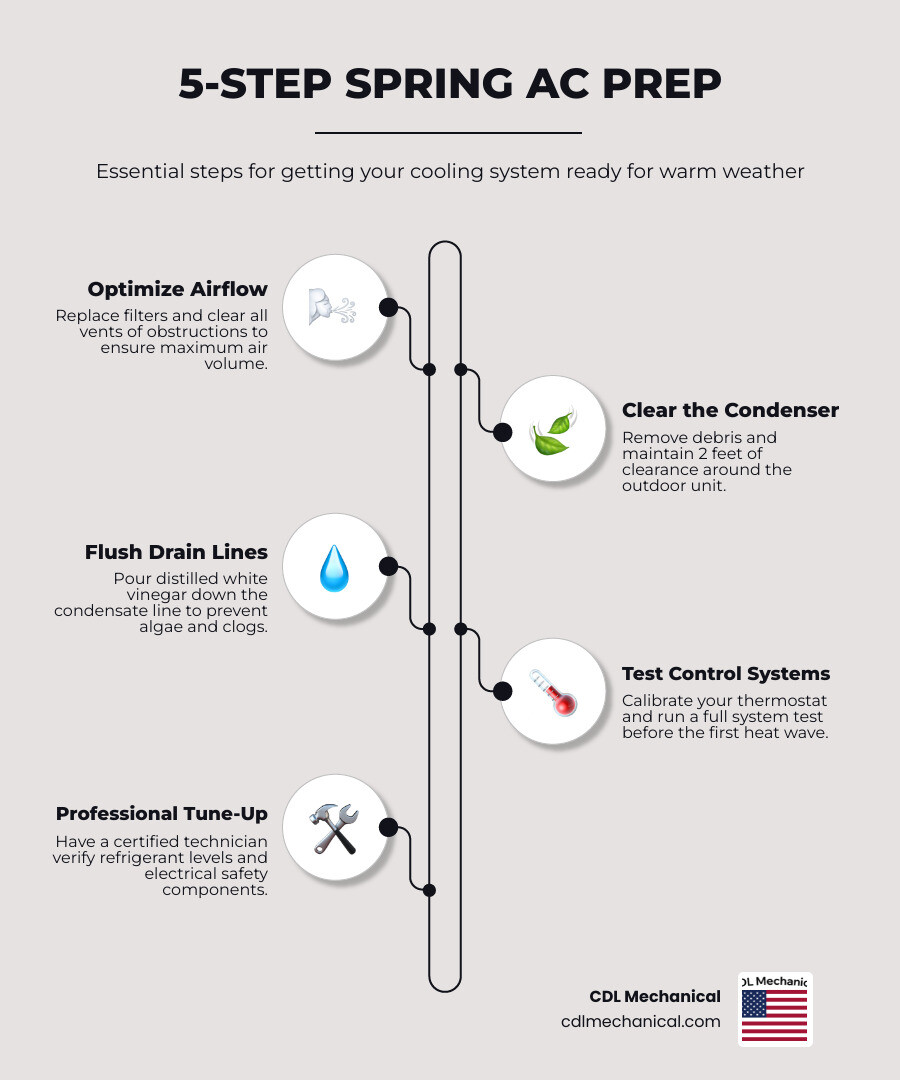
Here is a quick overview of the core steps:
- Replace your air filter — Check it monthly; replace 1-inch filters every 30 days during peak season
- Clear the outdoor condenser unit — Remove debris and maintain at least 2 feet of clearance on all sides
- Clean the condensate drain line — Pour distilled white vinegar down the line monthly to prevent algae clogs
- Test your thermostat — Switch to cooling mode and set it 5 degrees below room temperature to confirm it responds correctly
- Inspect vents and ductwork — Make sure all registers are open and unobstructed; look for visible tears or disconnected sections
- Schedule a professional tune-up — Have a certified technician check refrigerant levels, clean coils, and test electrical components
- Check refrigerant lines — Look for oily residue or listen for a faint hissing sound near the outdoor unit
- Rinse condenser fins — Use a gentle garden hose spray; never use a pressure washer
- Seal air leaks — Apply weatherstripping or caulk around doors and windows to reduce the cooling load
- Run a full system test — Turn the system on for several hours before the first heat wave to catch weak airflow or unusual noises early
In Glendale and the greater Phoenix area, summer does not ease in gently — it arrives fast and stays hard. When temperatures regularly push past 110°F, an air conditioner that was not prepared in the spring is not just uncomfortable to deal with; it is a system that is already running on borrowed time. Research consistently shows that roughly 80% of AC failures during the first major heat wave are entirely preventable with basic spring preparation. Yet every year, thousands of homeowners flip the switch on a dormant system and hope for the best.
This guide walks you through everything — from the simple DIY tasks you can do this weekend to the professional checks that protect your investment, your comfort, and your warranty.
I’m Joshua Michael Bartlett, owner of CDL Mechanical and an HVAC professional with over 20 years of hands-on experience helping Texas and Arizona homeowners navigate exactly this challenge of getting your cooling system ready for warm weather before the heat hits. I’ve seen what skipping spring prep costs families — and I’ve built this guide to help you avoid that entirely.
Why Getting Your Cooling System Ready for Warm Weather is Essential
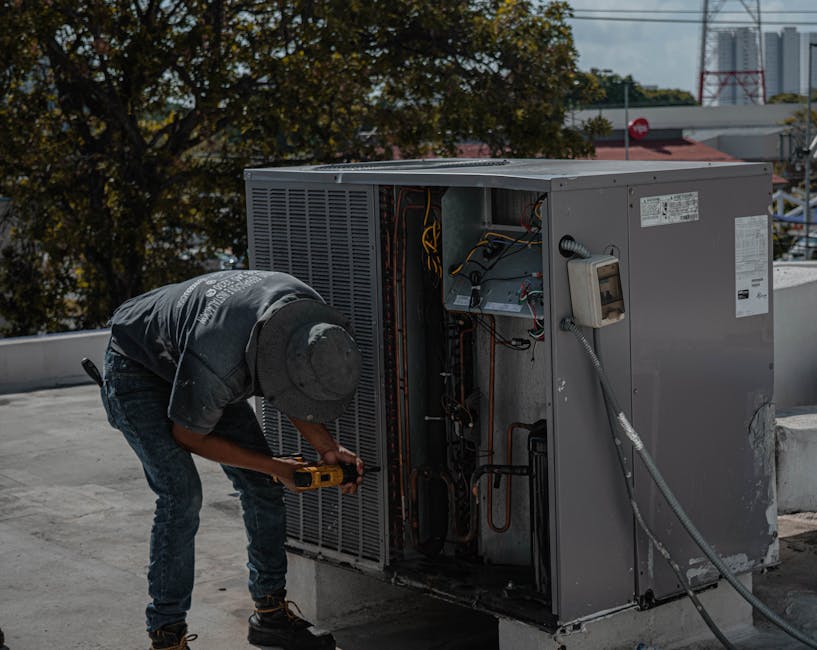
Living in the “Valley of the Sun” means our air conditioners work harder and longer than systems in almost any other part of the country. When you are getting your cooling system ready for warm weather, you aren’t just performing a chore; you are ensuring your home remains a safe sanctuary.
The physics of cooling relies heavily on heat transfer. Your AC doesn’t actually “create” cold; it removes heat from your indoor air and dumps it outside. For this to happen efficiently, your system needs to be spotless. Statistics show that dirty coils can reduce heat transfer efficiency by 10% to 30%. This means your unit has to run longer and work significantly harder to achieve the same temperature, leading to “death by a thousand cuts” for your wallet through spiked utility bills.
Furthermore, roughly 80% of air conditioning failures that occur during the first major heat wave are entirely preventable. Most systems fail on the hottest day of the year not by coincidence, but because that is when marginal components—like a weakening capacitor or a slightly low refrigerant charge—finally give out under peak load stress.
By investing time in 5 Benefits of Routine AC Maintenance, you can enjoy:
- Lower Utility Bills: A clean system can lower energy consumption by 10% to 25%.
- Extended Equipment Life: Well-maintained systems can last 15 to 20 years, whereas neglected ones often fail around year 10.
- Improved Indoor Air Quality: Removing dust and mold from coils and filters keeps your family breathing easier.
- Warranty Protection: Most major manufacturers require proof of annual professional maintenance to honor warranty claims.
| Feature | Maintained System | Neglected System |
|---|---|---|
| Energy Efficiency | Peak (100% potential) | 10-30% loss from dirty coils |
| Lifespan | 15–20 years | 10–12 years |
| Breakdown Risk | Low (80% less likely) | High during first heat wave |
| Airflow | Strong and consistent | Weakened by clogs/leaks |
The Best Time for Spring AC Maintenance
In the Phoenix area, timing is everything. We recommend the “Spring Window”—specifically March and April. Scheduling your Spring AC Tune-Up Checklist during these months allows you to beat the late-May rush. By the time the first triple-digit day hits in May or June, HVAC companies are often booked for days with emergency calls. Early diagnostics in the spring ensure that if a part needs to be ordered, it arrives while the weather is still pleasant, rather than during a 115°F emergency.
The Financial Impact of Skipping Tune-Ups
Many homeowners view maintenance as an optional expense, but it is actually the cheapest insurance you can buy. Wasted electricity from an inefficient system can easily add $100 or more to your seasonal cooling costs. Worse, a failed compressor—often caused by the strain of dirty coils or low refrigerant—can be a massive financial blow. Joining a structured HVAC Maintenance Plan helps spread out the care and ensures you never miss a critical service window, keeping your system in compliance with manufacturer warranties.
DIY Tasks for Getting Your Cooling System Ready for Warm Weather
While technical tasks require a professional, there are several vital steps you can take to assist in getting your cooling system ready for warm weather. These DIY actions focus on maximizing airflow and protecting the physical integrity of the unit.
One of the most common mistakes we see is homeowners using a pressure washer on their outdoor condenser. While it’s tempting to blast away the desert dust, the high pressure will bend the delicate aluminum fins, permanently restricting airflow. Always use a gentle garden hose instead. Another mistake is closing vents in unused rooms. This is a myth; it actually increases static pressure in the ductwork, which can damage the blower motor and reduce overall efficiency.
Air Filter Management and Duct Inspection
Your air filter is the “lungs” of your system. In Glendale, dust is a year-round reality. We recommend checking your filter every 30 days. If you hold it up to a light and cannot see light through the fibers, it’s time for a change. For the best balance of filtration and airflow, choose a filter with a MERV rating between 8 and 11.
While you are at it, do a visual inspection of your indoor vents and registers. Ensure they aren’t blocked by furniture, rugs, or curtains. The average forced-air system can lose 20% to 30% of its conditioned air to duct leakage. If you see visible gaps in accessible ductwork or feel air blowing into your attic, it may be time for Air Conditioner Repair to seal those leaks and keep your cold air where it belongs—inside your home.
Cleaning the Outdoor Condenser and Drain Line
Your outdoor unit needs to “breathe” to release heat. Over the winter, leaves, twigs, and desert debris can pile up.
- Clearance: Maintain at least a two-foot (24-inch) radius of clear space around the unit. Trim back any bushes or desert landscaping that has crept too close.
- Coil Cleaning: Gently rinse the metal fins with a hose from the top down to remove dust and pollen.
- Drain Line Maintenance: Algae and mold love the damp environment of your condensate drain line. To prevent a backup that could flood your home, pour one cup of distilled white vinegar down the drain line (usually located near the indoor evaporator coil) once a month. This simple trick can prevent a “sticky summer scenario” where the system shuts down due to a clogged drain.
Professional Maintenance and Performance Upgrades
There are some things that simply require the right tools and certifications. For instance, handling refrigerant is a regulated task that requires EPA 608 certification. During a professional visit, we don’t just “look” at the system; we perform a deep dive into its mechanical health.
We check refrigerant levels because systems can naturally lose 2% to 5% of their charge per year through normal permeation. We also tighten electrical connections that may have loosened during the expansion and contraction of the winter months. Proper lubrication of moving parts like motors and fans reduces friction, which lowers the amperage draw and saves you money. These steps are essential for reaching that 15 to 20-year system longevity we all want. If your system is already over 12 years old and struggling, we can help you understand How to Choose the Right AC System for a desert climate, focusing on high SEER2 ratings that thrive in Arizona.
Optimizing Your Thermostat for the Arizona Summer
Your thermostat is the “brain” of your cooling system. Even if it is hardwired, replace the batteries once a year to prevent erratic behavior. For the best balance of comfort and savings, we recommend the following Best Thermostat Settings for Staying Cool:
- When Home: 78°F is the industry-recommended “sweet spot.”
- When Away: Raise the temperature to 82°F or 85°F. Every degree you raise the thermostat can save you about 3% on cooling costs.
Upgrading to a smart thermostat is one of the most effective Popular Thermostat Controls for Summer to save money. These devices often pay for themselves in a single season by automating your savings while you are at work or on vacation.
Identifying Signs Your AC Needs Urgent Service
Don’t ignore the warning signs. If you notice any of the following, you need Air Conditioner Repair before the temperatures hit triple digits:
- Ice Formation: Even in 110°F heat, an AC can freeze up. This usually points to a refrigerant leak or severe airflow restriction.
- Strange Noises: Rattling, buzzing, or grinding sounds indicate loose parts or a failing motor.
- Short Cycling: If the system turns on and off every few minutes, it is under extreme stress.
- Warm Air: If the air coming from your vents isn’t at least 15–20 degrees cooler than the room air, something is wrong.
Getting Your Cooling System Ready for Warm Weather: Vehicle Edition
In Arizona, summer heat doesn’t just affect your home; it puts incredible strain on your vehicle. Your car’s cooling system works on the same principles as your home HVAC, and it is just as prone to failure in bumper-to-bumper traffic on the I-10.
To prevent a boil-over, ensure your radiator is filled with a 50/50 mix of antifreeze and water. This mixture is essential because it raises the boiling point of the fluid, allowing your engine to run at optimal temperatures without the coolant turning to steam. Inspect your radiator cap; if it doesn’t hold pressure, your coolant will evaporate, leading to a quick overheat.
Understanding Coolant vs. Antifreeze
It is important to know the difference: Antifreeze is the concentrated chemical (usually ethylene glycol), while Coolant is the 50/50 mix of antifreeze and water. For newer vehicles in extreme climates, synthetic coolants can offer better thermal stability and a longer lifespan. Always check your owner’s manual for OEM (Original Equipment Manufacturer) specifications. Using the wrong type of fluid can lead to internal corrosion. A professional fluid flush every 2-3 years is standard to remove sediment that can clog your radiator fins.
Safe Driving Tips for Extreme Heat
Driving in the Arizona summer requires a different mindset.
- Avoid Peak Heat: If possible, run errands in the early morning or evening.
- Emergency Kit: Always carry extra water, a portable fan, and a reflective sunshade.
- Hydration: Your body is your own cooling system—stay hydrated to prevent heat exhaustion during long drives.
- Check Hoses: Heat makes rubber brittle. Inspect your engine hoses for “bulges” or cracks before heading out on a summer road trip.
Frequently Asked Questions about Summer Preparation
How often should I change my air filters in Glendale?
During the peak cooling season (May through September), you should check your filter every 30 days. If you have pets, allergies, or a busy household, you may need to replace it every 3 weeks. In the “off-season,” every 60 to 90 days is usually sufficient.
What is the difference between coolant and antifreeze?
Antifreeze is the concentrated glycol used to prevent freezing and raise the boiling point. Coolant is the functional liquid in your car, which is a 50/50 mixture of antifreeze and distilled water. You should never run a car on 100% antifreeze or 100% water.
Why is my AC freezing up even when it is hot outside?
This is usually caused by one of two things: restricted airflow (like a very dirty filter or blocked return vent) or low refrigerant levels. When the pressure in the evaporator coil drops too low, the humidity in the air freezes onto the coil, creating a block of ice that prevents any cooling from happening.
Conclusion
Getting your cooling system ready for warm weather is about more than just staying comfortable; it is about protecting your home and your wallet from the uncompromising Arizona heat. At CDL Mechanical, we are a family-owned company that treats every customer like part of our own family. Whether you are in Peoria, Surprise, Scottsdale, or right here in Glendale, we are committed to providing the reliable, expert service you need to navigate the summer safely.
Don’t wait for the first 110-degree day to find out your system isn’t up to the task. By following this guide and securing a professional HVAC Maintenance Plan, you can breathe easy knowing your “Summer Breeze” is guaranteed.
Schedule your professional air conditioning maintenance today to beat the Arizona heat with the experts at CDL Mechanical. We are ready to take your call and keep your home cool all season long!