
What Glendale Homeowners Need to Know About Protecting Your Outdoor AC from Monsoon Dust
Protecting your outdoor AC from monsoon dust is one of the most important things you can do as a Glendale homeowner before June arrives. Here is a quick summary of what works:
- Turn off your AC during active dust storms to prevent fine silt from being pulled directly into the system
- Replace air filters monthly during monsoon season (June through September)
- Gently rinse the outdoor condenser unit with a garden hose after each storm
- Use MERV 8-11 rated filters to capture fine desert dust particles
- Clear a 2-foot radius around the outdoor unit of debris and vegetation
- Install a surge protector designed for HVAC systems to guard against lightning-related power spikes
- Schedule professional maintenance before and after monsoon season for deep cleaning and component inspection
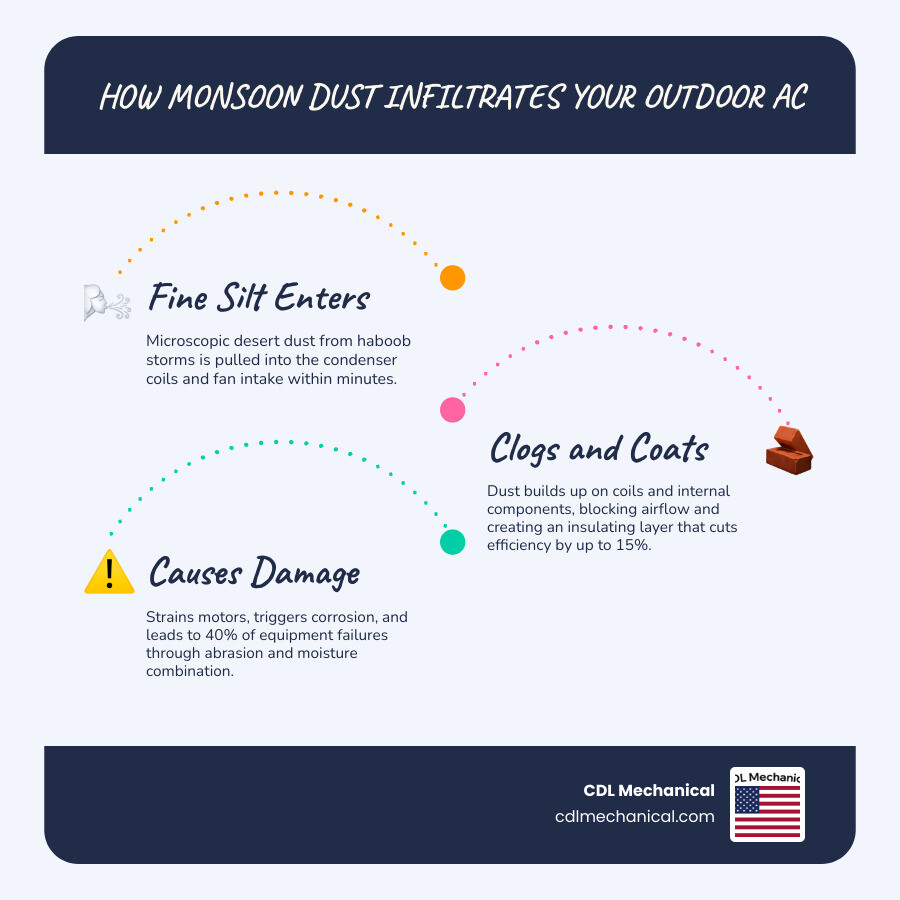
Arizona’s monsoon season runs from June through September and brings some of the most punishing conditions an AC system will ever face. In Glendale and across the greater Phoenix area, massive haboob dust storms can roll in within minutes — walls of fine, dry silt that reach thousands of feet into the air and coat everything in their path. Unlike larger debris that sits on the surface, this microscopic desert dust works its way deep inside your outdoor unit, clogging coils, straining motors, and quietly cutting into your system’s efficiency before you ever notice a problem.
Dirty filters and neglected maintenance alone can reduce AC efficiency by up to 15%, and corrosion — often triggered by dust and moisture combined — is responsible for roughly 40% of all HVAC equipment failures. In other words, what looks like a little dust on the outside could be a serious and costly problem developing on the inside.
I’m Joshua Michael Bartlett, founder of CDL Mechanical, and with over 20 years of hands-on HVAC experience in desert climates, I’ve seen how Arizona’s monsoon dust can quietly destroy a system that looks fine from the outside — which is exactly why protecting your outdoor AC from monsoon dust is a topic I take seriously for every homeowner we serve. In the sections ahead, I’ll walk you through everything you need to know to keep your system running strong all season long.
Why Arizona Monsoon Dust is a Silent Killer for Your HVAC
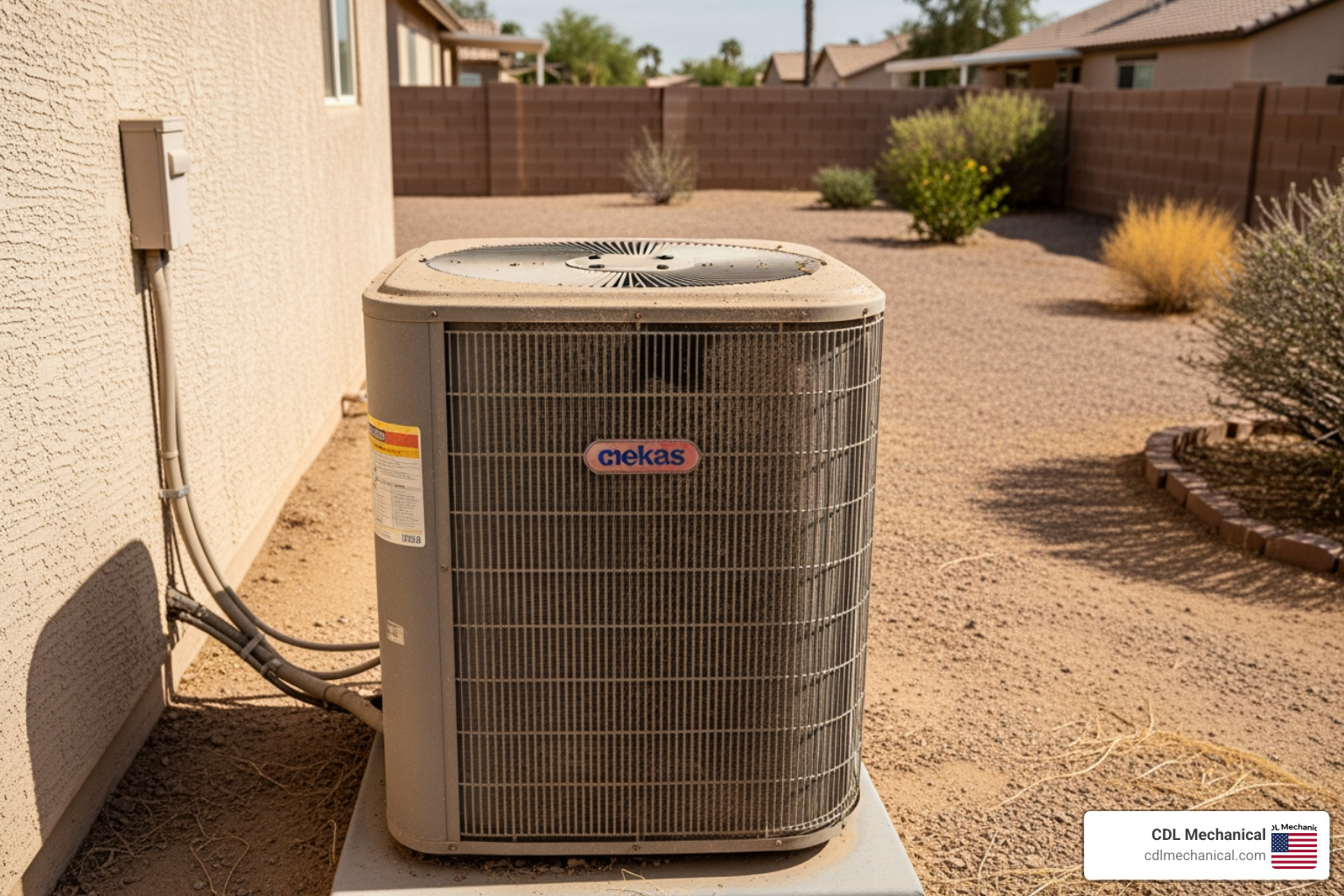
Arizona dust is not just “a little dirt.” During monsoon season in Glendale, Peoria, Surprise, Goodyear, Litchfield Park, and nearby communities, the outdoor condenser can get hit with extremely fine silt that behaves very differently from the chunky dust you might sweep off a patio.
Here is how monsoon dust damages an outdoor AC unit from the inside out:
- It coats condenser coils and acts like insulation
- It blocks heat transfer, so the system cannot release heat efficiently
- It makes the fan motor and compressor work harder and run hotter
- It clogs or overloads indoor air filters, reducing airflow
- It can enter through duct leaks and settle on internal parts
- It mixes with moisture and contributes to rust and corrosion
Your outdoor unit’s job is to move heat out of your home. When dust blankets the coils, that heat gets trapped. The result is longer run times, weaker cooling, and higher energy use. That is one reason dirty equipment can lead to about a 15% loss in efficiency.
The real trouble is that dust damage often builds slowly. First the unit runs a little longer. Then airflow drops. Then the bill climbs. Then one hot August afternoon the system starts short cycling, making odd noises, or stops cooling when you need it most. It is a very Arizona way for an AC to complain.
Routine Air Conditioning Maintenance is one of the best defenses because it catches buildup before it turns into wear, overheating, or corrosion.
The Role of High-Efficiency Filters in Protecting Your Outdoor AC from Monsoon Dust
Air filters do not protect only indoor air quality. They also protect your HVAC system by keeping fine debris from piling up on the evaporator coil and blower components.
For most homes in our service area, pleated filters in the MERV 8 to MERV 11 range are a good fit during monsoon season, as long as the system is designed for that level of resistance. These filters offer better dust capture than low-grade flat filters without being so restrictive that they choke airflow in a standard residential system.
Why pleated MERV 8-11 filters help:
- They capture more fine desert dust
- They have more surface area than basic fiberglass filters
- They help reduce dust buildup on indoor components
- They support better airflow when changed on time
During monsoon season, we recommend checking filters monthly and replacing them at least every 30 days in many homes, especially after major dust events. Homes with pets, allergy concerns, construction nearby, or frequent haboobs may need even closer monitoring.
If you want a local example of how regular tune-ups and filter care support system performance, our AC Maintenance Goodyear AZ page covers many of the same desert-climate concerns.
Why Arizona Dust is More Harmful Than Regular Dirt
Arizona monsoon dust is especially hard on AC systems for three big reasons.
First, it is finer. Tiny particles can cling to coil fins, sneak past weak seals, and settle into moving parts more easily than ordinary dust.
Second, it is drier and more abrasive. That means it can wear on bearings, fan assemblies, and electrical contacts over time. Repeated exposure can throw off fan balance, increase vibration, and create premature wear.
Third, it does not arrive politely. Haboobs can push huge amounts of silt and debris into your outdoor unit in a single event. One storm can do what months of normal dust exposure might do elsewhere.
When that dust later combines with monsoon humidity or rain, the problem shifts from dirt buildup to corrosion risk. Since corrosion is linked to roughly 40% of HVAC equipment failures, this is not a minor issue.
Essential Steps for Protecting Your Outdoor AC from Monsoon Dust
The good news is that homeowners can do a lot to reduce monsoon dust damage. The key is to think in three phases: before the storm, during the storm, and after the storm.
Start with these practical steps:
- Keep a 2-foot clearance around the condenser.
- Trim back bushes, weeds, and low branches.
- Remove leaves, grass clippings, and loose debris.
- Check your filter before monsoon season starts.
- Replace filters monthly from June through September.
- Inspect exposed duct gaps and obvious air leaks.
- Rinse surface dust off the outdoor unit after storms.
- Schedule seasonal maintenance for deep cleaning.
That 2-foot radius around the unit matters more than most homeowners think. If landscaping is too close, the system can pull in extra debris and lose airflow around the condenser. Dust, leaves, and desert clutter quickly become a blanket around the cabinet.
Our AC Maintenance Litchfield Park AZ resource also highlights why regular upkeep is so important in our dusty climate.
To protect condenser coils specifically:
- Hose the unit off gently from the top down after a storm
- Never use a pressure washer, which can bend fins
- Turn power off before deeper cleaning
- Do not jam brushes or tools into the coil
- Call for professional cleaning if buildup is thick or stuck deep in the fins
A light rinse removes loose dust. It does not replace a professional coil cleaning when grime is packed in tightly.
Protecting Your Outdoor AC from Monsoon Dust During Active Storms
One of the most common homeowner questions is whether to run the AC during a dust storm. In a severe haboob, if it is safe and practical, yes, we generally recommend turning the system off.
Why?
Because the outdoor fan can pull dust-laden air directly through the condenser while the storm is at its worst. That can quickly coat coils and introduce more grit into the system. Shutting the unit down during the peak of the storm helps limit that intake.
A few smart storm-time steps:
- Turn off the AC at the thermostat during the worst of the storm
- Keep windows and exterior doors closed tightly
- Seal obvious door gaps if dust is blowing indoors
- If your system settings allow it, avoid pulling in outside air
- Wait until the storm passes before restarting the system
If the storm is mild and indoor temperatures are becoming unsafe, use judgment. Home comfort and safety come first. But for strong dust walls, shutting the system down briefly is usually the safer move for the equipment.
Surge Protection and Proper Drainage
Monsoon season is not only about dust. It also brings lightning, power fluctuations, wind-driven rain, and humidity spikes.
A dedicated HVAC surge protector helps shield sensitive components like:
- Control boards
- Capacitors
- Contactors
- Sensors
- Thermostat communication components
Power surges do not always destroy a system instantly. Sometimes they cause partial damage that shortens the life of electrical parts and leads to nuisance breakdowns later.
Proper drainage matters too. Higher humidity means your AC removes more moisture from indoor air, which increases condensate flow. If the drain line is already partly clogged with algae, dirt, or sludge, monsoon season can push it over the edge.
That can cause:
- Water backup
- Safety switch shutoffs
- Indoor leaks
- Musty odors
- Extra humidity indoors
If you are already seeing signs of water trouble, our guide on How to Handle a Leaking Air Conditioner is a helpful next read.
Recognizing the Signs of Dust-Related AC Damage
Dust-related AC problems do not always announce themselves dramatically. Sometimes the clues are small at first.
Watch for these common signs:
- Reduced airflow from vents
- Longer cooling cycles
- Higher utility bills
- Uneven temperatures in the home
- More dust settling indoors
- Unusual noises from the outdoor unit
- Burning or musty smells
- Short cycling
- Weak cooling during the hottest part of the day
Grinding, rattling, or buzzing can suggest debris, motor strain, or fan issues. A burning smell can point to overheating components. A musty smell may signal moisture problems or clogged drainage.
Here is a simple comparison table:
| Normal Operation | Dust-Clogged Symptoms |
|---|---|
| Strong, steady airflow | Weak airflow |
| Normal cooling cycles | Long run times or short cycling |
| Stable electric bills | Noticeable bill spikes |
| Quiet fan and compressor sound | Grinding, buzzing, or rattling |
| Clean filter for normal interval | Filter loads up quickly |
| Dry, normal-smelling air | Musty or dusty odor |
If these signs sound familiar, do not wait too long. Small airflow restrictions can turn into major component strain in peak summer.
Regular maintenance helps catch these issues early. Our article on 5 Benefits of Routine AC Maintenance explains why preventive care matters so much in desert climates.
Professional Maintenance: The Best Way of Protecting Your Outdoor AC from Monsoon Dust
DIY steps are useful, but professional maintenance is still the most effective way to prevent monsoon dust damage.
Why? Because surface dust is only part of the problem. A technician can inspect the hidden areas homeowners usually cannot safely or effectively clean, including electrical connections, deeper coil buildup, blower performance, refrigerant condition, and drainage issues.
A thorough monsoon-season AC tune-up may include:
- Deep cleaning of condenser coils
- Inspection of fan blades and motor condition
- Refrigerant level and performance checks
- Electrical testing of capacitors and contactors
- Inspection for corrosion and moisture damage
- Condensate drain inspection and clearing
- Airflow and temperature split checks
- Filter review and replacement guidance
This matters because a system can look “pretty clean” from the outside and still be struggling internally.
In our experience, the best timing is:
- Before monsoon season begins
- After major storm activity
- Again if the system starts showing symptoms
That proactive schedule helps limit wear during the months when your AC is already under the heaviest heat load.
When to Choose Professional Repair Over DIY Fixes
Some monsoon-related issues are reasonable for homeowners to handle. Replacing a filter, clearing visible debris, or gently rinsing the cabinet are fine examples.
But call for professional repair when you notice:
- Overheating motors
- Frozen coils
- Repeated short cycling
- Loud or persistent new noises
- Electrical issues after a storm
- Breaker trips
- Outdoor fan not spinning properly
- AC not cooling well after filter changes and rinsing
- Water backing up or safety switch shutoffs
These problems can involve high voltage, refrigerant, damaged motors, or compressor stress. DIY fixes here can make the issue worse or create safety hazards.
As a rule of thumb, if the problem is inside the sealed system, involves electrical components, or keeps coming back, it is time to bring in a pro.
Post-Storm Recovery and Inspection
After a dust storm passes, a quick inspection can make a big difference.
Use this post-storm checklist:
- Wait until conditions are safe.
- Visually inspect the outdoor unit for heavy dust, branches, or lodged debris.
- Check that the fan area is clear.
- Replace or inspect the indoor air filter.
- Gently rinse the condenser with a garden hose.
- Check for unusual sounds when the system restarts.
- Watch for normal drainage and cooling performance.
For the rinse, use a regular garden hose with moderate pressure and spray from top to bottom. Avoid blasting the fins sideways. Think “gentle shower,” not “pressure-washer revenge.”
During the 2026 monsoon season, monthly filter checks are a must, and after major haboobs, an extra inspection is smart. In many Glendale-area homes, filters need replacement every month from June through September to keep airflow protected.
Frequently Asked Questions about Monsoon AC Care
Should I turn off my AC during a dust storm?
During a severe dust storm, yes, if it is safe and practical, turning off your AC is usually the best move. It reduces the amount of fine silt the outdoor fan pulls through the unit and helps protect coils and motors from heavy dust loading.
Once the storm passes, inspect the system, check the filter, and restart it. If the unit makes unusual noises or struggles to cool afterward, schedule service.
How often should I replace my air filters during monsoon season?
For most homes in Glendale and nearby desert communities, check filters every month and plan on replacing them about every 30 days during monsoon season. After a major dust storm, inspect the filter sooner.
MERV 8-11 pleated filters are often a strong choice for balancing dust capture and airflow, but the right filter depends on your system’s design.
Can I use a cover to protect my outdoor unit from dust?
A breathable cover or top shield designed for HVAC use can help reduce debris exposure when used correctly. But a full solid cover can trap heat and moisture, and you should never run the AC with a solid cover in place.
Avoid makeshift tarps or plastic wrapping. They can trap moisture, encourage corrosion, and create airflow problems. If you want added protection, ask about options that allow ventilation rather than sealing the unit up like leftovers.
Conclusion
Monsoon dust is tough on outdoor AC equipment in Glendale, but it does not have to win. With monthly filter changes, gentle post-storm cleaning, surge protection, proper drainage, and seasonal tune-ups, homeowners can greatly reduce the risk of dust-related breakdowns.
At CDL Mechanical, we are a family-owned team that understands what desert cooling systems go through in Glendale and across the greater Phoenix area. We believe in treating customers like family and helping homeowners stay ahead of the problems that monsoon season can create.
If you want help protecting your outdoor AC from monsoon dust, scheduling preventive maintenance, or checking your system after a storm, visit our Schedule HVAC Services in Glendale AZ page to get started.