
Why is my Glendale home always drafty? Understanding how air balancing eliminates hot and cold spots
In a place like Glendale, where the summer sun can feel relentless, the way air moves through your home is the difference between a sanctuary and a sweatbox. Many homeowners assume that if a room is too hot, the air conditioner simply isn’t “strong” enough. In reality, the issue is often not the cooling capacity, but the distribution.
Airflow distribution is governed by physics. Your HVAC system is a closed loop: it pulls air in, cools it, and pushes it back out. If the resistance in your ducts (known as static pressure) is too high in one area or too low in another, the air will naturally take the path of least resistance. This leaves some rooms starving for air while others are over-pressurized.
Through Air Balancing/, we essentially recalibrate the “traffic flow” of your home’s air. By adjusting the internal mechanics of the ductwork and the blower fan, we ensure that the heat transfer occurring at your cooling coils is effectively delivered to every corner of the house.
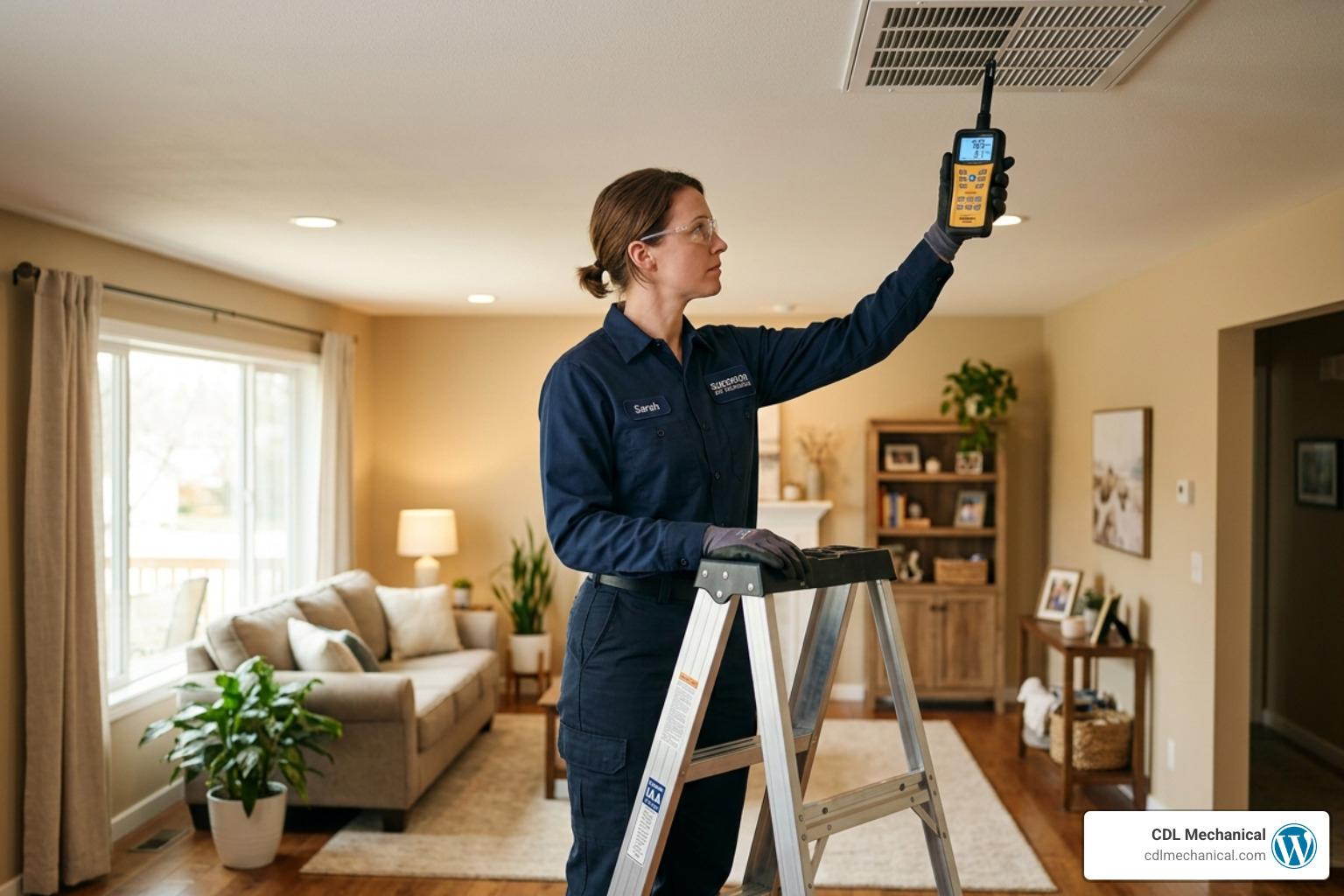
The science of how air balancing eliminates hot and cold spots
To understand how air balancing eliminates hot and cold spots, we have to look at CFM, or Cubic Feet per Minute. This is the measurement of how much air volume is moving through your vents. Every room in your Glendale home has a specific “load” requirement based on its size, the number of windows it has, and its insulation quality.
A master bedroom might require 150 CFM to stay cool, while a small bathroom only needs 50 CFM. If both vents are pushing out 100 CFM, the bedroom stays hot and the bathroom becomes a walk-in freezer.
Professional air balancing involves:
- Balancing Supply Vents: Ensuring the conditioned air reaching the room matches the room’s specific needs.
- Clearing Return Air Paths: If air can’t get back to the AC unit, new cool air can’t get into the room. This creates “stagnant” zones.
- Achieving Neutral Air Pressure: We want the pressure inside your home to be slightly higher than outside (positive pressure) to keep dust and hot Arizona air from leaking in through cracks in windows and doors.
How air balancing eliminates hot and cold spots in multi-story Phoenix homes
If you live in a two-story home in Peoria or Scottsdale, you’ve likely noticed that the upstairs is significantly warmer than the downstairs. This is due to convection—the natural tendency for heat to rise.
One of the most effective ways How To Fix Hot And Cold Spots At Home/ in a multi-story layout is the “two-degree offset” method. Because heat accumulates upstairs, we often recommend setting your upstairs thermostat two degrees lower than the downstairs unit. This helps compensate for the rising heat and ensures the upstairs bedrooms stay comfortable without freezing out the kitchen below.
Thermostat placement also plays a huge role. If your thermostat is located near a drafty door or a heat-producing electronic device (like a large TV), it will give a false reading, causing the system to shut off too early or run too long.
Common signs your HVAC system is unbalanced
How do you know if your home needs a professional “tune-up” for its airflow? It isn’t always as obvious as a room being hot. Sometimes the system gives you subtle clues that it’s struggling.
| Symptom | Balanced System | Unbalanced System |
|---|---|---|
| Temperature Variance | Less than 2°F between rooms | 3°F to 10°F difference room-to-room |
| Vent Noise | Quiet, steady hum | Whistling, rattling, or “whooshing” sounds |
| Airflow Strength | Consistent across all registers | Some vents feel weak; others feel like a gale |
| Utility Bills | Stable and predictable | Unexpectedly high or rising monthly costs |
| Dust Levels | Minimal and managed | High dust accumulation near certain vents |
One of the most startling statistics in the HVAC industry is that up to 30% of energy can be lost due to unbalanced airflow and duct issues. In April 2026, as we look at rising energy costs across the Phoenix metro area, that 30% represents a significant amount of money literally vanishing into your attic or crawlspace.
Primary causes of uneven airflow in Arizona homes
In our years serving the Glendale community, we’ve found that imbalances rarely have a single cause. Usually, it’s a combination of factors that have shifted over time.
- Leaky Ductwork: Over time, the seals on your ducts can dry out and crack in the intense Arizona heat. This allows cool air to escape into the attic before it ever reaches your living room.
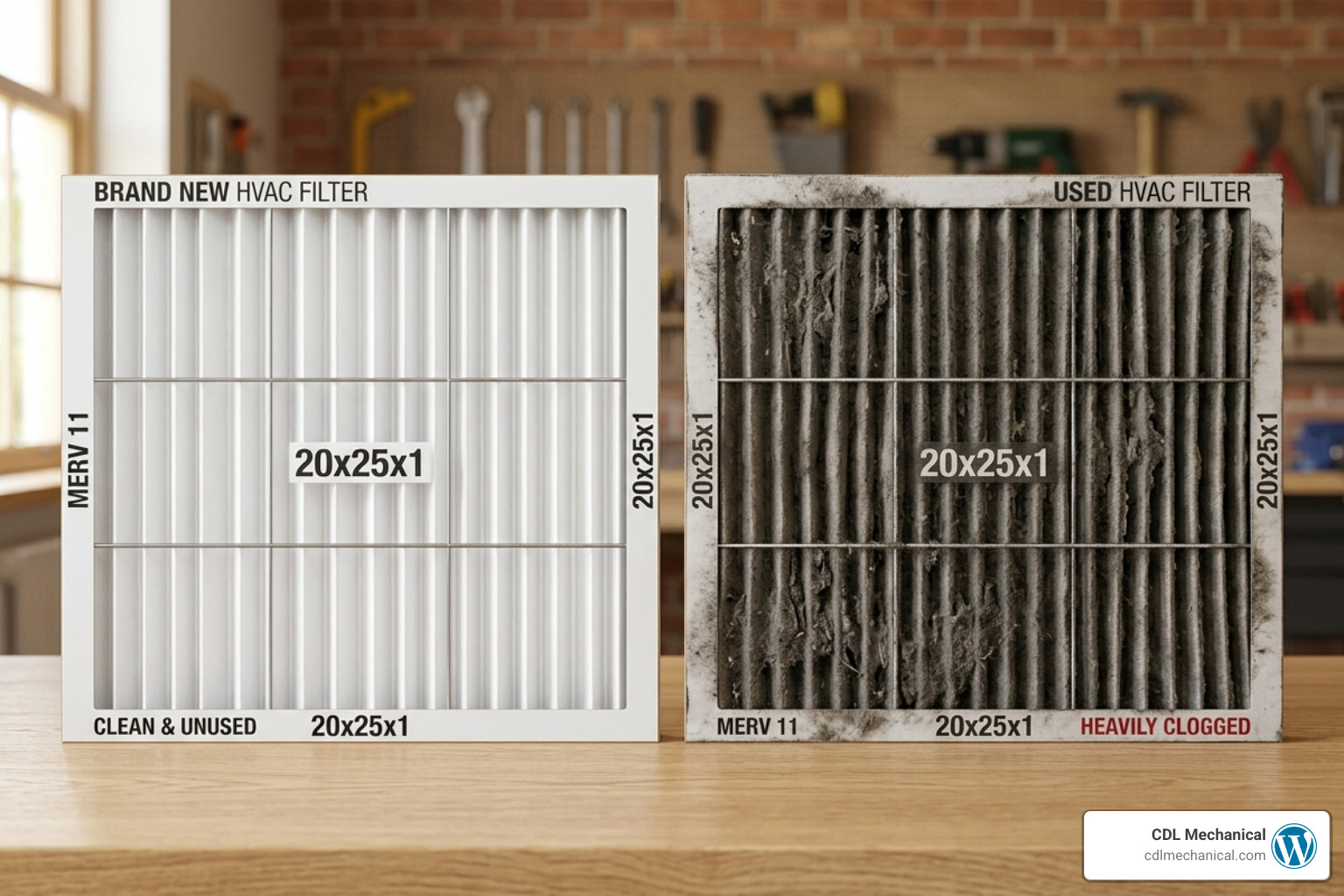
- Clogged Air Filters: This is the #1 cause of airflow restriction. A dirty filter acts like a wall, forcing your blower fan to work harder and reducing the total volume of air moving through the house.
- Poor Duct Design: Sometimes, the home was simply built with ducts that are too small for the rooms they serve, or the “runs” are too long, causing the air to lose its velocity.
- Solar Heat Gain: Rooms with large, south-facing windows in Phoenix can experience massive heat spikes. Research shows that 76% of sunlight on standard double-pane windows enters the home as heat. If your HVAC isn’t balanced to provide extra air to those specific rooms, they will always be hot spots.
- Furniture Blockages: It sounds simple, but a couch placed over a floor register or a tall bookshelf blocking a return vent can throw the entire floor’s pressure out of whack.
DIY steps to improve home comfort and air balance
Before you call in the heavy equipment, there are several steps you can take to see if you can nudge your home back into balance.
- The 18-Inch Rule: Ensure there is at least 18 inches of clear space around every supply and return vent. Move rugs, furniture, and curtains away from these openings.
- Check Your Filters: In the dusty Arizona climate, we recommend checking your filters every 30 days. If you have pets or allergies, you may need to change them more frequently than the standard three-month recommendation.
- Adjust Your Registers: You can partially close (but never fully close!) the registers in rooms that stay too cold. This pushes a bit more air toward the rooms that are too hot. Warning: Never close more than 20% of the vents in your home, as this can cause the cooling coils to freeze or damage the compressor.
- Manage Your Windows: Use heavy drapes or cellular shades on south and west-facing windows during the day to block that 76% solar heat gain.
- Set Ceiling Fans Correctly: In the summer, your fans should run counterclockwise to push a “wind chill” breeze downward. In the winter, flip the switch to clockwise to pull cool air up and push the trapped warm air off the ceiling.
- Thermostat Fan Setting: Try switching your thermostat fan from “Auto” to “On.” This keeps air circulating constantly, even when the AC isn’t actively cooling, which helps even out temperatures between rooms.
When to call a professional for air balancing in Glendale, AZ
While DIY tips can help, they are often just a “band-aid” for deeper mechanical issues. True air balancing is a technical process that requires specialized tools that the average homeowner doesn’t have in their garage.
At CDL Mechanical, we use Pitot tubes and manometers to measure the exact static pressure inside your ducts. We also use flow hoods (anemometers) to get a digital readout of the exact CFM coming out of every single vent.
You should call a professional if:
- You’ve tried adjusting vents and changing filters, but the hot spots persist.
- You hear whistling or loud air noises in the walls.
- Your home has been renovated or had an addition built.
- Your energy bills are significantly higher than your neighbors’ with similar-sized homes.
- The air coming out of your vents feels “weak” even when the system is running at full blast.
Our team doesn’t just guess; we use math and physics to ensure your home is calibrated for the specific climate of the West Valley. We treat your home like our own, ensuring that every adjustment we make is aimed at long-term comfort and system longevity.
Frequently Asked Questions about Air Balancing
How often should I have my home’s air balanced?
For most homes in the Glendale and Phoenix area, a professional air balancing check is recommended every 2 to 3 years. However, you should have it done immediately if you install a new HVAC system, replace your windows, or add more insulation to your attic, as these changes alter how your home holds and moves air.
Can air balancing help reduce my monthly energy bills?
Absolutely. When your system is unbalanced, it has to run longer cycles to try and satisfy the thermostat in a “hot” room, while other rooms become unnecessarily cold. By evening out the distribution, the system reaches the target temperature faster and stays there longer, which can significantly lower your utility costs.
Does air balancing improve indoor air quality and humidity?
Yes. Proper air balancing ensures that air is being filtered correctly and that “stagnant” pockets of air—where dust and allergens collect—are eliminated. Furthermore, balanced airflow allows your AC’s evaporator coil to effectively remove humidity from the air. In a balanced system, you won’t have that “clammy” feeling in one room and “dry” air in another.
Conclusion
Achieving a comfortable home in the Arizona desert shouldn’t feel like a constant battle with your thermostat. By understanding how air balancing eliminates hot and cold spots, you can take control of your indoor environment, save money on your monthly bills, and extend the life of your expensive HVAC equipment.
Whether you are dealing with a drafty hallway in Surprise or a sweltering upstairs bedroom in Peoria, the solution is often found in the balance of your airflow. Don’t spend another summer shivering in one room and sweating in the next.
Ready to experience true, even comfort in every room? Schedule your professional air balancing service with CDL Mechanical today and let our family take care of yours. We serve Glendale and the surrounding communities with the expert, reliable service you deserve.