
Understanding Ductwork Problems Signs and Solutions for Homeowners
When we visit homes in Glendale or Peoria, the first thing homeowners usually complain about isn’t the AC unit itself—it’s how the house feels. If you feel like you are fighting a losing battle with your thermostat, the culprit is often hiding behind your drywall.
Uneven Temperatures and Hot Spots
Do you have that one bedroom that feels like a sauna while the kitchen is a walk-in freezer? This is one of the most classic ductwork problems signs and solutions for homeowners. When ducts have leaks or are poorly designed, the conditioned air escapes before it ever reaches the furthest rooms. We often see this in older homes where the ductwork wasn’t sized correctly for modern, high-efficiency AC units. Learning how to fix hot and cold spots at home often starts with a pressure test of your delivery system.
Excessive Dust and Poor Air Quality
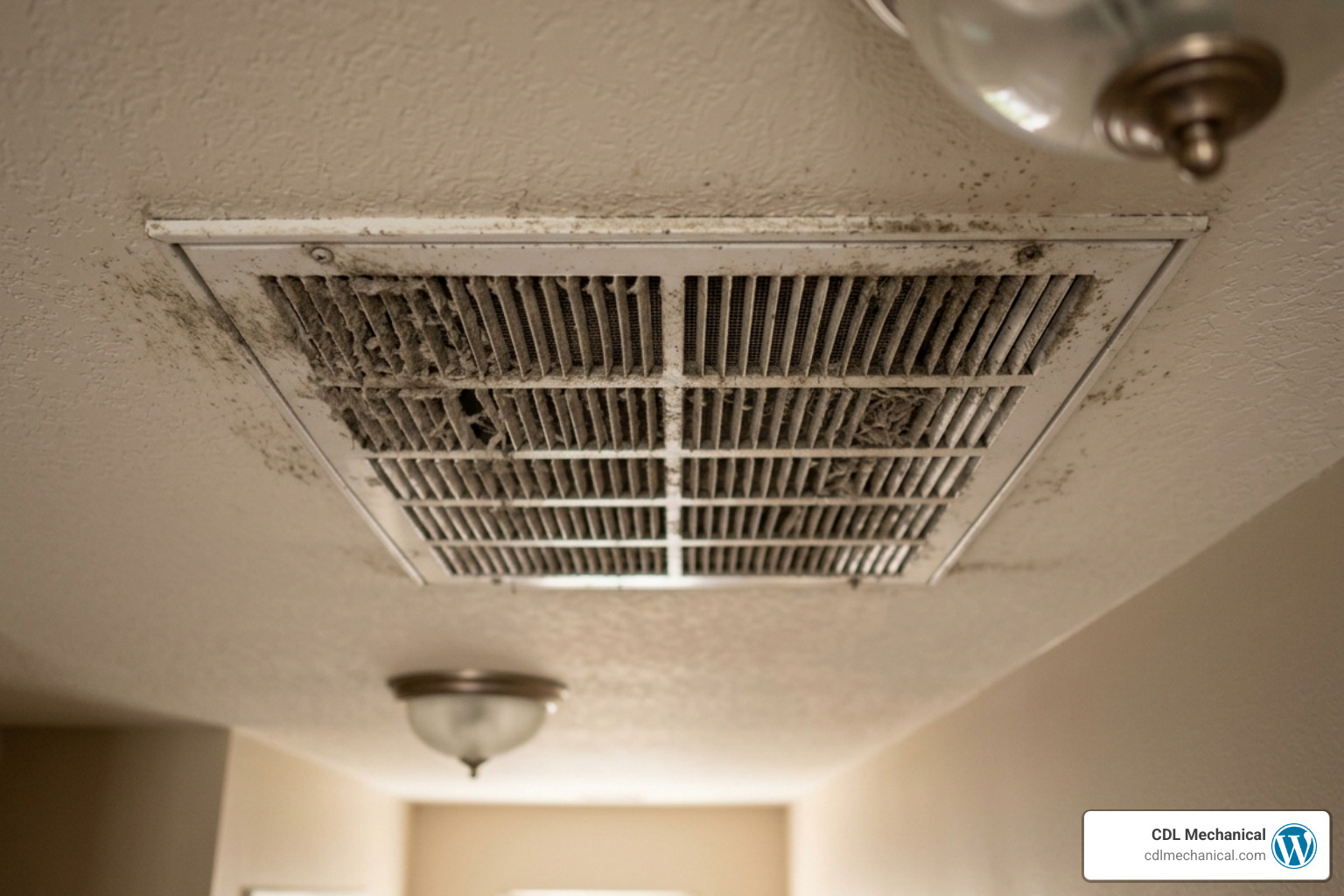
In the Arizona desert, dust is a way of life, but it shouldn’t be taking over your living room. If you find yourself dusting your coffee table every single day, your ducts might be acting like a vacuum for attic debris. Leaky return ducts create a “venturi effect,” pulling in 130-degree attic dust and insulation fibers and blasting them into your bedrooms. This is a major reason why how HVAC filters affect indoor air quality is so important; however, even the best filter can’t stop dust that enters the system after the filtration point through a hole in the duct.
Strange Noises and Rattling
Your HVAC system should be a quiet companion, not a percussion band. We listen for three specific sounds:
- Rattling: Usually indicates loose metal-to-metal connections or a duct that has become disconnected from a register.
- Whistling: A high-pitched whistle is almost always the sound of air being forced through a tiny crack or a hole in the sealant.
- Banging or Popping: This often happens when metal ducts expand and contract as the air temperature changes, which can be a sign of undersized ductwork or poor support.
If you are tired of no more shivering in the kitchen and sweating in bed, it’s time to look at the “arteries” of your home.
Why Your Energy Bills and Comfort Are Suffering
We often tell our customers that having leaky ducts is like driving a car with a hole in the gas tank. You are paying for fuel that never actually gets you where you want to go.
Conditioned Air Loss and Efficiency
Statistics show that the average home loses between 20% and 40% of its conditioned air due to duct leakage. In April 2026, with energy costs continuing to fluctuate, that is money literally flying into your attic or crawlspace. When that air escapes, your AC unit has to run longer to reach the temperature set on your thermostat. This extra “run time” is what causes those eye-watering summer utility bills. Implementing new year, lower bills: simple HVAC tweaks to cut winter energy costs is a great start, but sealing the ducts provides the biggest ROI.
System Strain and Shortened Lifespan
When your ducts are restricted or leaking, your blower motor has to work twice as hard to push air through the house. This creates “static pressure” issues. High static pressure is the silent killer of HVAC systems. It causes parts to overheat and wear out years before they should. Understanding SEER ratings and their importance is great for buying a new unit, but even a 20-SEER unit will perform like a 10-SEER unit if the ductwork is falling apart. Regular air conditioning maintenance should always include a visual check of accessible ductwork to ensure your investment lasts its full 15-year lifespan.
Identifying Ductwork Problems Signs and Solutions for Homeowners in Glendale
Living in locations like Sun City, Surprise, or Glendale presents unique challenges. Our “attic heat” is legendary, often reaching 150°F. If your duct insulation is thin or falling off, the cool air inside the duct warms up before it hits your vents. Furthermore, indoor air quality Glendale AZ is heavily impacted by our low humidity, which keeps dust airborne longer. If you’ve ever wondered is your home’s air quality worse than outside?, the answer is often “yes” if your ducts are pulling in desert allergens from unconditioned spaces.
Identifying the Root Causes of Damaged Air Ducts
Why do ducts fail in the first place? It’s rarely just one thing. It is usually a combination of time, nature, and human error.
Poor Installation and Design
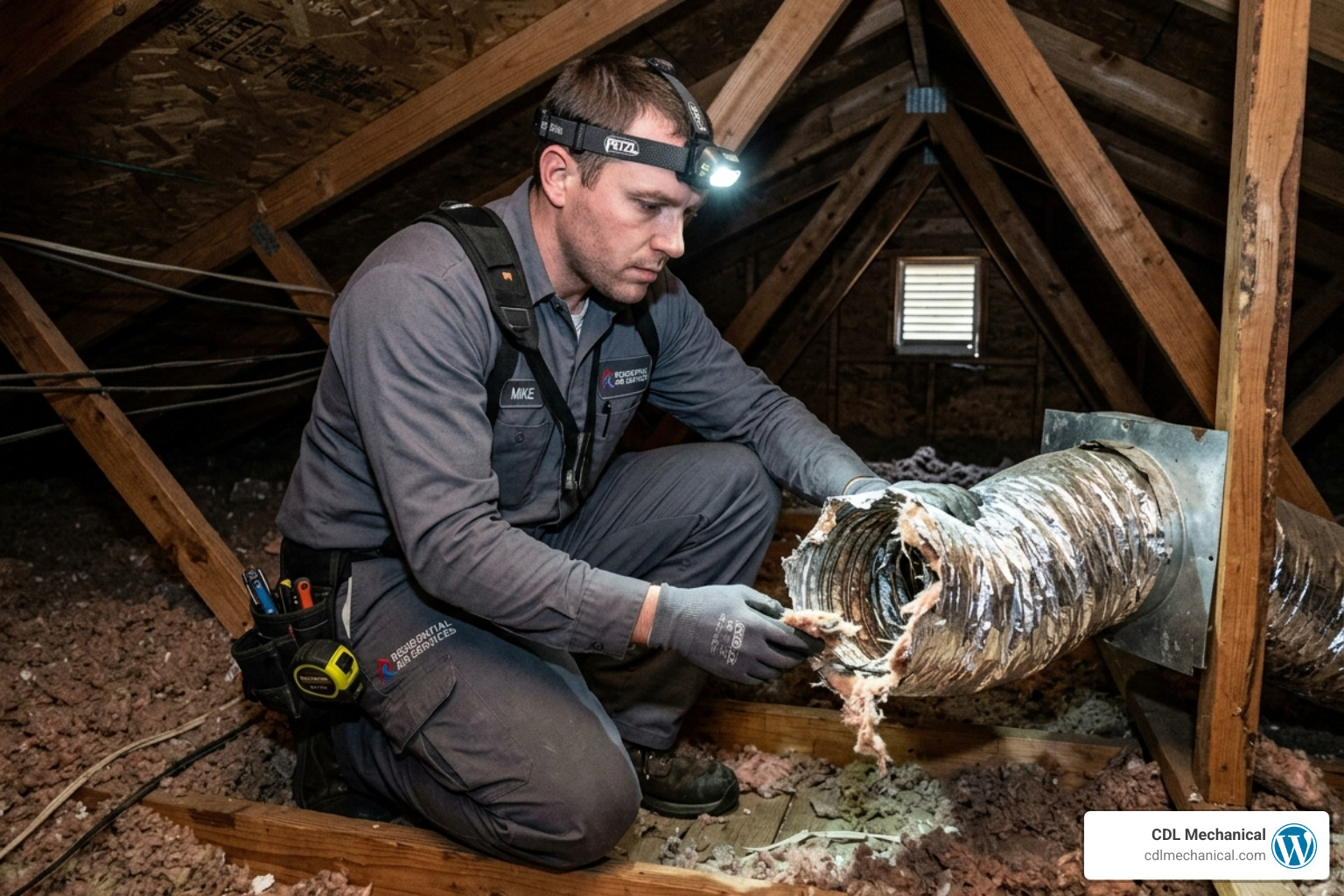
We see this all the time: “flex duct” that looks like a bowl of spaghetti in the attic. If a duct has too many sharp turns or is kinked, the air simply can’t move. Proper installation requires straight runs and smooth transitions. Air needs roughly 18 to 24 inches to stabilize after a turn. If your system was installed by someone cutting corners, you’ll likely experience poor airflow from day one. Knowing 5 things to expect during HVAC installation can help you spot these issues during a replacement.
Pest Infestations and Physical Damage
In the Valley, rodents and even larger pests like raccoons look for the path of least resistance to find cool air. They can chew through flexible ducting in minutes, creating massive leaks. Pests also leave behind pheromones that attract more “roommates,” making it a recurring nightmare. Beyond pests, we often find ducts that were crushed by other contractors (like cable or insulation installers) stepping on them in the dark attic.
Age-Related Wear and Tear
Nothing lasts forever. While metal ducts can last 40-50 years, the seals, tapes, and flexible portions typically have a 15-year lifespan. Over time, the adhesive on duct tape (which, ironically, should never be used on ducts) dries out and peels away. If your home was built in the early 2010s, your ductwork is likely reaching the point where the joints are failing. Understanding how does central heating and cooling work? helps you realize that every joint is a potential failure point.
Professional Ductwork Problems Signs and Solutions for Homeowners
When the “DIY” tape isn’t enough, it’s time for professional intervention. We use specialized tools to find what the naked eye misses.
Professional Sealing and Aeroseal
Traditional sealing involves “mastic”—a thick, gooey paste that we paint onto every joint. It’s incredibly effective but only works for ducts we can reach. For leaks hidden behind walls or deep in the structure, we use Aeroseal technology. This process involves pressurizing your duct system and injecting a specialized aerosol sealant. The particles find the leaks and “clump” together, sealing holes up to 5/8″ wide. This method can last up to 40 years and is often the best solution for improving air balancing in a multi-story home.
Cleaning and Sanitizing
The National Air Duct Cleaners Association (NADCA) recommends cleaning your ducts every 3-5 years. However, we specifically recommend it if you’ve recently finished a renovation, moved into a new home, or noticed a musty smell. Cleaning removes the “food source” for mold and allergens. If we find mold during an air conditioner repair or furnace maintenance visit, we combine cleaning with EPA-approved sanitizers to ensure your air is safe to breathe.
Long-Term Ductwork Problems Signs and Solutions for Homeowners
Sometimes, repair isn’t enough. If your ducts are undersized or the insulation has completely disintegrated, a full replacement is the most cost-effective long-term move.
- Metal Ducts: Best for longevity (40+ years) and airflow efficiency.
- Fiberglass/Flex Ducts: More common in modern Glendale homes; easier to install but need replacement every 15-20 years.
During a heater installation, we always evaluate if the “arteries” can handle the “heart” of the new system. We may also suggest adding UV lights inside the ductwork to kill airborne pathogens before they reach your living space.
Frequently Asked Questions
How long do air ducts typically last in 2026?
In 2026, we are seeing that the average lifespan of flexible ductwork in the Arizona heat is about 15 to 20 years. Metal ductwork can last much longer, often 40 years or more, but the insulation wrapped around it and the sealant at the joints will still need attention every 15 years. If you are receiving heating services and the technician mentions your ducts are “getting brittle,” it’s time to plan for a replacement.
Can leaky ducts affect my indoor air quality?
Absolutely. Leaky ducts create a pressure imbalance. If your return duct has a leak in the attic, it will suck in fiberglass insulation, dust, and even pest droppings. Is indoor air quality testing worth it? Yes, especially if you have unexplained allergies. There are 5 benefits of good indoor air quality, including better sleep and fewer respiratory issues, all of which start with sealed ducts.
How often should I have my ducts cleaned?
We follow the NADCA recommendation of every 3 to 5 years. However, if you have pets that shed heavily or family members with asthma, you might want to do it more frequently. Combining a cleaning with a high-quality air purifier or UV lights indoor air quality winter Glendale AZ setup can significantly reduce the “dust load” in your home.
Conclusion
Your home’s ductwork is easy to ignore because it is out of sight, but its impact on your comfort and your bank account is undeniable. From the dusty vents in Peoria to the hot bedrooms in Scottsdale, ductwork problems signs and solutions for homeowners are the key to a healthy, efficient home.
At CDL Mechanical, we aren’t just looking at your AC unit; we are looking at the whole “circulatory system” of your house. As a family-owned business right here in Glendale, we treat your home like our own. We know the local challenges—the dust, the heat, and the wear and tear that our climate demands.
Don’t let 40% of your money vanish into your attic. Whether you need a simple sealing, a deep clean, or a complete redesign for better airflow, we are here to help. Schedule your professional ductwork inspection today and start breathing easier.