
Understanding How Extreme Heat and Dust Stress Your AC System
To keep your home cool in Glendale, your air conditioner has to perform a mechanical miracle every day. It doesn’t actually “create” cold; it removes heat from inside your house and dumps it outside. However, there is a physical limit to how much heat the system can move. Most residential units are designed for a 95°F day. For every degree the temperature rises above that 95°F mark, your AC can lose 1% to 2% of its cooling efficiency.
By the time we hit those brutal 105°F or 110°F afternoons in May 2026, your system is fighting an uphill battle. The extreme heat forces the compressor to run nearly non-stop, spiking energy consumption by 40% to 50%. This creates a “pressure cooker” effect inside the outdoor unit. High-side pressures that normally sit around 350 PSI at 95°F can spike to 480 PSI when temperatures hit 115°F. This internal pressure, combined with cabinet temperatures that can exceed 130°F, leads to thermal overload and component fatigue.
This is why geography matters so much. If you’ve ever wondered How Long Does an AC Last in the Desert?, the answer is often shorter than the national average. While a system in a moderate climate might last 20 years, the relentless heat and dust in the Phoenix valley typically drop that lifespan to 10 or 12 years without meticulous care.
How extreme heat and dust stress your ac system components
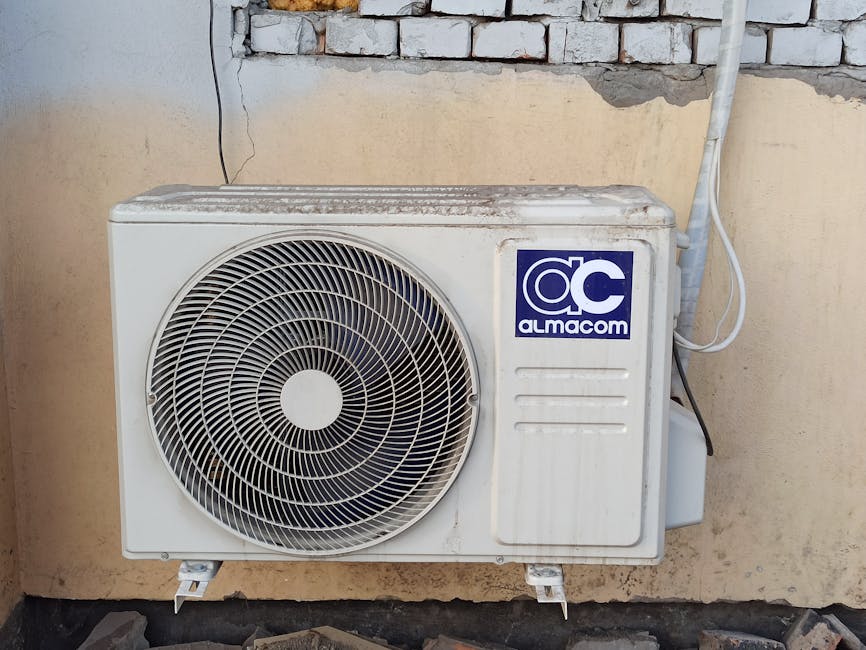
The outdoor portion of your AC, the condenser, relies on thin aluminum fins to release heat. When desert dust—specifically fine silica particles—settles on these fins, it acts as insulation. Instead of the heat escaping into the air, it gets trapped. This forces the fan motor to work harder and the compressor to run hotter.
Over time, this dust creates a “sandblasting” effect. High winds and monsoon gusts drive these abrasive particles into the mechanical bearings of the fan motor and erode the delicate aluminum fins. This physical wear is a primary reason why we emphasize that you Don’t Let the Dust Settle on Your AC Performance. When dust infiltrates the internal machinery, it increases friction and heat, leading to premature motor burnout.
The impact of Arizona monsoons on system airflow
Our monsoon season brings a unique set of challenges. Haboobs aren’t just a spectacle; they are massive walls of particulate matter that your AC “breathes” in. These fine particles bypass cheap fiberglass filters and settle deep within your ductwork and on your evaporator coils.
When dust meets the moisture naturally found on your indoor evaporator coil, it creates a “bio-slime.” This thick, muddy coating restricts airflow and prevents the refrigerant from absorbing heat effectively. This is one of the many ways How HVAC Filters Affect Indoor Air Quality becomes a critical issue for both your comfort and your health. Without proper filtration, your system becomes a recirculating pump for desert allergens and dust.
Step 1: Master Your Air Filter Schedule During Dust Storms
The simplest way to protect your system is to manage your air filters. In a standard climate, you might change a filter every three months. In Glendale, that schedule will lead to a system failure. During the peak of summer or after a major dust storm, filters can clog in as little as 24 to 48 hours.
We recommend using pleated filters with a MERV rating between 8 and 11. This range provides the perfect balance: it’s strong enough to catch fine silica dust but not so restrictive that it chokes the blower motor. Avoid those “see-through” fiberglass filters; they are virtually useless against the fine silt found in Arizona.
Our Filter Pro-Tips:
- Check Weekly: During June, July, and August, pull the filter out once a week. If you can’t see light through it, it’s done.
- Replace Every 30 Days: Even if there hasn’t been a haboob, the sheer volume of air your AC moves in the summer means the filter will be full within a month.
- Post-Storm Swap: Always check your filter immediately after a high-wind event or dust storm.

Step 2: Protect Your Outdoor Unit from the “Sandblasting” Effect
Your outdoor condenser needs to breathe. If it’s choked by dust or crowded by landscaping, it can’t shed heat. One of the most effective DIY tasks you can perform is a gentle coil rinse. After a dust storm, turn off the power at the outdoor disconnect and use a low-pressure garden hose to spray the coils from the top down. Never use a pressure washer, as the high pressure will flatten the aluminum fins and permanently ruin the unit.
You should also maintain at least a two-foot clearance around the entire unit. Trim back desert broom, bougainvillea, or any other vegetation that might block airflow or drop debris into the fan. Keeping this area clear reduces the “sandblasting” effect by ensuring the unit isn’t sucking in extra dirt from the immediate surroundings.
By keeping the exterior clean, you unlock the 5 Benefits of Routine AC Maintenance, including lower energy bills and fewer emergency repairs. A clean coil can improve heat transfer efficiency by up to 20% compared to one coated in desert grime.
Step 3: Optimize Your Home’s Thermal Envelope
Your AC is only as good as the box it’s trying to cool. If your home has poor insulation or leaky ducts, you are essentially trying to cool the entire neighborhood. In the Central Valley, up to 30% of your cooled air can be lost to leaky ducts in a hot attic before it ever reaches your living room.
| Feature | With Proper Optimization | Without Optimization |
|---|---|---|
| Attic Insulation | R-38 (Prevents 40% heat gain) | R-19 (Heats up the home fast) |
| Energy Consumption | 30-40% Lower | Standard High Summer Bills |
| Solar Heat Absorption | Reduced by 60% | High (via windows/roof) |
| System Runtime | Cycles normally | Runs 10-14 hours straight |
We often recommend Aeroseal technology for homes with inaccessible ductwork. This process seals leaks from the inside out, ensuring the cold air you pay for actually stays inside. Additionally, upgrading attic insulation to an R-38 rating can significantly reduce the “sensible load” on your AC, allowing it to cycle off occasionally even when it’s 105°F outside.
Reducing how extreme heat and dust stress your ac system through home sealing
To further reduce strain, remember the “20-degree rule.” Most AC systems are designed to maintain a 20-degree difference between the outdoor temperature and the indoor air. If it’s 115°F outside, your AC is doing its job if the house is 85°F. To help it get closer to your goal of 78°F, keep your blinds drawn during the day and ensure weatherstripping is tight around doors and windows. This keeps the dust out and the cold air in.
Step 4: Monitor Performance for Early Warning Signs
Because how extreme heat and dust stress your AC system is often a gradual process, you need to be a “system detective.” Most major failures start with small warning signs that homeowners often ignore until the system stops completely.
Red Flags to Watch For:
- Short Cycling: If the unit turns on and off every few minutes, it may be overheating or have a failing capacitor.
- Unusual Noises: Grinding, screeching, or loud clicking often indicate that dust has damaged a motor bearing or an electrical contactor is pitting.
- Lukewarm Air: If the air coming from the vents isn’t “crisp,” your refrigerant levels might be low or your coils are too dirty to transfer heat.
- Ice Buildup: It sounds counterintuitive, but if you see ice on the copper lines when it’s 100°F outside, you likely have a severe airflow restriction (like a clogged filter) or a refrigerant leak.
- Energy Spikes: A sudden 20% to 30% jump in your utility bill without a change in usage is a major indicator that the system is struggling against dust accumulation.
Step 5: Schedule Professional Desert-Grade Maintenance
While DIY steps are great, they don’t replace a professional eye. In the desert, we recommend bi-annual service—once in the spring to prep for the heat, and once in the fall. A standard 20-point inspection includes tightening electrical connections (which expand and contract in the heat), checking refrigerant pressures, and calibrating the thermostat.
Professional cleaning is also much deeper than a garden hose rinse. We use specialized, non-acidic cleaners to break down the “bio-slime” on the indoor coils and clear the condensate drain lines, which often get clogged with a mix of dust and algae. Following The Ultimate Guide to HVAC Service Frequency ensures your system is calibrated for the specific thin, dry air of the Arizona desert.
Frequently Asked Questions about Heat and Dust Stress
Why does my AC run non-stop when it is over 100°F?
This is usually due to the system reaching its physical design limit. Most ACs are sized to maintain a 20-degree differential. When the heat gain from your walls, roof, and windows exceeds the cooling capacity of the unit, it will run continuously to try and keep up. Ensuring your attic is properly insulated can help the system “catch up” and cycle off.
Can dust actually break my air conditioner?
Absolutely. Dust is the #1 silent killer of AC systems in Glendale. It causes abrasive wear on moving parts, coats coils to prevent cooling, and clogs filters until the blower motor burns out from the strain. This “sandblasting” effect can lead to a total compressor failure, which is often the most expensive repair a homeowner can face.
How often should I rinse my outdoor unit in Glendale?
We recommend a quick rinse once a month during the summer, and always immediately following a haboob or significant dust storm. Use low pressure and a “top-down” motion to flush the dirt out of the fins rather than pushing it deeper in.
Protect Your Home with CDL Mechanical
At CDL Mechanical, we know Glendale because we live here. We understand that your air conditioner isn’t just a luxury—it’s a necessity for your family’s safety and comfort. As a family-owned business, we treat your home like our own, providing the expert, reliable service needed to combat the unique challenges of the Arizona desert.
Don’t wait for the next record-breaking heatwave to find out your system is struggling. From professional coil deep-cleaning to precision system calibrations, we have the tools and experience to keep your AC running efficiently all summer long.