
Getting the Right Size HVAC for the Phoenix West Valley Homes
When we talk about getting the right size hvac for the phoenix west valley homes, we are dealing with a climate that is fundamentally different from the rest of the country. In communities like Glendale and Goodyear, the extreme heat isn’t just a comfort issue; it’s a mechanical challenge.
The sizing process must account for intense solar radiation and the sudden spikes in monsoon humidity. If you choose a system based on a generic online chart, you might find yourself with a unit that can’t keep up when the mercury hits 115°F. To avoid this, you need to understand how to choose the right AC system by focusing on the unique “X-factors” of the Sonoran Desert.
Getting the right size HVAC for the Phoenix West Valley homes: The Manual J standard
The industry gold standard for determining HVAC size is the Manual J load calculation. Unlike a “rule of thumb,” a Manual J is a detailed engineering analysis. It looks at two types of heat:
- Sensible Load: This is the heat you feel on your skin and see on the thermometer. In Sun City or Litchfield Park, this is primarily driven by the sun beating down on your roof and through your windows.
- Latent Load: This is the moisture in the air. While Arizona is “dry,” our monsoon season introduces significant humidity that the AC must remove to keep you feeling cool.
A proper Manual J calculation uses a 1% outdoor design temperature of 110°F for Phoenix. This means the system is engineered to maintain indoor comfort even when it is scorching outside. We don’t just guess; we calculate the exact BTU/h (British Thermal Units per hour) your home needs to stay a sanctuary.
Getting the right size HVAC for the Phoenix West Valley homes: Essential questions for your contractor
When you are interviewing a company for HVAC services in Peoria or looking for a Buckeye HVAC company, you should be prepared to vet their process. Here are the questions you should ask:
- “Will you perform a full Manual J load calculation?” If they say they “just know” based on square footage, that’s a red flag.
- “Do you use Manual S for equipment selection?” Manual S ensures the specific brand and model of the unit actually produces the capacity the Manual J says you need at 110°F.
- “Will you evaluate my ductwork using Manual D?” Even a perfectly sized unit will fail if the ductwork is too small or leaking air into the attic.
- “How do you account for my west-facing windows and current insulation?”
At CDL Mechanical, we believe in doing the math. We want to ensure that your investment provides decades of comfort, not a decade of “it’s almost cool enough.”
The Risks of Improper HVAC Sizing in Arizona
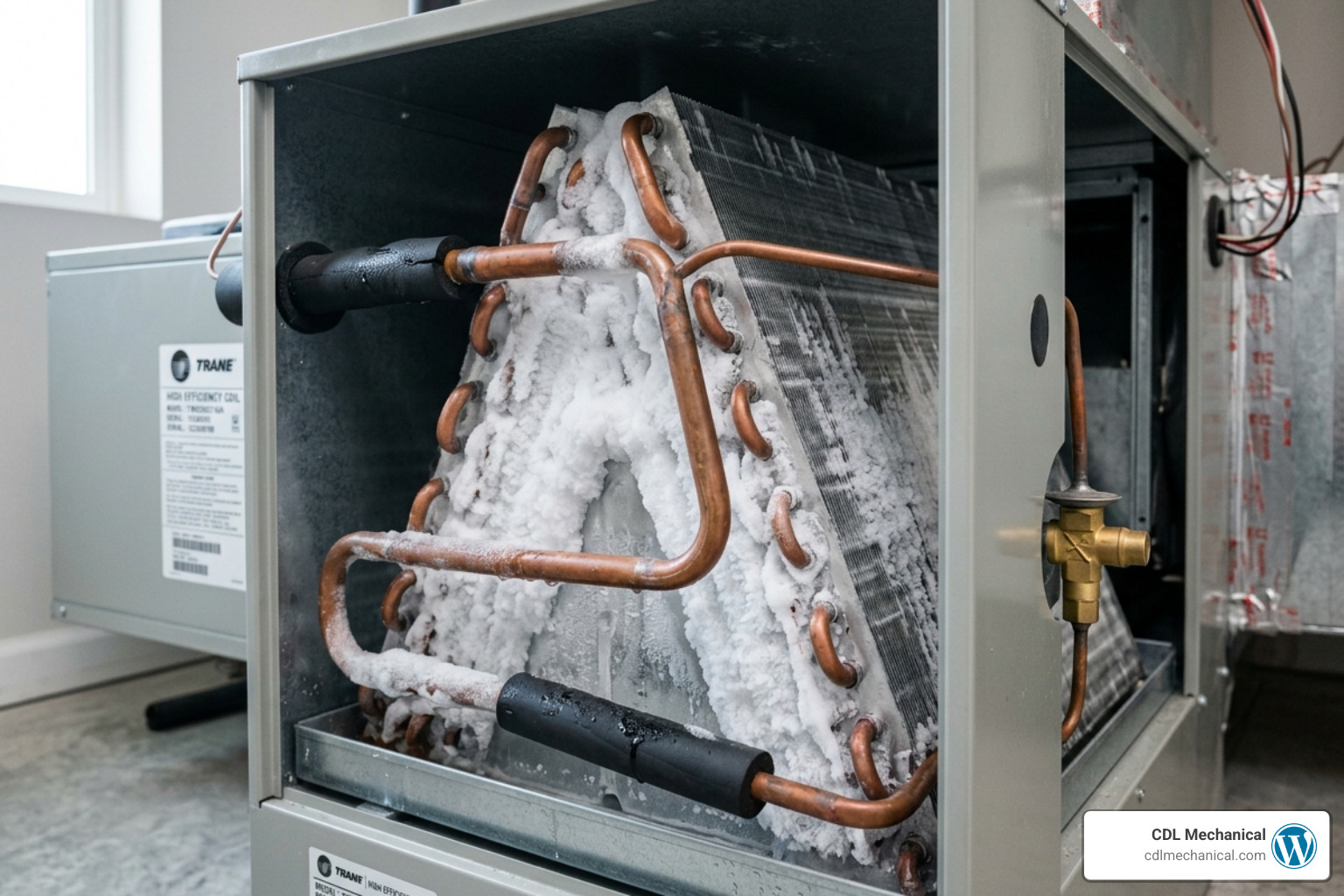
Many homeowners think that if a 3-ton unit is good, a 5-ton unit must be “extra good.” This is one of the most expensive misconceptions in Arizona. Improper sizing—whether too big or too small—leads to a cascade of mechanical and comfort failures.
Consequences of an oversized system
An oversized system suffers from “short cycling.” It turns on, blasts the house with cold air, and reaches the thermostat setting in five minutes.
- High Humidity: Because it shuts off so fast, it doesn’t run long enough to remove moisture. This leaves your home feeling “clammy.”
- Uneven Cooling: The air doesn’t have time to circulate, leading to hot and cold spots throughout the house.
- Frequent Repairs: Starting and stopping is the hardest thing a compressor does. Short cycling wears out components prematurely.
- Energy Waste: HVAC units are least efficient during the first few minutes of operation. An oversized unit spends its whole life in that inefficient “startup” phase.
Consequences of an undersized system
An undersized system is just as problematic. On a 112°F day in the West Valley, an undersized unit will run 24/7 and still never reach your desired temperature.
- Constant Running: This leads to astronomical utility bills.
- Inadequate Cooling: Your home stays at 80°F even when the AC is set to 75°F.
- Premature Failure: The system is essentially “running a marathon” every single day, leading to a much shorter lifespan than the typical 12–15 years expected in Arizona.
Proper air balancing and sizing ensure the system runs long enough to dehumidify and circulate air without overworking the hardware.
Unique Factors Influencing West Valley Cooling Loads
The Phoenix West Valley has specific geographic and architectural traits that change the cooling equation. A home in Surprise built in 2024 has vastly different needs than a 1970s ranch in Glendale.
The impact of home orientation and glazing
In Arizona, the sun is your biggest opponent. Phoenix receives approximately 299 sunny days a year.
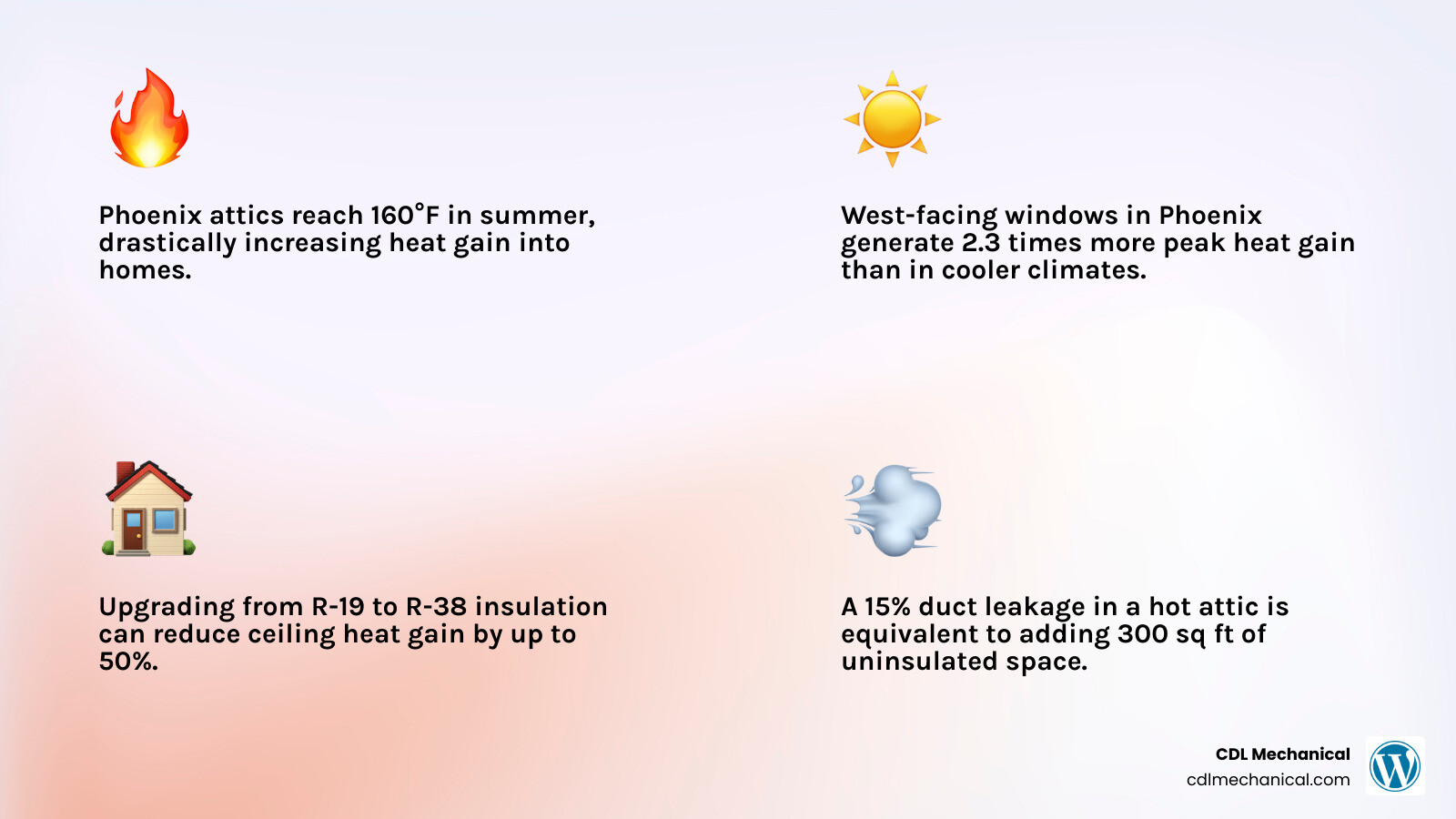
- Solar Radiation: A west-facing window in Phoenix generates peak heat gain 2.3 times higher than the same window in Chicago.
- SHGC Values: The Solar Heat Gain Coefficient of your glass tells us how much solar radiation enters your home.
- Radiant Heat: Stucco walls and tile roofs absorb heat all day and continue to radiate it into your living space long after the sun goes down.
Insulation and ductwork integrity
Your “building envelope” is what keeps the cool air in.
- Attic Temperatures: On a July afternoon, your attic can reach 160°F. If you have R-19 insulation, that heat is pouring into your home. Moving to R-38 can reduce that ceiling heat gain by 50%.
- Duct Leakage: This is a hidden killer. A duct system leaking just 15% of its air into a hot attic is like adding 300 square feet of uninsulated space to your home.
- Air Infiltration: We measure this in ACH50 (Air Changes per Hour). Older homes might leak air at a rate of 10-12 ACH50, while modern builds are closer to 3-5. This “leakiness” must be factored into the sizing.
| Insulation Level | Heat Gain Impact |
|---|---|
| R-19 (Standard Older Home) | High heat transfer from 160°F attic |
| R-38 (Modern Code) | ~50% reduction in ceiling heat gain |
| R-49+ (High Efficiency) | Maximum thermal barrier for desert heat |
Efficiency Ratings and Modern HVAC Technology
When getting the right size hvac for the phoenix west valley homes, you also have to consider efficiency ratings. In 2023, the federal government moved to SEER2 ratings. In Arizona, the minimum requirement is now 14.3 SEER2.
However, the rating is only half the story. You also need to choose the right technology. Many homeowners are now opting for heat pumps because they provide both heating and cooling with incredible efficiency. Understanding SEER ratings and their importance helps you see the long-term ROI of your investment.
The benefits of variable-capacity systems
Traditional AC units are either “on” or “off.” Variable-capacity (or variable-speed) systems are different. They can modulate their output to as low as 40% capacity.
- Partial-Load Conditions: Most of the year in Arizona isn’t 115°F. During the “shoulder seasons” (April, May, October), a variable-speed unit can run at a lower, quieter, and more efficient speed.
- Seasonal Energy Reduction: These systems can provide a 20%–40% reduction in energy use compared to single-stage units because they avoid the constant “power surges” of turning on and off.
Why the “Square Feet Per Ton” rule fails
You might hear people say you need “one ton for every 400 square feet.” In the West Valley, this is a dangerous myth.
- The 300-350 Sq Ft Reality: Because of our extreme design temperatures (110°F), most standard Arizona homes actually need a ton for every 300 to 350 square feet.
- Construction Vintage: A 2,000 sq ft home built in 1975 with single-pane windows needs a much larger system than a 2,000 sq ft home built in 2024 with high-performance glass.
- Ceiling Height: Cooling a room with 12-foot vaulted ceilings requires more capacity than a room with 8-foot ceilings, even if the floor square footage is the same.
Frequently Asked Questions about HVAC Sizing
Why is my AC running constantly but the house is still warm?
This is usually a sign of an undersized system, extreme duct leakage, or a lack of insulation. If the unit is running but the temperature is climbing, it simply cannot remove heat as fast as the sun is adding it. A professional load calculation can determine if the unit is truly too small or if your home just needs better “armor” (like attic insulation).
Does a bigger AC unit handle the 115°F Phoenix heat better?
Not necessarily. If a unit is drastically oversized, it will short cycle even on hot days, leading to poor air distribution and hot spots. A “correctly” sized unit is designed to run almost continuously during the hottest hour of the hottest day of the year. This is actually by design—it keeps the air moving and the temperature stable.
How often should I have my HVAC sizing re-evaluated?
You should re-evaluate your sizing if you make significant changes to your home. This includes adding a room, replacing all your windows with high-efficiency glass, or significantly increasing your attic insulation. These changes alter the “load,” meaning your old AC might now be oversized for your improved home!
Conclusion
At CDL Mechanical, we know that your home is your refuge from the Arizona sun. As a family-owned company based in Glendale, we treat every calculation as if we were sizing a system for our own parents or children. We don’t believe in “rules of thumb”—we believe in science, engineering, and the Manual J standard.
Getting the right size hvac for the phoenix west valley homes is the difference between a summer of soaring bills and a summer of cool, quiet comfort. Whether you are in Buckeye, Peoria, or right here in Glendale, our team is ready to help you find the “Goldilocks” system: not too big, not too small, but just right.
Don’t leave your comfort to chance. Schedule your professional sizing assessment with our HVAC services in Glendale, AZ today and let us help you stay cool for years to come.