
How Arizona Monsoon Season Affects Your HVAC System in Glendale, AZ
How Arizona monsoon season affects your HVAC system is something every Glendale homeowner should understand before June 15 rolls around. From the moment the first haboob rolls across the Valley, your AC is fighting on multiple fronts — dust, humidity, lightning, and debris all hit at once.
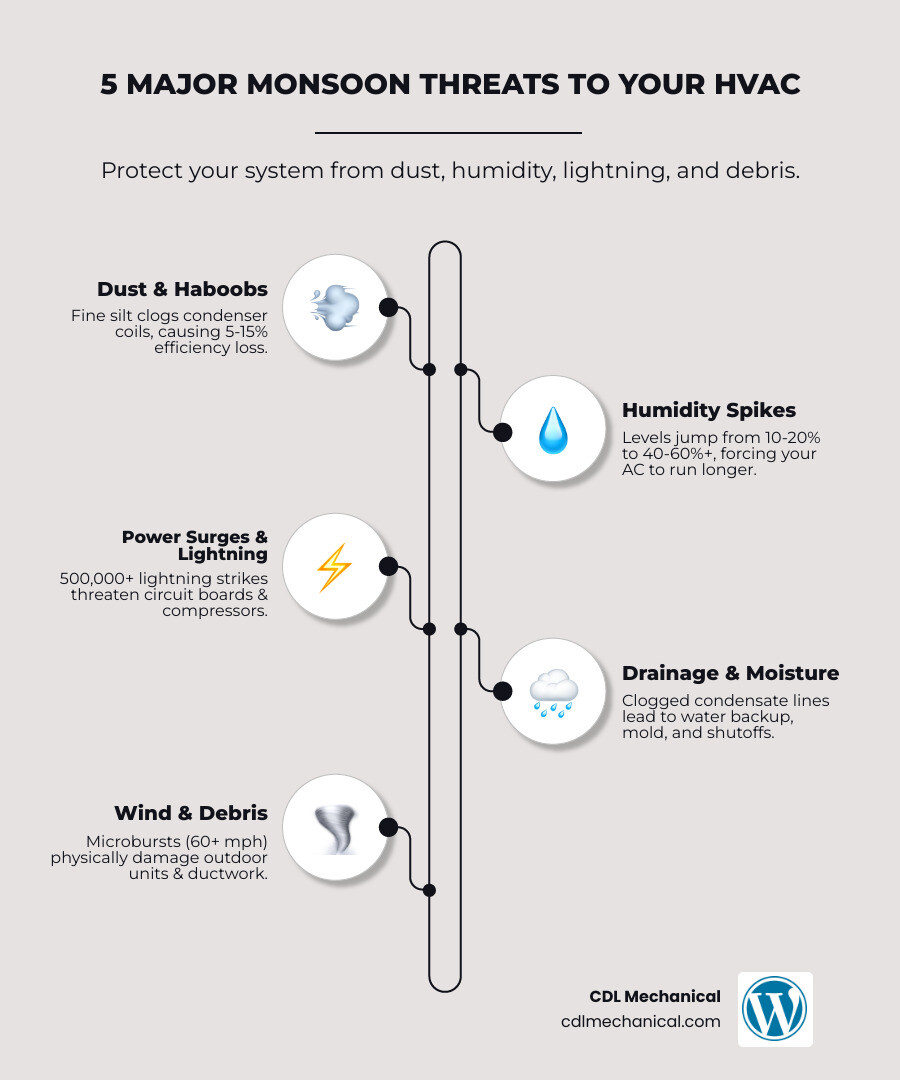
Here is a quick look at the five biggest monsoon threats to your HVAC system:
- Dust and haboobs – Fine silt clogs condenser coils and causes 5–15% efficiency loss
- Humidity spikes – Levels jump from 10–20% to 40–60%+, forcing your AC to run longer and work harder
- Power surges and lightning – Phoenix averages 500,000 lightning strikes per monsoon season, threatening circuit boards, capacitors, and compressors
- Drainage and moisture problems – Clogged condensate lines lead to water backup, mold growth, and safety shutoffs
- Wind and flying debris – Microbursts exceeding 60 mph can physically damage outdoor condenser units and ductwork
Arizona’s monsoon season officially runs from June 15 to September 30. In a place like Glendale, where the dry season keeps humidity as low as 10–20%, that sudden shift to 40–60% or higher is a shock to any cooling system. Most AC units are calibrated for the dry desert heat — not this combination of dust, moisture, and electrical chaos. If your system is not prepared, you will feel it in your comfort, your energy bill, and eventually your repair costs.
I’m Joshua Michael Bartlett, founder of CDL Mechanical, and with over 20 years of hands-on HVAC experience in desert climates, I have seen how Arizona monsoon season affects your HVAC system — and what it takes to protect it before the storms arrive. In the sections below, we’ll walk through each threat in detail and give you clear, actionable steps to keep your system running strong all season long.
I’m worried about dust storms damaging my AC. How Arizona monsoon season affects your HVAC system in Glendale?
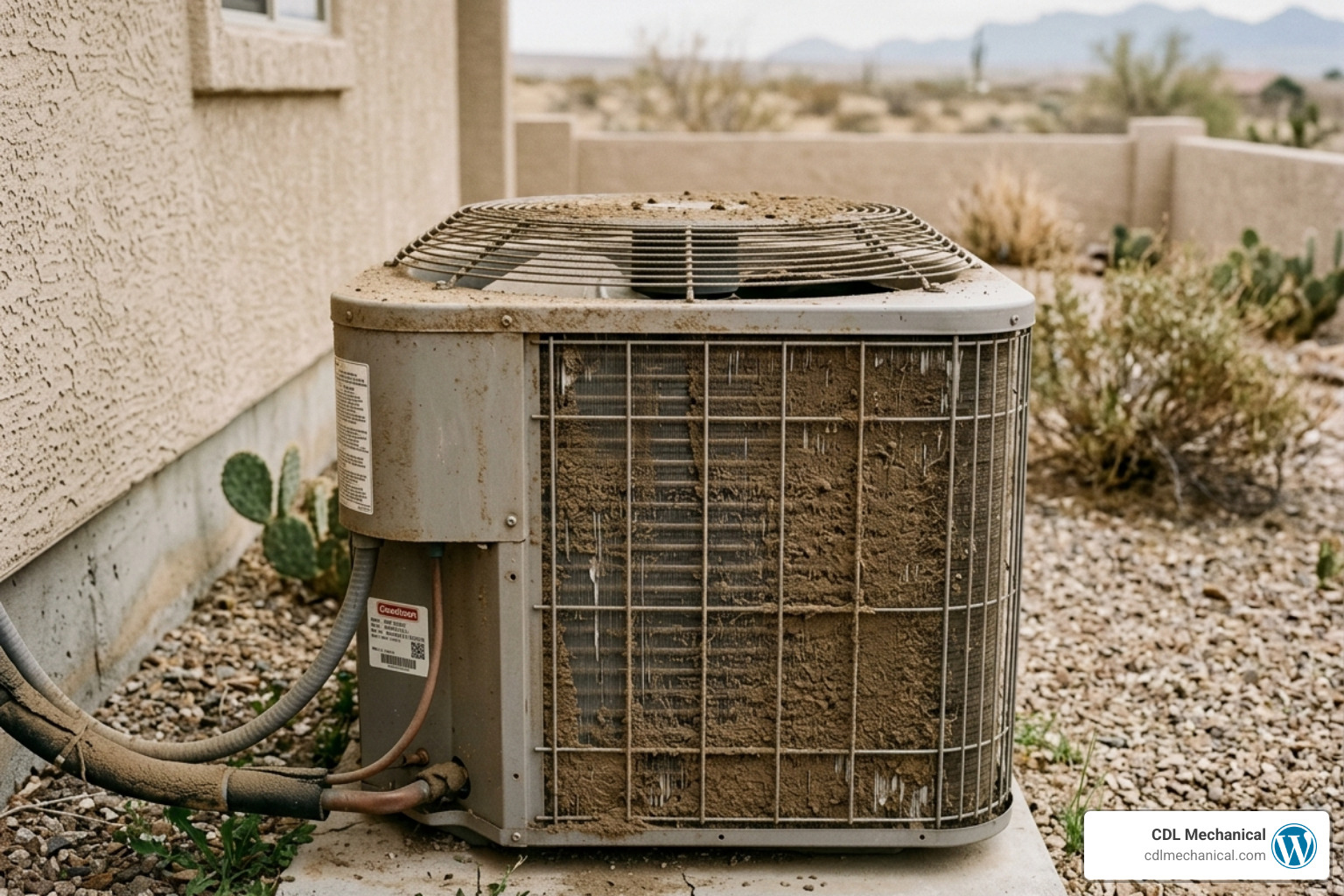
When we talk about “haboobs,” we aren’t just talking about a little bit of wind. These massive walls of dust can reach thousands of feet into the air and travel at 50 mph, swallowing neighborhoods in Sun City, Peoria, and Glendale within minutes. For your air conditioner, a haboob is essentially a giant blanket of fine silt that smothers its ability to breathe.
The outdoor portion of your AC, the condenser unit, relies on airflow to release the heat it gathered from inside your home. Inside that unit are copper or aluminum fins called condenser coils. When a dust storm hits, that fine silt coats these coils. Think of it like trying to run a marathon while wearing a heavy winter parka in July. The silt acts as an insulator, trapping heat inside the system.
This leads to a 5–15% efficiency loss almost immediately. Because the heat can’t escape, your compressor has to work twice as hard and run significantly longer to achieve the same cooling effect. This extra strain is a leading cause of overheating and premature compressor failure during the peak of the 2026 summer.
Furthermore, that dust doesn’t just stay outside. It finds its way into your ductwork and clogs your indoor air filters. During a particularly dusty July, we often tell our neighbors that those “90-day” filters might only last 20 or 30 days. When the filter is caked in Arizona silt, your indoor blower motor has to pull harder, which can lead to a frozen evaporator coil or a complete system shutdown. Regular Air Conditioning Maintenance is the only way to ensure these coils are chemically cleaned and ready to breathe again. You can also learn more about How Hvac Filters Affect Indoor Air Quality to understand why keeping them clean is vital for your family’s health during storm season.
Why does my house feel so humid in July? Managing latent heat and cooling efficiency
One of the most common calls we get in late July and August is: “My AC is running, but I’m still sweating!” This is because how Arizona monsoon season affects your HVAC system involves a massive shift in how your unit handles heat.
In the “dry” part of the summer, your AC focuses on sensible heat—the actual temperature you see on the thermostat. But when the monsoon moisture arrives, your AC has to deal with latent heat—the energy required to remove moisture from the air.
| Weather Condition | Typical Humidity Levels | Impact on HVAC |
|---|---|---|
| Dry Season (May/June) | 10% – 20% | High efficiency; rapid cooling |
| Monsoon Season (July/Aug) | 40% – 60%+ | 15–25% energy usage increase; 10–20% efficiency drop |
When humidity levels spike, your AC spends a huge portion of its energy turning water vapor into liquid rather than lowering the air temperature. This is why your cooling efficiency can drop by up to 20%. You might notice your vents are blowing air that is only 10 degrees cooler than the room temperature, whereas in June, it was a crisp 20-degree difference.
High humidity also makes the air feel “heavy” and prevents your sweat from evaporating, which is your body’s natural cooling mechanism. This leads many homeowners to crank the thermostat down even lower, causing energy bills to skyrocket by 15% to 30%. If you are noticing that some rooms feel stickier than others, it might be time to look into How To Fix Hot And Cold Spots At Home or consider Air Balancing to ensure the dehumidified air is reaching every corner of your house.
Protecting your home from 500,000 lightning strikes and power surges
The Phoenix Valley is famous for its “electric” summer nights, but those 500,000 lightning strikes that NOAA tracks each season are a nightmare for modern HVAC systems. Today’s air conditioners are essentially high-powered computers. They rely on sensitive circuit boards, sensors, and capacitors to function.
A lightning strike doesn’t even have to hit your house to cause damage. A strike nearby can send a massive power surge through the electrical grid. These surges can “fry” a control board instantly, or worse, cause “invisible” damage to the compressor motor windings that leads to a breakdown three months later when you least expect it.
Beyond the electricity, we also have to contend with microbursts. These are localized, intense downdrafts that can generate winds exceeding 60 mph. We have seen microbursts in Scottsdale and Surprise toss patio furniture and heavy tree branches directly into outdoor condenser units. If a branch hits the fan grill, it can bend the blades or destroy the fan motor.
This is one of the many 5 Benefits Of Routine Ac Maintenance—we check for loose electrical connections and ensure your unit is securely mounted to its pad before the wind starts howling. We also inspect the transitions where your unit connects to your ductwork, as high winds can actually tear these seals, leading to massive air leaks.
Is my AC leaking because of the rain? Moisture risks and drainage issues
It might seem strange to worry about “water damage” in the desert, but the monsoon brings a unique moisture threat to your indoor equipment. Remember how we mentioned the AC pulls moisture out of the air? That water (condensate) collects in a drain pan and flows out through a PVC pipe.
During the dry season, that pipe might only see a few drops a day. During the monsoon, it’s a constant stream. Now, combine that extra water with the fine dust from a haboob that your filter didn’t catch. That dust and water mix together to create a literal “monsoon mud” inside your drain line.
If that line clogs, the water has nowhere to go but back into your house. We have seen ceiling collapses in Glendale homes because a clogged drain pan overflowed into the attic. Modern systems often have a “float switch” that will shut the AC off if it detects a backup, but older units might just keep leaking. If you see water pooling around your indoor unit, you need to know How To Handle A Leaking Air Conditioner immediately to prevent mold growth.
Excess moisture in your ducts can also lead to biological growth. If you start noticing a “dirty sock” smell when the AC kicks on, it’s a sign that the humidity is winning. It’s worth asking, Is Your Homes Air Quality Worse Than Outside during these humid months? Often, the answer is yes if your drainage system isn’t functioning perfectly.
Proactive steps for the 2026 storm season: Preparation and recovery
The best way to handle how Arizona monsoon season affects your HVAC system is to be proactive. You don’t want to be calling for a repair on a Sunday night in August when it’s 115 degrees outside and every HVAC company in the Valley is booked solid.
What maintenance is needed for my cooling unit? How Arizona monsoon season affects your HVAC system before the storms hit
Before the first storm clouds gather over the White Tank Mountains, we recommend following this 2026 monsoon prep checklist:
- The 2-Foot Rule: Ensure there is at least two feet of clear space around your outdoor condenser. Trim back any desert broom, palo verde branches, or shrubs that could blow into the unit during a microburst.
- Filter Stockpile: Buy a multi-pack of high-quality pleated filters. During the monsoon, check them every 30 days. If you can’t see light through the filter, it needs to be changed.
- Gently Rinse the Coils: After a major dust storm, you can use a garden hose to gently rinse the outdoor coils. Warning: Use low pressure only! High-pressure sprayers can bend the delicate fins and cause permanent damage. Spray from the top down to wash away the silt.
- Install Surge Protection: We highly recommend a dedicated HVAC surge protector. This is installed at the electrical disconnect near your outdoor unit and can save you thousands in repairs from lightning strikes.
- Professional Tune-Up: A professional Spring Ac Tune Up Checklist includes flushing the condensate drain line with an anti-microbial solution to prevent that “monsoon mud” from clogging your pipes. Joining a Maintenance Plan is the easiest way to ensure this gets done every year without you having to remember it.
My AC is making strange noises after a storm. How Arizona monsoon season affects your HVAC system components
Once a storm passes, take a moment to perform a quick “post-storm inspection.”
- Listen for Noises: If you hear rattling, buzzing, or grinding when the unit starts up, turn it off. Debris like gravel or small sticks might have been sucked into the fan.
- Check the Thermostat: If your thermostat screen is blank after a storm, you likely had a power surge that tripped a breaker or blew a fuse on the control board.
- Wait Before Restarting: If your power flickers or goes out, wait about 10–15 minutes before turning the AC back on. This allows the refrigerant pressures to equalize and prevents the compressor from trying to start under a heavy load.
- Upgrade for Resilience: If your home struggles with the humidity every year, 2026 might be the time to consider a whole-home dehumidifier. These units work alongside your AC to pull moisture out of the air more efficiently than the AC can do alone. Additionally, a smart thermostat can alert your phone if humidity levels spike or if the system is running for 4 hours straight without reaching the set temperature—a clear sign of a clogged coil.
Frequently Asked Questions about Arizona Monsoons and HVAC
When does the Arizona monsoon season officially occur?
The monsoon season officially begins on June 15 and ends on September 30. However, the most intense activity—including the heaviest rains and the largest haboobs—typically occurs between mid-July and mid-August.
Can a dust storm actually break my air conditioner?
Yes. While a single storm might not “break” it instantly, the accumulation of silt on the coils causes the compressor to run at much higher temperatures. Over time, this heat breaks down the oil inside the compressor, leading to a mechanical failure. It’s a “silent killer” for AC units in the Phoenix Valley.
Should I turn off my AC during a severe thunderstorm?
If you see frequent lightning and hear loud thunder nearby, it is a safe practice to turn your AC off at the thermostat. This protects the sensitive electronics from the immediate threat of a power surge. Once the storm passes and the power is stable, you can turn it back on.
Conclusion
Living in Glendale means enjoying the beautiful desert landscape, but it also means respecting the power of the Arizona monsoon. Understanding how Arizona monsoon season affects your HVAC system is the first step toward ensuring your home remains a sanctuary of cool, dry air when the weather outside gets wild.
At CDL Mechanical, we are a family-owned company that treats our customers like our own neighbors. We know exactly what the 2026 monsoon season can throw at a cooling system because we live and work right here in the same heat. Whether you need a pre-season cleaning, a surge protector installation, or a post-storm diagnostic, our expert technicians are here to help.
Don’t wait for the dust to settle on your AC’s performance. Take action now to protect your investment and your family’s comfort.
Schedule your monsoon-ready HVAC service in Glendale, AZ