
Why High Efficiency Furnace Benefits for Cold Winters Matter More Than You Think
The high efficiency furnace benefits for cold winters are real, measurable, and worth understanding before you replace your heating system. Here is a quick summary:
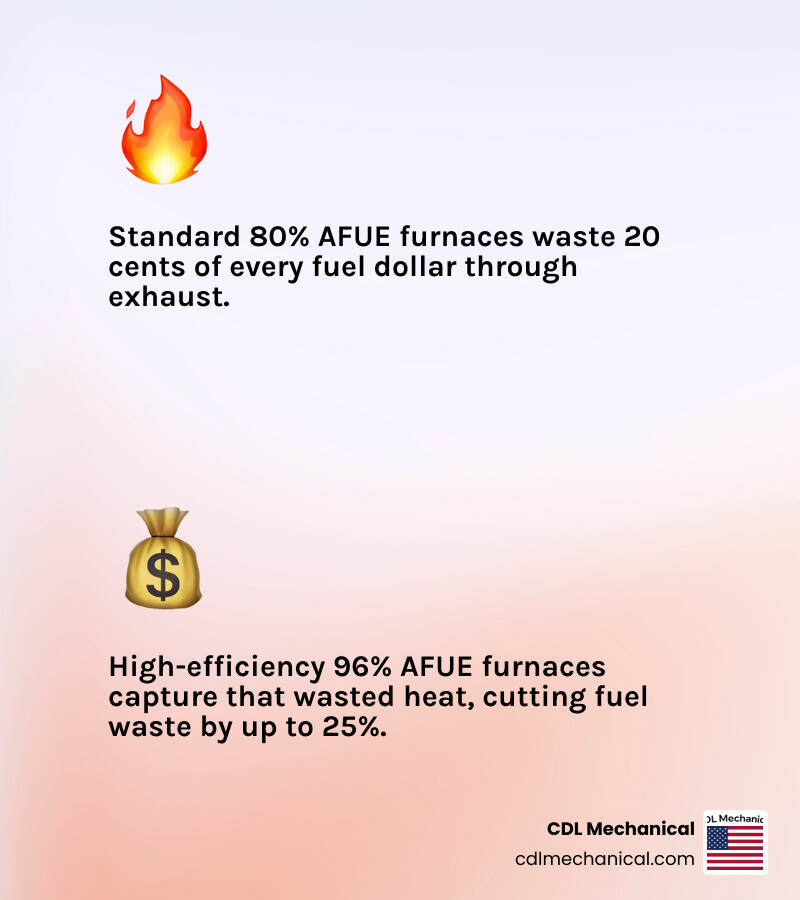
- Lower energy bills – Upgrading from an 80% AFUE furnace to a 96% model can cut fuel waste by up to 25%
- More consistent warmth – Variable-speed blowers eliminate cold spots and temperature swings
- Quieter operation – Advanced blower motors and insulated cabinets run significantly quieter than older systems
- Reduced emissions – Switching to a high-efficiency model can cut CO₂ output by roughly 1.5 metric tons per year
- Longer equipment life – With proper maintenance, high-efficiency furnaces typically last 15 to 20 years
- Rebates and tax credits – Federal and utility incentive programs can help offset the upfront cost
If your furnace is more than 15 years old, running up high energy bills, or struggling to keep every room comfortable during cold snaps, a high-efficiency upgrade is likely worth a serious look.
Most people only think about their furnace when something goes wrong. But if you have not replaced yours in over a decade, a lot has changed — and the gap between an older 80% efficient unit and a modern 95%+ model represents real money left on the table every single winter.
A standard furnace sends roughly 20 cents of every fuel dollar straight out the exhaust. A high-efficiency condensing furnace captures most of that wasted heat through a second heat exchanger, putting it back into your home instead. The result is a warmer, quieter house and a noticeably lower gas bill.
I’m Joshua Michael Bartlett, owner of CDL Mechanical and a hands-on HVAC professional with over 20 years of experience helping homeowners get the most out of their heating systems — including understanding exactly where high efficiency furnace benefits for cold winters make the biggest difference. In the sections below, I will walk you through everything you need to know to make a confident, informed decision.
What is a High-Efficiency Furnace and How Does It Work?
To understand why a high-efficiency furnace is such a game-changer for cold weather, we first have to look at the science of how it extracts heat from fuel.
Standard furnaces are non-condensing systems. They burn natural gas or propane, send the hot combustion gases through a single heat exchanger to warm up your home’s air, and then vent the remaining exhaust straight up a metal chimney. Because those exhaust gases must remain hot enough (often between 300°F and 400°F) to rise naturally out of the flue, a substantial amount of heat is lost to the outdoors.
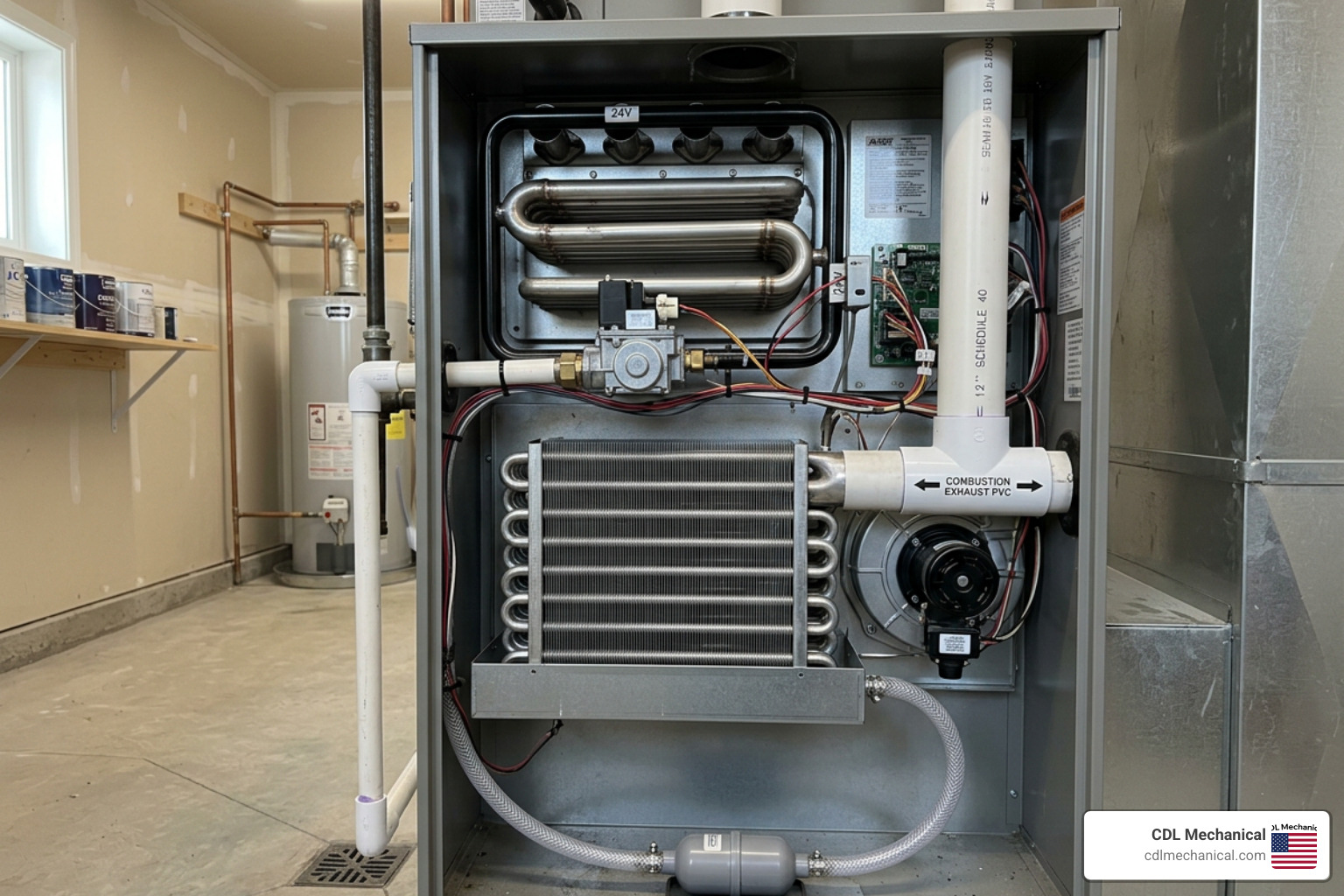
A high-efficiency furnace, also known as a condensing furnace, changes this process entirely by utilizing two heat exchangers working in tandem:
- The Primary Heat Exchanger: This is where the initial combustion takes place, capturing the bulk of the heat just like a standard furnace.
- The Secondary Heat Exchanger: Instead of venting the remaining exhaust, a high-efficiency system routes the flue gases into a secondary, highly durable stainless steel heat exchanger. Here, the gases are cooled further, extracting “latent heat.” This is the extra energy released when the water vapor in the combustion exhaust condenses back into liquid water.
Because so much heat is extracted, the exhaust gases drop to a cool 130°F to 140°F. At this temperature, the exhaust no longer needs a metal chimney to rise. Instead, we vent it safely through a inexpensive, durable PVC pipe run through an exterior wall. The resulting acidic condensate water is then drained away safely through a dedicated condensate drain line.
Additionally, high-efficiency furnaces feature a sealed combustion system. Rather than drawing warm indoor air from your living space or utility closet to burn as fuel (which creates negative pressure and pulls cold outdoor drafts into your home), they use a dedicated PVC intake pipe to pull fresh air directly from outside.
When you are looking at Choosing the Best Heating System for Your House, understanding these thermodynamic differences is crucial. If you are comparing different fuel sources, our guide on Heat Pump vs Gas Furnace vs Electric Furnace: 3 Key Factors can help you weigh your options.
Key High Efficiency Furnace Benefits for Cold Winters
Upgrading to a high-efficiency system provides immediate, tangible improvements to your daily life when the temperatures drop. Here are the primary high efficiency furnace benefits for cold winters that make the transition worthwhile:
- Substantial Energy Savings: Because high-efficiency units convert nearly all their fuel into usable heat, they drastically reduce your monthly gas consumption. Upgrading from an older, standard 80% AFUE furnace to a 95% or 96% AFUE model can cut your fuel usage by up to 25%.
- Elimination of Cold Spots: Standard furnaces blast hot air at full speed and then shut off completely, leading to a “roller coaster” of indoor temperatures. High-efficiency systems operate at lower, steadier speeds to distribute heat evenly across every room in your home.
- Whisper-Quiet Operation: Thanks to advanced combustion technology, insulated cabinet designs, and variable-speed fan motors, these units run so quietly that you will barely notice when they turn on.
- A Cleaner Carbon Footprint: By burning less fuel to achieve the same level of comfort, you are significantly reducing your household’s greenhouse gas emissions. Upgrading to a 96% AFUE furnace can reduce your carbon footprint by roughly 1.5 metric tons of CO₂ per year.
- Enhanced Durability and Lifespan: High-efficiency furnaces are built with premium materials, such as stainless steel secondary heat exchangers, designed to resist corrosion from acidic condensate. With routine maintenance, these systems can comfortably last 15 to 20 years.
To lower your utility bills even further, you can pair your upgrade with other straightforward home adjustments. Check out our guide on New Year Lower Bills: Simple HVAC Tweaks to Cut Winter Energy Costs for actionable advice.
AFUE Comparison Table
To see how much fuel is converted to heat versus how much is wasted, look at this quick comparison:
| Furnace Efficiency Rating (AFUE) | Heat Delivered per Dollar Spent | Fuel Wasted through Exhaust | Estimated Annual Savings (on a $1,000 Fuel Bill) |
|---|---|---|---|
| 80% AFUE (Standard) | $0.80 | 20% | Baseline |
| 90% AFUE (High-Efficiency) | $0.90 | 10% | $100 saved |
| 96% AFUE (Premium High-Efficiency) | $0.96 | 4% | $160 saved |
| 98% AFUE (Ultra High-Efficiency) | $0.98 | 2% | $180 saved |
Maximizing High Efficiency Furnace Benefits for Cold Winters with Smart Thermostats
To get the absolute most out of your new high-efficiency furnace, we highly recommend pairing it with a smart thermostat. Traditional thermostats are simple on/off switches, but smart thermostats communicate dynamically with modern variable-speed and two-stage heating systems.
By using motion detection, geofencing, and automated scheduling, a smart thermostat ensures your high-efficiency system only runs when you actually need it. For instance, it can automatically lower the indoor temperature by a few degrees while you are at work or asleep, and then gently warm the house back up before you return or wake up. This prevents the furnace from wasting fuel when the house is empty, maximizing your overall savings.
If you want to keep your home’s comfort systems running seamlessly, exploring our comprehensive Heating Services is a great place to start.
How Dual-Fuel Systems Enhance High Efficiency Furnace Benefits for Cold Winters
Here in the West Valley of the Phoenix metro area—including communities like Glendale, Peoria, Goodyear, and Litchfield Park—our winter weather presents a unique challenge. While our winter days are often beautiful and mild, our desert nights can drop rapidly into the chilly 30s and 40s.
This is where a dual-fuel (or hybrid) heating system shines. A dual-fuel system pairs an electric heat pump with a high-efficiency gas furnace.
- During mild winter days: The electric heat pump handles the heating. Heat pumps are incredibly efficient when temperatures are above 40°F because they transfer existing heat from the outdoor air into your home rather than generating it from scratch.
- During freezing desert nights: When the temperature plummets and the heat pump has to work harder, the system automatically switches over to your high-efficiency gas furnace. This ensures you always have fast, robust, and cost-effective heating when you need it most.
This automatic optimization can cut your total winter heating energy use by up to 50% compared to conventional gas-only or electric-resistance systems. To learn more about how you can take advantage of these hybrid setups, read our guide on How to Get Paid for Upgrading to a Heat Pump in Arizona.
Comparing Furnace Technologies: Single-Stage, Two-Stage, and Modulating
When shopping for a high-efficiency furnace, you will encounter three primary types of burner and blower technologies. Understanding these differences will help you choose the right balance of comfort and efficiency for your family:
- Single-Stage Furnaces: These are the traditional systems of the past. They operate on a simple “all-on or all-off” basis. When the thermostat calls for heat, the burner runs at 100% capacity, and the blower fan runs at full blast. This leads to rapid temperature swings, louder operation, and higher energy consumption.
- Two-Stage Furnaces: These systems have a high and a low setting. Most of the time (around 80% of the winter), they run on the low setting, which uses about 65% of the furnace’s total capacity. This allows the system to run longer, gentler cycles that distribute heat much more evenly while saving fuel. When an extreme cold snap hits, the furnace automatically steps up to the second, high-capacity stage to keep your home warm.
- Modulating Furnaces: This is the gold standard of heating technology. A modulating gas valve can adjust its heat output in tiny increments (often between 40% and 100% capacity) to precisely match your home’s real-time heating demand.
When paired with a variable-speed ECM blower motor, modulating and two-stage furnaces do wonders for your indoor air quality and humidity control. Because the fan runs continuously at a very low, energy-efficient speed, your indoor air is constantly circulating through your home’s air filter. This continuous filtration removes more dust, pet dander, and allergens from the air while preventing stagnant, humid spots from forming.
To keep these advanced components operating at peak performance, regular Furnace Maintenance is essential. And if your system ever experiences an unexpected hiccup during a cold desert night, prompt Furnace Repair will ensure your home stays safe and warm.
Financial Incentives, Rebates, and the Payback Period
While high-efficiency furnaces have a higher upfront equipment cost than standard 80% models, they are a smart long-term investment. The time it takes for the system to pay for itself through lower utility bills is known as the payback period. In climates with long, freezing winters, this payback period is often as short as 5 to 8 years. In our milder Arizona winter climate, the payback period might be slightly longer, but it is dramatically shortened by taking advantage of available financial incentives.
As of June 2026, there are fantastic federal and local programs designed to put money back in your pocket for making energy-efficient upgrades:
- Federal Tax Credits: Under the Energy Efficient Home Improvement Credit (Section 25C of the Inflation Reduction Act), homeowners can claim a tax credit of up to 30% of the installation cost (capped at $600) for qualifying high-efficiency gas furnaces (97% AFUE or higher). If you choose a qualified heat pump as part of a dual-fuel system, that tax credit increases up to $2,000!
- Local Utility Rebates: Arizona utility companies like APS and SRP offer lucrative rebates for upgrading to high-efficiency heating and cooling equipment.
To navigate these savings opportunities easily, we have compiled several step-by-step resources for Arizona residents:
- The Arizona Homeowners Guide to Inflation Reduction Act Benefits
- What HVAC Systems Qualify for Tax Credits and Rebates
- The Ultimate Guide to Arizona Energy Rebates for HVAC Upgrades
- Applying for Arizona Energy Rebates Made Easy
- How West Valley Homeowners Can Cash in on APS Rebates
Frequently Asked Questions about High-Efficiency Furnaces
How long do high-efficiency furnaces typically last?
With professional installation and regular preventative maintenance, a high-efficiency furnace typically lasts 15 to 20 years. Because these systems utilize condensing technology, keeping the condensate drain lines clear and the heat exchangers clean is essential to maximizing their lifespan.
If you live in the West Valley, scheduling annual tune-ups is the best way to protect your investment. Learn more about our local maintenance services here:
Do high-efficiency furnaces require special installation or venting?
Yes. Because high-efficiency furnaces cool combustion gases to the point of condensation, they cannot use your home’s existing vertical metal chimney flue. The acidic moisture would quickly corrode the metal.
Instead, they require dedicated PVC pipes for venting and combustion air intake, which are typically routed horizontally through an exterior sidewall. Additionally, because they produce water during operation, they must be connected to a reliable indoor drain or condensate pump.
If you are planning an upgrade, it is vital to work with licensed professionals who understand these code requirements. Check out our expert installation services:
How do I know if my current furnace needs to be replaced?
It is usually time to consider a replacement if your current furnace is over 15 years old, requires frequent or increasingly expensive repairs, or if your winter energy bills are climbing unexpectedly. Uneven heating, cold spots, or loud rattling noises are also clear signs that your system is struggling to keep up.
If you are experiencing any of these issues, our expert technicians can diagnose the problem and help you decide whether a repair or replacement makes the most sense. Explore our local repair services:
Conclusion
Investing in a high-efficiency furnace is one of the smartest ways to bring reliable comfort, whisper-quiet operation, and lower monthly energy bills to your home. Whether you are looking to replace an old, failing gas furnace or want to design a cutting-edge, dual-fuel hybrid system tailored perfectly to our desert climate, we are here to help.
At CDL Mechanical, we are a family-owned HVAC company based right here in Glendale, AZ. We pride ourselves on treating our customers like family, which means providing honest advice, transparent communication, and top-tier workmanship on every single job. We serve Glendale and the surrounding West Valley communities with dependable, expert heating and cooling solutions.
Ready to experience the difference a high-efficiency system can make in your home? Contact CDL Mechanical for expert heating installation and replacement services today, and let us keep your family comfortable all winter long!