
Why Indoor Air Quality in Glendale, AZ Starts With Your HVAC System
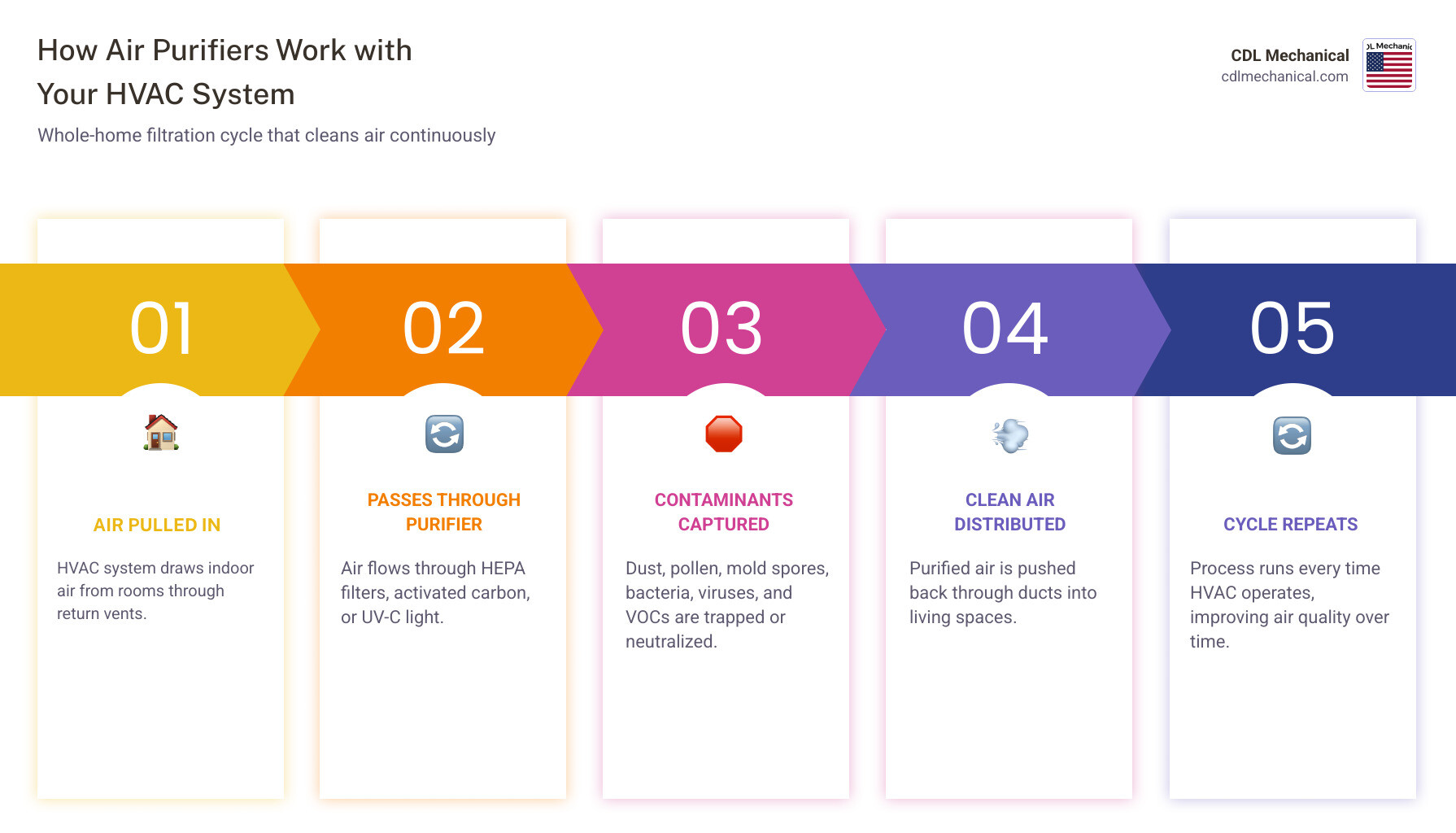
How air purifiers work with your HVAC system comes down to one simple idea: your HVAC already moves air through every room in your home — an integrated air purifier cleans that air as it travels through the system, catching pollutants before they circulate back to you.
Here is a quick breakdown of how it works:
- Air is pulled in through your return vents as your HVAC system runs.
- It passes through the purifier — which may use HEPA filters, activated carbon, UV-C light, or a combination of these technologies.
- Contaminants are captured or neutralized — including dust, pollen, pet dander, mold spores, bacteria, viruses, and VOCs.
- Cleaner air is distributed back through your ductwork and into your living spaces.
- The cycle repeats every time your system runs, continuously improving your indoor air quality.
Most homeowners are surprised to learn that indoor air can be anywhere from two to five times — and sometimes up to 100 times — more polluted than the air outside, according to the EPA. And since most of us spend roughly 90% of our time indoors, the quality of that air has a real impact on our health, comfort, and well-being. In a place like Glendale, AZ, where extreme heat keeps windows shut for months at a time, pollutants have nowhere to escape. They just keep building up inside your home.
Your HVAC system is already doing the heavy lifting of moving air around your house. The problem is that a standard filter is mostly designed to protect the equipment — not to protect your lungs. That is where a dedicated air purifier changes everything.
I am Joshua Michael Bartlett, founder of CDL Mechanical, and with over 20 years of hands-on HVAC experience in the greater Phoenix area, I have seen how properly integrating an air purifier with your HVAC system transforms a home’s air quality from stale and irritating to genuinely fresh and clean. In the sections below, I will walk you through everything you need to know about how air purifiers work with your HVAC system — from the technology behind it to what it takes to get it right.
Understanding the Synergy: How Air Purifiers Work With Your HVAC System
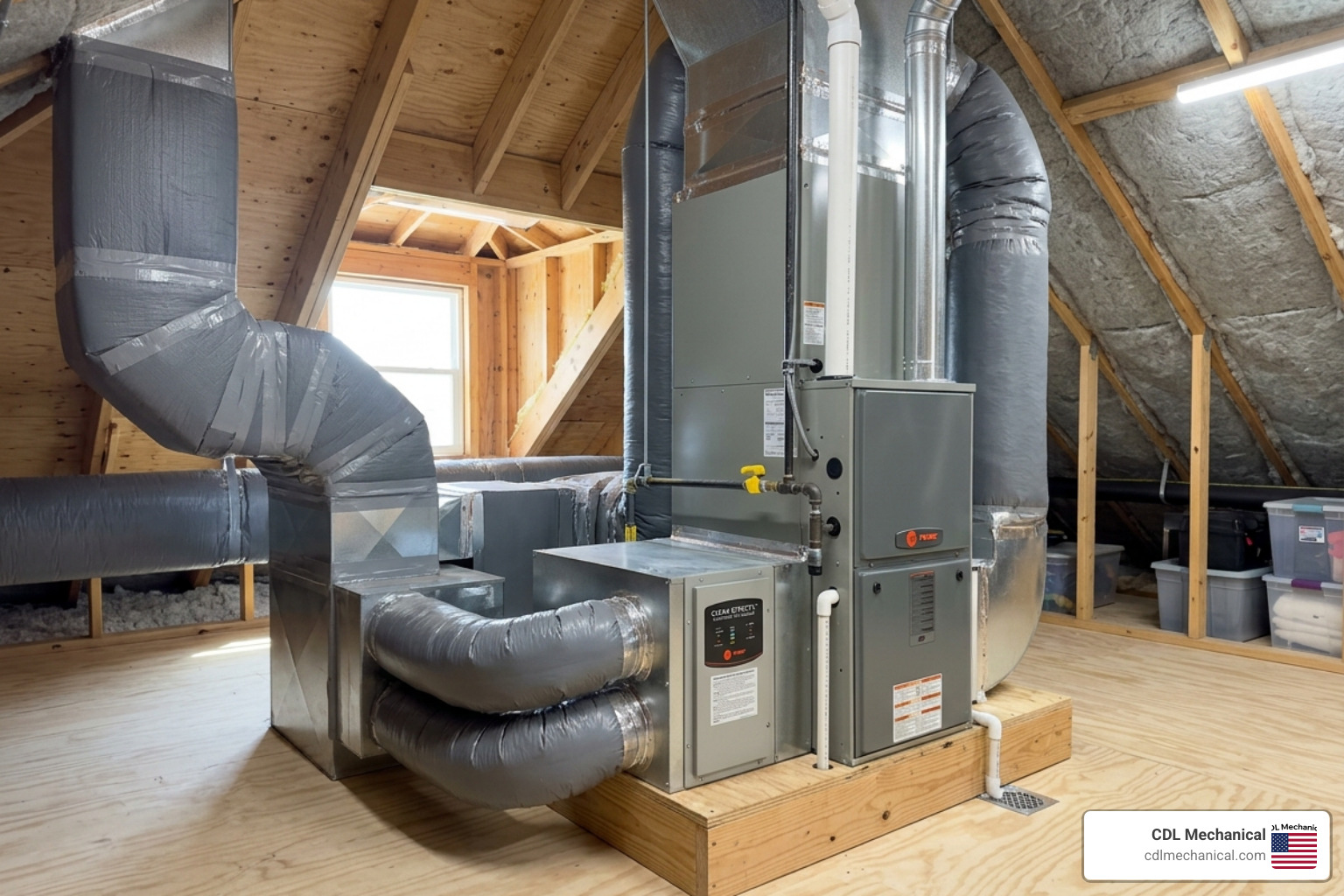
To understand how air purifiers work with your HVAC system, we first have to look at your HVAC as a giant lung. It breathes in the air from your rooms through return ducts, heats or cools it, and then breathes it back out. While this is great for temperature control, it can be a double-edged sword for air quality. If your air is full of dust or pet dander, your HVAC is essentially just “stirring the pot,” moving those pollutants from the living room to the bedroom.
By integrating a purifier, we turn that circulation into a cleaning cycle. Instead of just managing the temperature, the system provides continuous filtration. This is vital because is your home’s air quality worse than outside? In many cases, yes. Modern homes are built to be airtight for energy efficiency, which is great for your electric bill but bad for “trapped” pollutants.
When we combine these two systems, we unlock 5 benefits of good indoor air quality, including better sleep and fewer allergy symptoms. The synergy allows the air purifier to leverage the powerful blower motor of your furnace or air handler to treat every square inch of your home, rather than just one corner of a room.
The mechanics of how air purifiers work with your hvac system
The process begins in the return air path. This is the “intake” side of your system. As the HVAC fan pulls air through the return vents, it forces that air through the purification device. Unlike standard 1-inch filters that only catch large “boulders” of dust to protect the machinery, integrated purifiers are designed to trap sub-micron particles. These are the tiny irritants—like bacteria, smoke, and viruses—that are small enough to settle deep in your lungs.
Because the purifier is located inside the main ductwork, it provides whole-home coverage. Every time the air cycles—which can happen several times an hour—it gets scrubbed clean. This creates a consistent airflow pattern of purified air throughout the entire house.
Why professional integration is how air purifiers work with your hvac system most effectively
You might be tempted to just buy the thickest, highest-rated filter you can find and shove it into your intake. Please, don’t do that! This is where professional integration becomes critical. Every HVAC system is designed to handle a specific amount of “static pressure”—basically, how hard the blower motor has to work to push air through a filter.
If a filter or purifier is too restrictive, it can choke your system, causing the blower motor to burn out or the coils to freeze. We ensure that the integration is seamless, matching the purifier’s capacity to your system’s blower motor capacity. This professional touch ensures system longevity and peak performance, so you aren’t trading clean air for a broken air conditioner in the middle of a Glendale July.
Main Types of HVAC-Integrated Air Purifiers
Not all purifiers are created equal. Depending on whether you’re fighting desert dust, pet odors, or seasonal germs, different technologies might be better suited for your home.
- HEPA Filtration: High-Efficiency Particulate Air filters are the gold standard for trapping physical particles. An air purifier using HEPA technology can capture 99.97% of particles as small as 0.3 microns.
- Activated Carbon: If your main concern is odors from cooking, pets, or smoke, carbon is your best friend. It uses “adsorption” to trap volatile organic compounds (VOCs) and gases that physical filters can’t catch.
- UV Lights: These don’t “trap” anything; instead, they use ultraviolet radiation to scramble the DNA of biological contaminants. Installing UV lights near your indoor coils or in the return duct can neutralize mold, bacteria, and viruses. This is especially popular for UV lights indoor air quality winter Glendale, AZ setups when flu season hits.
- Photocatalytic Oxidation (PCO): This sounds like science fiction, but it’s very real. It uses UV light hitting a catalyst (usually titanium dioxide) to create a reaction that breaks down pollutants at the molecular level.
- Ionization Technology: These devices release ions into the air stream that cause tiny particles to “clump” together. Once they are clumped, they become large enough for your standard filter to catch.
Whole-house systems vs. portable units
Many of our Glendale neighbors ask if they should just buy a few portable units. While portables have their place, they usually can’t compete with a whole-house system.
The biggest difference is the Clean Air Delivery Rate (CADR). A standard 1-inch disposable filter might have a CADR of 10, while a high-end whole-home air cleaner can have a CADR of 1200. That is a massive difference in how much clean air is actually being delivered to your family.
| Feature | Whole-House Purifier | Portable Air Cleaner |
|---|---|---|
| Coverage | Entire Home (Every Room) | Single Room Only |
| Noise Level | Silent (In-Duct) | Can be noisy (Fan in room) |
| Maintenance | Once or twice a year | Monthly filter checks/cleaning |
| Floor Space | Zero (Hidden in HVAC) | Takes up floor/table space |
| Initial Cost | Higher | Lower per unit |
| Efficiency | High (Uses existing HVAC fan) | Moderate (Individual motors) |
The Installation Process: Adding a Purifier to Your Existing Setup
Adding a purifier isn’t a “one-size-fits-all” DIY project. It requires a careful professional assessment of your current setup. When we come to your home in Peoria or Scottsdale, we start by checking your ductwork and your air handler’s available space.
The installation typically involves a few key steps:
- Ductwork Modification: We often need to cut a section of the return air duct to create a housing for the new purifier. This must be done with precision to ensure an airtight seal; otherwise, dirty air will just leak around the filter.
- Electrical Requirements: Most advanced purifiers—especially UV lights and ionizers—require a dedicated power source. We wire these directly into your HVAC’s control board so they only run when the system is moving air, saving energy.
- Air Handler Integration: The unit is typically placed just before the air reaches the furnace or air handler. This ensures the air is cleaned before it passes over your expensive heating and cooling coils.
For many homeowners, this is the perfect time to ask, is indoor air quality testing worth it? Testing before installation gives us a baseline, and testing after shows you exactly how much your indoor air quality Glendale, AZ has improved.
Key Benefits for Health, Efficiency, and Home Protection
The benefits of knowing how air purifiers work with your HVAC system go far beyond just “smelling better.”
- Allergen and Virus Reduction: By capturing pollen, pet dander, and viruses, you’re creating a safer environment for anyone with asthma or weakened immune systems.
- Mold Prevention: Mold loves the dark, damp environment of an AC coil. UV-C lights kill mold spores before they can take root, preventing that “musty” smell.
- Equipment Protection: This is a big one. Dust is the #1 enemy of HVAC longevity. By catching dust in a high-quality purifier, you prevent it from coating your motors and coils. This leads to fewer breakdowns and less need for emergency air conditioning maintenance.
- Energy Efficiency: A clean system is an efficient system. When your coils stay clean, they transfer heat better, meaning your AC doesn’t have to run as long to cool your home.
- Reduced Dusting: If you feel like you’re dusting your furniture every two days, an integrated purifier will be a life-changer. It catches the dust in the ducts so it never lands on your coffee table.
We always remind our customers how HVAC filters affect indoor air quality: a standard filter protects the machine, but an integrated purifier protects the people.
Maintenance and Expert Selection Criteria
Once your system is installed, it isn’t “set it and forget it” forever. To keep your air at medical-grade cleanliness, you need to follow a few simple rules.
MERV Ratings: This stands for Minimum Efficiency Reporting Value. For residential HVAC-integrated purifiers, we generally recommend a MERV 13 filter. It is the “sweet spot” that is efficient enough to catch bacteria and smoke but not so restrictive that it kills your airflow.
Replacement Cycles: While standard 1-inch filters need changing every 30 days, most integrated whole-home purifiers use deep-pleated media that only needs to be replaced every 6 to 12 months. This saves you time and reduces the “maintenance labor” of checking filters every month.
Expert Selection Tips:
- Ozone-Free: Always ensure your purifier is certified as ozone-free. Some older ionizers produced ozone as a byproduct, which is a lung irritant—exactly what we’re trying to avoid!
- ASHRAE Standards: Look for equipment that meets ASHRAE 52.2 standards for testing.
- Smart Monitoring: Many modern systems now come with sensors that alert your phone when the filter is getting full or the UV bulb needs replacing.
Frequently Asked Questions about HVAC Air Purifiers
What MERV rating is best for my HVAC-integrated purifier?
For most homes in the Glendale area, a MERV 13 is ideal. It provides high particle efficiency, capturing over 90% of large particles and a significant portion of microscopic ones. However, we always check your system’s compatibility first; some older blower motors might require a slightly lower rating to maintain proper airflow.
Can an air purifier solve a mold problem in my vents?
An air purifier is a powerful tool for preventing mold by capturing spores and using UV-C light to sterilize surfaces. However, it cannot solve an existing moisture problem. If you have a leak or standing water in your ducts, we must fix the moisture source first. The purifier then acts as the “clean-up crew” and long-term guard.
When should I consult a professional for an air quality assessment?
If you notice persistent odors, excessive dust accumulation despite frequent cleaning, or if family members are experiencing increased respiratory issues at home, it’s time to call us. Also, if you’re planning a system upgrade, that is the most cost-effective time to integrate a whole-home purifier.
Conclusion
Understanding how air purifiers work with your HVAC system is the first step toward a healthier, more comfortable home. At CDL Mechanical, we aren’t just here to fix your AC when it breaks; we’re here to make sure the air your family breathes every day is as clean and safe as possible.
As a family-owned business right here in Glendale, AZ, we treat your home like our own. Whether you’re in Surprise, Tempe, or right down the street from us in Glendale, we have the local expertise to handle the unique challenges our desert air presents.
Are you ready to stop just “stirring the air” and start cleaning it? Breathe easier with our professional air purifier solutions and let us help you turn your HVAC system into a true filtration powerhouse. Give us a call today!