
What Is a Heat Pump and How Does It Work? A Quick Answer for Glendale Homeowners
How does a heat pump work is one of the most common questions homeowners ask when shopping for a smarter, more energy-efficient HVAC system — and the short answer might surprise you with how elegant it is.
Quick Answer: How a Heat Pump Works
- It moves heat, not air. A heat pump transfers existing heat from one place to another using refrigerant, electricity, and a closed-loop cycle — it does not burn fuel to generate warmth.
- In summer (cooling mode): The system pulls heat from inside your home and releases it outdoors, cooling your living space the same way a refrigerator keeps food cold.
- In winter (heating mode): The cycle reverses. The system extracts heat energy from outside air — even cool air contains usable heat — and transfers it indoors to warm your home.
- The result: For every unit of electricity it uses, a heat pump can deliver 3 to 5 units of heating or cooling energy, making it far more efficient than traditional gas furnaces or electric resistance heaters.
Here in Glendale, AZ, where summers push well past 110°F and winters bring the occasional cold snap, that kind of year-round versatility matters. A single heat pump system handles both heating and cooling, which means one less piece of equipment to maintain and one smarter investment in your home’s comfort.
Whether you’re replacing an aging AC unit, exploring ways to cut your energy bills, or simply trying to understand what your contractor is recommending — this guide breaks down exactly how heat pumps work, what makes them tick, and whether one is the right fit for your home.
I’m Joshua Michael Bartlett, founder of CDL Mechanical and an HVAC professional with over 20 years of hands-on experience helping Texas and Arizona homeowners understand how does a heat pump work and whether it’s the right system for their climate and budget. I’ll walk you through everything you need to know in plain, straightforward language so you can make a confident decision.
How Does a Heat Pump Work: The Core Science
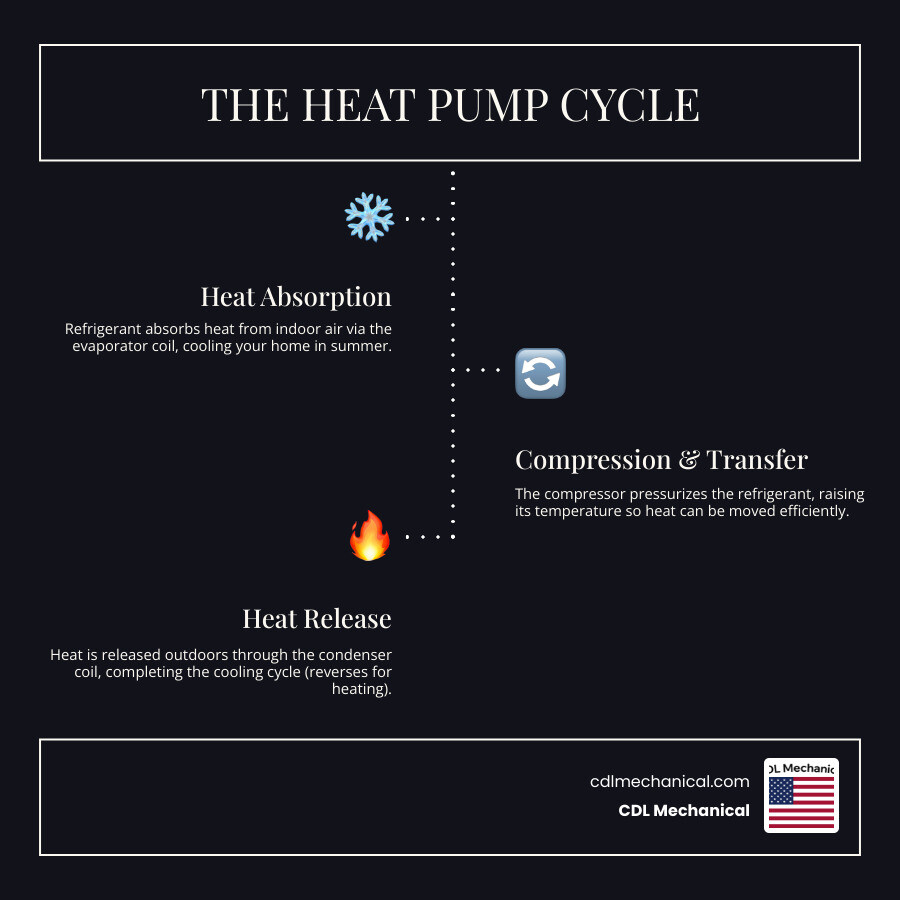
To understand the core science of a heat pump, it helps to throw out the idea that heating systems have to “create” heat. Traditional systems like gas furnaces or electric baseboards burn fuel or use electrical resistance to generate thermal energy from scratch.
Heat pumps take a completely different approach. They rely on the laws of physics and thermodynamics. Specifically, heat naturally wants to move from an area of higher temperature to an area of lower temperature. By utilizing a closed loop of chemical refrigerant, a heat pump can capture this heat and force it to move in whichever direction you want—even if that means pulling warmth out of chilly winter air and pumping it inside.
This process is known as the refrigeration cycle, and it is the exact same technology that keeps your milk cold in the refrigerator or your car cool on a hot afternoon. Because the system only uses electricity to power the compressor and fans that transfer this heat—rather than generating it—the energy efficiency is off the charts.
In fact, heat pumps can transfer 1 to 4.5 kWh of thermal energy into a building for every 1 kWh of electricity consumed. This means they operate at several hundred percent efficiency, whereas even the most expensive high-efficiency gas furnaces max out at around 98% efficiency. If you want to dive deeper into how this technology compares to other setups, check out our comprehensive guide on Heat Pumps.
Step-by-Step: How Does a Heat Pump Work in Summer?
When the Arizona summer hits and Glendale temperatures soar, your heat pump acts exactly like a high-powered central air conditioner. Here is how the cooling cycle works step-by-step:
- Heat Absorption Indoors: Warm air from your home is pulled through your return vents and blown across the indoor coil (which acts as the evaporator coil). Inside this coil is cold, low-pressure liquid refrigerant.
- The Magic of Evaporation: Because the indoor air is warmer than the refrigerant, the refrigerant absorbs the heat from your home’s air. As it absorbs this heat, the liquid refrigerant evaporates and boils into a low-pressure gas. The air blowing across the coil is now chilled and is distributed back into your home through your ductwork.
- Compressor Pressurization: The low-pressure refrigerant gas travels through copper lines to the outdoor unit. Here, the compressor squeezes the gas. Compressing the refrigerant raises its pressure and dramatically increases its temperature, turning it into a hot, high-pressure vapor.
- Heat Release Outdoors: This hot gas enters the outdoor coil (acting as the condenser coil). A large fan blows hot outdoor air across the coil. Because the compressed refrigerant is even hotter than the scorching outdoor desert air, the heat naturally transfers from the refrigerant to the outside environment.
- Condensation and Expansion: As the refrigerant loses heat to the outdoor air, it condenses back into a high-pressure liquid. It then passes through an expansion valve, which drops the pressure and temperature rapidly. Now cold and liquid once again, the refrigerant heads back indoors to repeat the cycle.
Step-by-Step: How Does a Heat Pump Work in Winter?
When the sun goes down and desert winter nights get chilly, you don’t need a separate heating system. Your heat pump simply runs this entire process in reverse.
- The Reversing Valve Shifts: When you switch your thermostat to “heat,” an electromagnetic component called the reversing valve slides into a new position. This changes the direction of the refrigerant flow.
- Outdoor Heat Extraction: Now, the outdoor coil acts as the evaporator. The cold liquid refrigerant circulating through the outdoor coil is actually much colder than the outdoor air. Because of this temperature difference, the refrigerant is able to extract heat energy from the outside air—even when it feels cold to us.
- Compression: The refrigerant absorbs this outdoor heat, turns into a gas, and is pumped to the compressor. The compressor squeezes the gas, raising its temperature to over 100°F.
- Indoor Heat Release: The hot gas is sent to the indoor coil (now acting as the condenser). Your indoor blower fan pushes home air across this hot coil. The air absorbs the heat from the refrigerant, warming your home to your desired thermostat setting.
- Back to the Start: The refrigerant cools down, condenses back into a liquid, passes through the expansion valve to lower its pressure, and heads back outside to collect more heat.
Key Components of a Heat Pump System
A heat pump relies on a highly coordinated team of mechanical and electrical components to keep your home comfortable year-round.
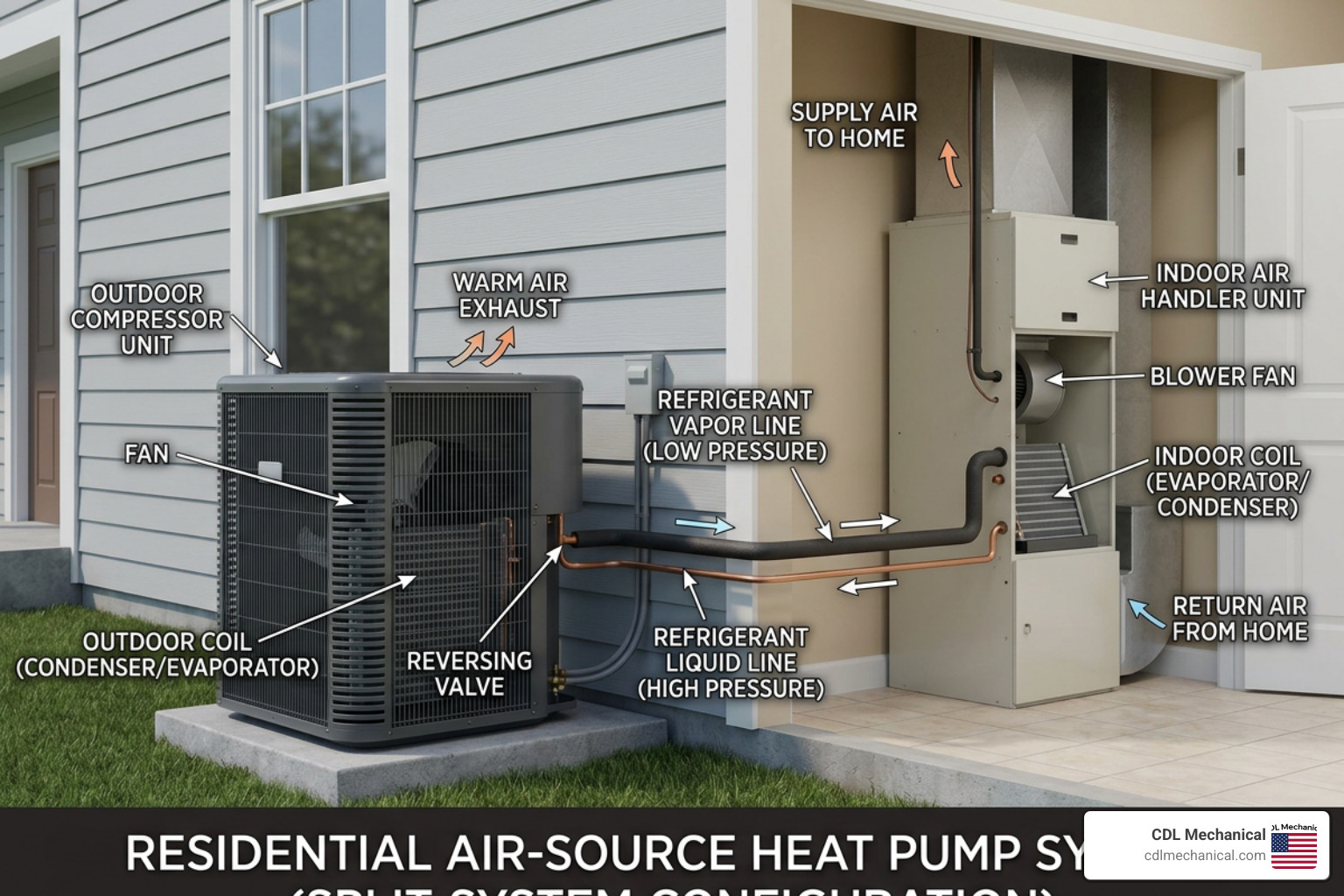
Here are the key parts that make the system function:
- The Compressor: Often called the heart of the system, the compressor is located in the outdoor unit. It pumps the refrigerant through the lines and applies the pressure needed to raise the refrigerant’s temperature during both heating and cooling cycles.
- The Condenser and Evaporator Coils: These are copper or aluminum tube networks surrounded by thin metal fins. Depending on whether you are heating or cooling, these coils switch roles. The evaporator coil absorbs heat, while the condenser coil releases it.
- The Reversing Valve: This is the brain of the operation. It is the specific valve that reverses the flow of refrigerant, allowing the system to seamlessly switch between cooling and heating modes.
- The Expansion Valve: This small but crucial device regulates the flow of refrigerant. It acts as a gateway, dropping the pressure of the liquid refrigerant so it can quickly cool down and prepare to absorb heat again.
- The Refrigerant: This is the chemical heat-transfer medium that flows through the system. It has an incredibly low boiling point, allowing it to easily change states from liquid to gas and back again at common household temperatures.
Types of Heat Pumps and Climate Considerations
Not all heat pumps are built the same way. Depending on your home’s layout, your existing ductwork, and your specific comfort goals, we typically install one of three main types of systems:
- Air-Source Heat Pumps: This is the most common type of system installed in Arizona. It extracts heat from the outdoor air and transfers it indoors (or vice versa). They are highly effective, easy to install, and perfectly suited for the moderate winters we experience in the Southwest.
- Ground-Source (Geothermal) Heat Pumps: These systems use a series of underground pipes to transfer heat between your home and the earth. Because ground temperatures remain stable year-round (usually between 50°F and 60°F), geothermal systems are incredibly efficient. However, they require extensive excavation and carry significantly higher installation costs, making them less common in standard residential retrofits.
- Ductless Mini-Splits: If your home doesn’t have existing ductwork, or if you have a recent home addition, sunroom, or garage conversion, ductless mini-splits are a fantastic option. They utilize an outdoor compressor paired with small, wall-mounted indoor air handlers. They offer precise, single-zone control and eliminate the energy losses associated with leaky ducts.
When considering a heat pump in the Valley, climate is the single most important factor. In freezing northern states, older heat pumps historically struggled because there wasn’t enough heat in the sub-zero air to keep the home warm without relying on expensive backup electric resistance heat.
However, in our desert climate—spanning Glendale, Peoria, Phoenix, Scottsdale, and surrounding areas—heat pumps are in their absolute element. Our mild winters rarely drop below freezing, meaning a heat pump can operate at peak efficiency all winter long without ever needing to kick on auxiliary heat. If you’re wondering how to choose the right setup for your home, learning about Finding the Best Heat Pump Service in Glendale is Easier Than You Think can help point you in the right direction.
Heat Pumps vs. Traditional HVAC Systems
To truly appreciate the value of a heat pump, it helps to see how it stacks up against traditional heating and cooling options.
When comparing systems, we look at several industry-standard efficiency metrics:
- COP (Coefficient of Performance): This measures heating efficiency. A COP of 4 means the system outputs 4 times more energy than it consumes.
- SEER2 (Seasonal Energy Efficiency Ratio 2): This measures cooling efficiency over a typical cooling season. Higher numbers mean lower summer electricity bills.
- HSPF2 (Heating Seasonal Performance Factor 2): This measures heating efficiency over a typical heating season.
Here is a quick look at how these systems compare side-by-side:
| System Type | Heating Efficiency (COP / HSPF2) | Cooling Efficiency (SEER2) | Energy Source | Primary Benefit |
|---|---|---|---|---|
| Heat Pump | COP: 3.0 – 5.0 / HSPF2: 7.5 – 10+ | 14.3 – 22+ SEER2 | Electricity | All-in-one heating/cooling, ultra-high efficiency |
| Gas Furnace | 80% – 98% AFUE (COP < 1.0) | N/A (Requires separate AC) | Natural Gas / Propane | Extremely fast heating in sub-zero climates |
| Standard AC | N/A | 14.3 – 22+ SEER2 | Electricity | Reliable cooling, but requires a separate heater |
| Electric Furnace | 100% AFUE (COP: 1.0) | N/A (Requires separate AC) | Electricity | Low upfront cost, but very expensive to run |
As you can see, a traditional electric furnace has a COP of exactly 1.0—meaning it converts 100% of its electricity into heat. While that sounds good, a modern heat pump easily achieves a COP of 4.0, making it four times more efficient!
Additionally, in 2022, more heat pumps were sold in the United States than natural gas furnaces, signaling a massive nationwide shift toward electrification and energy savings. If you are trying to decide which system configuration makes the most sense for your home’s layout, you can read our detailed breakdown on Heat Pump vs Gas Furnace vs Electric Furnace: 3 Key Factors.
Maximizing Efficiency and Savings in Arizona
Upgrading to a heat pump is one of the smartest financial moves a homeowner can make in 2026, thanks to a variety of federal and local financial incentives designed to make clean energy upgrades affordable.
The Inflation Reduction Act (IRA) and Local Rebates
Under the federal Inflation Reduction Act, homeowners can claim a tax credit of up to 25% of the total cost of an eligible heat pump installation, capped at $2,000 per year. When you combine these federal savings with local Arizona utility rebates from SRP or APS, the upfront transition becomes incredibly manageable.
To find out exactly how to maximize these savings, take a look at our guides on The Arizona Homeowners Guide to Inflation Reduction Act Benefits and How to Get Paid for Upgrading to a Heat Pump in Arizona.
The Power of Regular Maintenance
While heat pumps are incredibly durable and typically last around 15 years, they do work twice as hard as a standalone furnace or air conditioner because they run year-round. That means routine maintenance isn’t just a good idea—it’s essential for keeping your utility bills low and preventing premature wear and tear.
Dirty coils, clogged air filters, or slightly low refrigerant levels can force your compressor to work much harder, driving up your energy bills and shortening the lifespan of your system. We highly recommend scheduling professional tune-ups twice a year: once in the spring before the intense summer heat, and once in the fall before winter arrives.
To keep your system running at peak performance, check out these local resources:
- If you reside in the Phoenix metro area, understand Why Regular Heat Pump Service in Phoenix is a Total Lifesaver.
- For Goodyear homeowners, check out The Best Heat Pump Service Deals in Goodyear AZ for Savvy Homeowners or view our rankings of the Top Rated Heat Pump Service Experts in Goodyear Ranked.
- If you are in Peoria, see Your Neighborhood Guide to Heat Pump Service Near Me in Peoria AZ.
- For those closer to Glendale Luke AFB, meet the Meet the Elite Heat Pump Service Experts in Glendale Luke AFB.
- If you are in Avondale, learn How to Find Affordable Heat Pump Service in Avondale Today and read The Expert Guide to Choosing Avondale Heat Pump Technicians.
Frequently Asked Questions About Heat Pumps
How efficient are heat pumps compared to gas boilers?
Heat pumps are significantly more efficient than gas boilers. While a high-efficiency condensing gas boiler might achieve an efficiency rating of 90% to 95%, modern heat pumps are 3 to 5 times more energy efficient than gas boilers, operating at 300% to 500% efficiency. This is because they transfer existing heat rather than burning fossil fuels to generate new heat. This dramatic reduction in energy consumption also significantly lowers your home’s carbon footprint.
Do heat pumps work in extreme desert heat?
Yes, absolutely. While older heat pump models sometimes struggled when outdoor temperatures soared, modern heat pumps equipped with variable-speed inverter compressors handle extreme desert heat exceptionally well. In places like Glendale, Tempe, and Mesa, these systems easily maintain a cool, comfortable indoor environment even when outdoor temperatures exceed 110°F. Because they run on variable speeds, they can dial in the exact amount of cooling needed, which also helps control indoor humidity.
How long do heat pumps typically last?
With proper maintenance, a high-quality heat pump typically lasts about 15 years. Because these systems run year-round—providing cooling in the summer and heating in the winter—they experience more consistent usage than a standalone furnace. Keeping the air filters clean, ensuring the outdoor unit is free of debris, and scheduling professional bi-annual tune-ups are the best ways to maximize your system’s lifespan and protect your investment.
Conclusion
Understanding how does a heat pump work is the first step toward taking control of your home’s year-round comfort and energy consumption. By moving heat rather than creating it, these innovative systems offer Glendale homeowners an incredibly efficient, reliable, and environmentally friendly alternative to traditional HVAC setups.
At CDL Mechanical, we are a family-owned HVAC company based right here in Glendale, AZ. We specialize in keeping desert homes cool in the summer and cozy during our chilly winter nights. Our unique philosophy is simple: we treat every single customer like family. Whether you need a quick repair, a seasonal tune-up, or are ready to explore a complete system replacement, our team of expert technicians is here to provide reliable, honest, and top-tier service.
Ready to upgrade your home comfort or schedule your next maintenance service? Contact us today to learn more about our professional Heat Pumps services and discover why so many Valley homeowners trust us with their heating and cooling needs.