
Why Mold in Your HVAC System Is a Bigger Problem Than You Think
How proper HVAC maintenance prevents mold growth is one of the most important things a Glendale, AZ homeowner can understand — because your air conditioner runs hard here, and that creates the perfect conditions for mold to take hold without you ever knowing it.
Here is a quick answer:
| HVAC Maintenance Task | How It Prevents Mold |
|---|---|
| Replace air filters every 30–90 days | Removes trapped moisture and organic material that feed mold |
| Clear condensate drain lines regularly | Eliminates standing water where mold colonies start |
| Seal leaky ductwork | Stops warm, humid air from entering and condensing inside ducts |
| Keep indoor humidity between 30–50% | Stays below the 60% threshold where mold begins to thrive |
| Schedule professional inspections twice a year | Catches hidden moisture issues before mold spreads |
| Install UV-C lights near evaporator coils | Destroys mold DNA before spores can replicate |
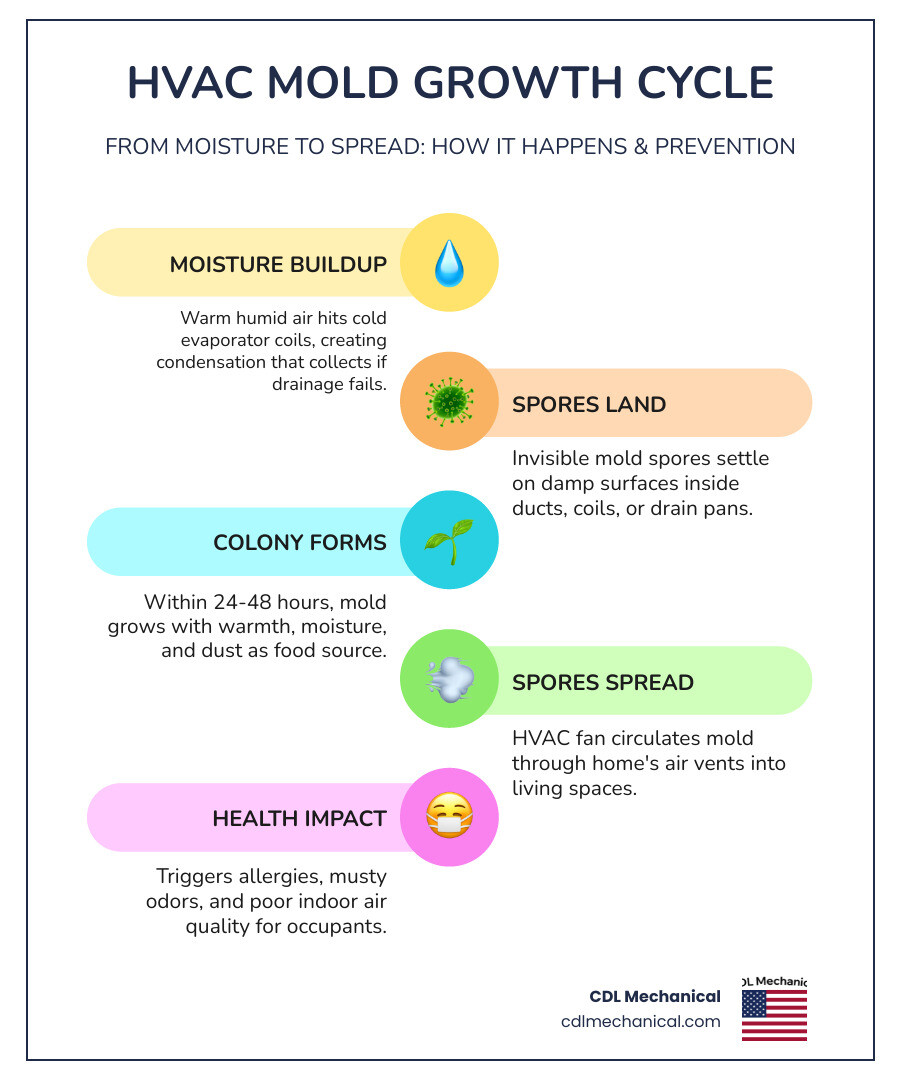
Mold spores are always in the air around us — they are invisible to the naked eye and completely normal in small amounts. The problem starts when those spores land on a damp surface inside your HVAC system and find exactly what they need to grow: moisture, warmth, and organic material like dust. Within just 24 to 48 hours, a small moisture problem can turn into a growing mold colony hidden deep inside your ductwork or on your evaporator coils. From there, your HVAC system does what it always does — it pushes air through every room in your home, carrying mold spores right along with it.
In Glendale’s desert climate, you might assume mold is not a concern. But the reality is that your AC system pulls warm, humid air across cold coils all summer long, producing condensation continuously. When any part of that drainage or airflow process gets disrupted — a clogged drain line, a dirty filter, a small duct leak — moisture builds up fast. And mold does not need much of an invitation.
I’m Joshua Michael Bartlett, owner of CDL Mechanical and a 20-year HVAC veteran who has seen how neglected maintenance turns a perfectly good system into a source of poor indoor air quality and health problems for families across the greater Phoenix area — and understanding how proper HVAC maintenance prevents mold growth is something I consider essential knowledge for every homeowner we serve. Let’s walk through exactly what you need to know to keep your system clean, dry, and working the way it should.
How Proper HVAC Maintenance Prevents Mold Growth
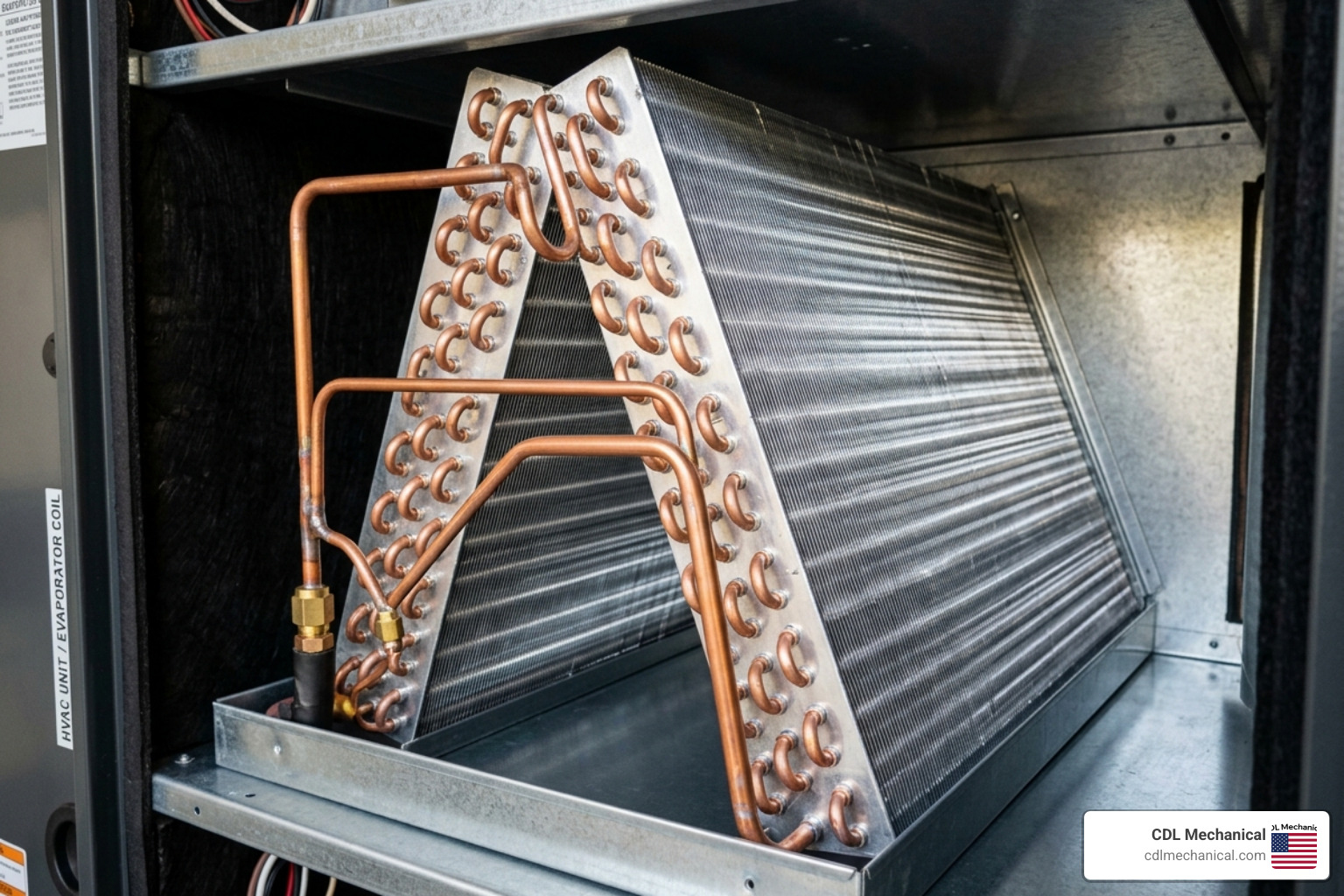
The secret to a mold-free home isn’t magic; it’s moisture management. Your air conditioner is essentially a giant dehumidifier. As it cools your home, the evaporator coil pulls moisture out of the air. This water drips into a pan and exits through a drain line. When the system is running efficiently, this process is seamless. However, when maintenance is ignored, the system becomes less efficient at moving this water out, creating a “science experiment” in your mechanical closet.
One of the 5 benefits of routine AC maintenance is the significant reduction of organic matter within the system. Mold needs food to grow, and in an HVAC system, that food is usually the dust and skin cells that bypass a dirty filter. By keeping the coils clean and the airflow optimized, we ensure that moisture doesn’t linger and spores have nothing to eat.
Common Causes of Mold Growth in HVAC Systems
In our experience serving neighbors from Surprise to Tempe, we’ve found that mold usually stems from a few specific mechanical failures.
- Condensate Clogs: Algae and dust can build up in your drain line, causing water to back up into the drain pan. This standing water is a primary breeding ground for mold.
- Leaky Ductwork: If your ducts have holes, they can pull in hot, dusty air from your attic. When that hot air hits the cool air inside the duct, condensation forms.
- Stagnant Air: Poor airflow caused by a dying blower motor or clogged filter means moisture doesn’t evaporate, leaving the system damp for long periods.
Many people ask, “Is your home’s air quality worse than outside?” Often, the answer is yes, specifically because of these hidden moisture traps that circulate contaminants through every room.
Recognizing the Signs of Mold in Your Glendale Home
You don’t always need to see mold to know it’s there. In fact, because HVAC systems are mostly enclosed, the “visible” signs are often the last to appear.
- Musty Odors: If you notice a “dirty sock” smell when the AC kicks on, that is a telltale sign of microbial growth on the coils or in the ducts.
- Visible Spots: Check your supply registers (the vents in your ceiling or walls). If you see black or green fuzzy spots on the louvers, spores are likely colonizing the ductwork behind them.
- Allergy Symptoms: If your family experiences unexplained sneezing, coughing, or itchy eyes only when they are inside, your indoor air quality in Glendale, AZ may be compromised.
Critical Steps to Keep Your System Dry and Clean
To stay ahead of the curve, there are several “dry and clean” protocols we recommend. First and foremost is the condensate system. We suggest a regular vinegar flush—pouring a cup of distilled white vinegar down the condensate drain line every few months—to kill algae and prevent clogs. This is a simple task that can save you from a massive headache later.
Our spring AC tune-up checklist includes a deep dive into these components. While there are things you can do yourself, comprehensive air conditioning maintenance requires specialized tools to reach the parts of the system where mold loves to hide.
| Task | Homeowner DIY | Professional Technician |
|---|---|---|
| Change Air Filters | Yes (Every 1-3 months) | Yes (Included in visit) |
| Clean Supply Vents | Yes (Vacuum/Wipe) | Yes (Deep cleaning) |
| Flush Drain Line | Yes (Vinegar/Water) | Yes (High-pressure flush) |
| Clean Evaporator Coils | No (Requires chemicals) | Yes (Essential for efficiency) |
| Inspect Duct Integrity | Limited (Visual) | Yes (Camera/Pressure test) |
| Measure Humidity | Yes (Hygrometer) | Yes (System calibration) |
The Role of Air Filters in How Proper HVAC Maintenance Prevents Mold Growth
Air filters are your first line of defense. Many homeowners make the mistake of buying the cheapest fiberglass filters available. These might stop a stray cat hair, but they do nothing to stop microscopic mold spores. We recommend filters with a MERV (Minimum Efficiency Reporting Value) rating between 8 and 13.
Understanding how HVAC filters affect indoor air quality is key. A high-quality filter traps the “food” (dust and dander) that mold needs to thrive. However, if you leave that filter in for six months, it becomes damp and clogged, eventually becoming a mold colony itself. Replacing your filter every 30 to 90 days is the single easiest way to prevent growth.
Managing Humidity Levels for Desert Comfort
It sounds counterintuitive in the desert, but indoor humidity can skyrocket if your AC is oversized or malfunctioning. If an AC unit is too large for a home, it cools the air so quickly that it doesn’t run long enough to remove moisture. This results in a cold, clammy house where the relative humidity (RH) stays above 60%.
To experience the 5 benefits of good indoor air quality, you should aim for a “sweet spot” of 30% to 50% humidity. We suggest keeping a simple hygrometer (a humidity monitor) in your living room. If you see those numbers creeping up, it’s a sign your system isn’t dehumidifying correctly.
Advanced Technology for Mold-Free Air
Sometimes, standard maintenance needs a boost from modern science. This is where UV lights come into play. These UVC lamps are installed directly inside your air handler, usually pointing right at the evaporator coil. The ultraviolet light penetrates the cellular walls of mold spores, destroying their DNA and rendering them unable to reproduce. It’s like having a 24/7 security guard for your air quality.
Additionally, a high-quality air purifier can be integrated into your existing ductwork. These systems don’t just wait for air to pass through a filter; they actively send out ions that “scrub” the air and surfaces in your home, neutralizing spores before they can land and grow.
Why Professional Inspections are Vital for How Proper HVAC Maintenance Prevents Mold Growth
While changing a filter is a great start, a professional eye is needed to spot the “silent killers” of an HVAC system. During a professional inspection, we don’t just look at the thermostat. We get into the nitty-gritty:
- Coil Cleaning: We use specialized, self-rinsing foams to remove biofilm from deep within the coil fins where your vacuum can’t reach.
- Duct Sealing: We check for pressure imbalances that might be sucking humid attic air into your clean air stream.
- Drain Pan Integrity: We ensure the pan is sloped correctly so water doesn’t pool in the corners.
Whether you are looking for furnace maintenance in the winter or AC service in the summer, having a maintenance plan ensures these checks happen like clockwork.
Advanced Solutions for Glendale Homeowners
For homes that struggle with persistent moisture, we offer several heavy-duty solutions. Whole-home dehumidifiers can be installed to work alongside your AC, ensuring your home stays dry even during the monsoon season. We can also apply antimicrobial coatings to the inside of your ductwork, which makes it nearly impossible for mold to stick to the surfaces.
Smart thermostats also play a role; many modern versions can be programmed to run the fan for a few minutes after a cooling cycle to help dry out the coils, further reducing the chance of moisture buildup.
Frequently Asked Questions about HVAC Mold
Why are clogged condensate drain lines a major cause of mold?
Your AC system can produce gallons of water a day during a Peoria or Scottsdale summer. If the drain line is clogged, that water has nowhere to go but the drain pan. If the pan sits with standing water for more than 48 hours, mold colonies will begin to form. This mold can then spread upward onto the evaporator coils and eventually into the air stream.
How can leaky ductwork contribute to mold growth?
When ducts leak in an unconditioned space like an attic or crawlspace, they create a pressure imbalance. This can pull in hot, moist air from the outside. When that moisture-laden air hits the cold surfaces inside your ductwork, it creates condensation—essentially “raining” inside your ducts. This damp environment, combined with the dust that often settles in ducts, is the perfect recipe for a mold outbreak.
What should I do if I suspect mold in my air vents?
If you see visible growth or smell a persistent musty odor, the first step is to turn off the system to prevent further spore circulation. Do not try to clean it with bleach, as bleach is mostly water and can actually encourage more growth on porous surfaces. Instead, call for a professional inspection. We can identify the root cause—whether it’s a leak, a clog, or a humidity issue—and recommend a safe path for remediation.
Conclusion
At CDL Mechanical, we believe your home should be your sanctuary, not a breeding ground for mold. As a family-owned business in Glendale, AZ, we treat every system we service as if it were in our own mother’s house. We know the local climate, we know the common pitfalls of desert HVAC systems, and we know exactly how proper HVAC maintenance prevents mold growth.
Don’t wait for a musty smell or an allergy flare-up to take action. Regular care is the best insurance policy for your family’s health and your home’s comfort. Whether you’re in Buckeye, Chandler, or right here in Glendale, we’re ready to help you keep your air clean and your system running at peak performance. Improve your home’s health with a professional Air Purifier and breathe easier knowing your HVAC system isn’t a science experiment. Reach out to us today to schedule your next maintenance visit!