
What AC Making Strange Noises Mean — and Why It Matters
If your AC making strange noises has you worried, here is a quick look at the most common sounds and what they typically signal:
| Noise | Most Likely Cause | Urgency |
|---|---|---|
| Banging or clanking | Loose or broken parts in blower or compressor | High — shut off and call a pro |
| Hissing | Refrigerant leak or air escaping ductwork | High — call a pro soon |
| Buzzing | Electrical issue, failing capacitor, or frozen coils | High — do not ignore |
| Screeching or squealing | Worn motor bearings, slipping belt, or high compressor pressure | High — shut off immediately |
| Rattling | Loose panels, debris in outdoor unit, or loose screws | Medium — inspect and tighten |
| Clicking (persistent) | Failing contactor, relay, or thermostat | Medium — schedule service |
| Whistling | Dirty air filter restricting airflow | Low — replace filter first |
| Grinding | Worn motor bearings or compressor wear | High — shut off immediately |
| Gurgling or bubbling | Refrigerant leak or clogged condensate drain | Medium — schedule service |
Modern variable-speed AC systems can run as quietly as 19 decibels — softer than a whisper — and most residential systems operate somewhere between 25 and 55 decibels, roughly the volume of a quiet conversation. When your unit suddenly starts making sounds that fall outside that predictable range, it is almost always trying to tell you something. Some noises are harmless and easy to fix yourself. Others are early warnings of a failing compressor, a refrigerant leak, or an electrical problem that can become dangerous if ignored. Knowing the difference can save you from a mid-summer breakdown in the Glendale, AZ heat — and from a much larger repair bill down the road.
I’m Joshua Michael Bartlett, owner of CDL Mechanical and an HVAC professional with over 20 years of hands-on experience diagnosing exactly the kinds of AC making strange noises issues covered in this guide. In that time, I’ve seen how catching an unusual sound early — before it turns into a failed compressor or a full system replacement — makes all the difference for homeowners.
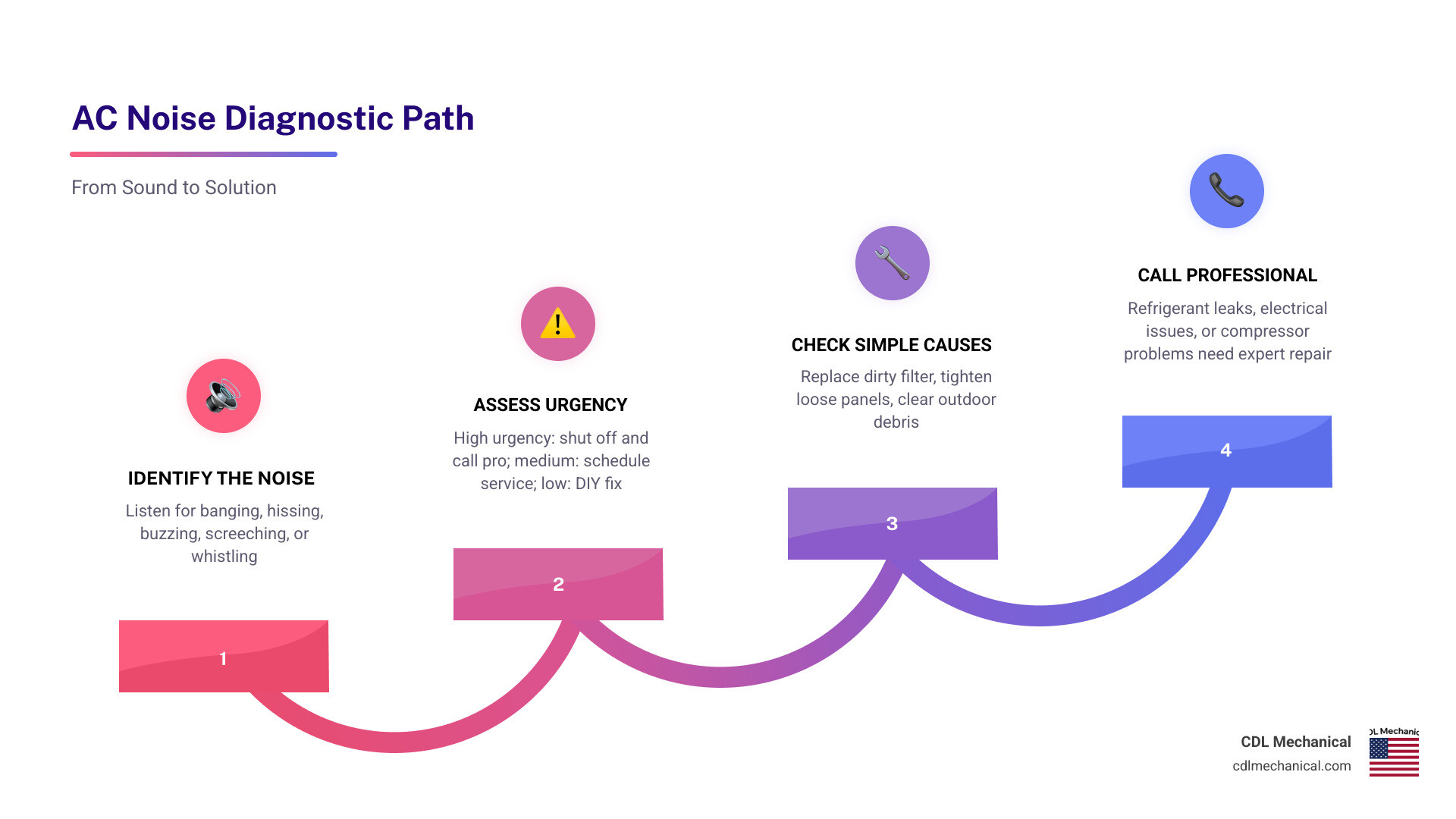
Normal vs. Abnormal AC Noises: What is Safe to Ignore?

When your air conditioner is running, a certain amount of sound is completely normal. After all, your cooling system is a powerful machine packed with moving parts, high-pressure gases, and electrical relays. To keep your peace of mind intact during a blistering Arizona summer, it helps to understand what a healthy system sounds like.
Normal operational sounds include:
- The Steady, Soft Hum: This is the sound of your outdoor condenser fan and indoor blower motor spinning. In modern systems, this hum is highly controlled and steady.
- A Single Click at Startup and Shutdown: When your thermostat signals the AC to turn on, you will hear a single, distinct click. This is the electrical contactor closing to send power to the compressor and fan. It is completely normal.
- A Gentle Whoosh of Air: As conditioned air moves through your ductwork and exits the supply vents, you should hear a steady, soft rush of air.
- Thermal Expansion Snapping: Occasionally, you might hear a mild snapping or popping sound. This is often just the plastic housing of your indoor unit or the metal of your ductwork expanding or contracting as cold air starts flowing.
On the other hand, abnormal noises are sudden, loud, persistent, or change in pitch over time. If a sound makes you look up in surprise or forces you to turn up the TV, it is a warning sign. Ignoring these auditory clues can lead to a sudden breakdown when you need your system the most. To learn more about what to watch out for before your system stops cooling, read our guide on Warning Signs Your AC Could Fail During a Heat Wave.
Deciphering the AC Making Strange Noises What They Mean in Your Vents
Sometimes, the noise you hear is not coming directly from the indoor air handler or the outdoor condenser, but from the air vents themselves. If you hear a distinct whistling or high-pitched rushing sound coming from your grilles, you are likely dealing with localized airflow restriction.
When your system is starved for air, it acts like a giant vacuum, pulling air through any small opening it can find. The leading culprit here is a dirty air filter. When dust and pet dander clog the filter fibers, the blower motor has to work twice as hard, pulling air through the restricted space and creating a sharp whistling sound.
If changing the filter does not solve the whistle, the issue might lie within your ductwork. Leaking, crushed, or undersized ducts can create pressure imbalances that whistle, rattle, or pop. If you suspect your air pathways are compromised, check out our helpful resource, Is Your Ductwork Acting Up? Here Is How to Tell.
AC Making Strange Noises What They Mean: A Sound-by-Sound Breakdown
To help you pinpoint the issue, let’s dive deep into the specific sounds your air conditioner can make, what causes them, and how worried you should be.
Banging and Clanking Sounds
If your air conditioner sounds like a dryer filled with tennis balls, you need to pay attention. Banging and clanking sounds are almost always mechanical in nature and indicate that something has come loose or broken inside the unit.
Common causes include:
- A Loose Blower Wheel: The blower fan inside your indoor unit is balanced perfectly on its shaft. If the set screw loosens, the wheel can wobble and bang against the metal housing.
- A Broken Motor Mount: If the mounts holding your blower motor or outdoor fan motor break, the entire assembly will thrash around while spinning.
- Internal Compressor Damage: Inside your outdoor unit’s compressor, there are pistons, connecting rods, and crankshafts. If these internal parts break, they will clank violently inside the sealed compressor dome.
What to do: Turn off your AC at the thermostat immediately. Running a system with loose, heavy metal parts will quickly destroy surrounding components, turning a simple repair into a total system replacement.
Hissing, Bubbling, and Whistling
Hissing and bubbling are highly specific sounds that almost always point to your system’s refrigerant loop or ductwork pressure.
- Refrigerant Leaks: Your AC relies on a closed loop of pressurized refrigerant. If a tiny hole or crack develops in the copper coils, the escaping gas will make a steady hissing sound. If the leak is occurring alongside moisture or liquid, you may hear a bubbling or gurgling noise instead.
- Expansion Valve Operation: A brief, soft hissing sound for a few seconds when the system shuts down can be normal pressure equalization across the expansion valve. However, loud or continuous hissing is not normal.
- Air Leaks: If ductwork joints separate behind your walls or in your attic, the pressurized air escaping the gaps can sound like a steady hiss.
Because refrigerant is a regulated chemical that requires specialized EPA certification to handle, you should never attempt a DIY fix for these sounds. For a step-by-step breakdown of how to handle this safely, read our guide on How to Handle a Leaking Air Conditioner.
Buzzing and Clicking Noises
Buzzing and clicking are the primary indicators of electrical issues within your air conditioner.
- Electrical Buzzing: A loud, steady buzz from the outdoor unit often indicates a failing contactor relay, a weak capacitor, or loose wiring. If the compressor is trying to start but cannot because of a dead capacitor, it will emit a deep, struggling buzz.
- Frozen Evaporator Coils: Interestingly, ice buildup on your indoor coils can also cause a buzzing sound as the fan blades lightly clip the ice, or as the system struggles to pull air through the frozen block.
- Rapid Clicking: While a single click at startup is normal, rapid, continuous clicking means an electrical component is trying to engage but failing. This could be a failing control board, a worn-out contactor, or a malfunctioning thermostat relay.
Because electrical issues carry inherent fire risks, persistent buzzing or clicking should be evaluated by a professional technician as soon as possible.
Screeching, Squealing, and Grinding
These high-pitched, harsh sounds are incredibly jarring—and they should be. They indicate severe friction or high pressure.
- Worn Blower Motor Bearings: Older indoor blower motors often rely on sleeve bearings that require regular lubrication. When these bearings dry out, they emit a piercing, metal-on-metal screech or grind.
- Slipping Fan Belt: Older AC units (and some commercial systems) use a rubber belt to connect the motor to the blower wheel. If this belt stretches, cracks, or slips, it will squeal loudly, much like a loose serpentine belt on a car.
- High Compressor Pressure: If your compressor builds up dangerously high internal pressure, it can emit a loud, high-pitched screech or scream. This is a critical safety issue. Fortunately, most modern systems have a built-in high-pressure safety switch to shut the unit down, but older models may continue to scream.
What to do: If you hear grinding or screaming, turn the thermostat to “Off” immediately. Running a grinding motor can seize the fan completely, while a screaming compressor is on the verge of permanent, catastrophic failure.
Indoor vs. Outdoor Unit Sounds: Identifying the Source
When diagnosing an ac making strange noises what they mean, where you hear the sound is just as important as what it sounds like. Your split-system air conditioner is divided into two main environments: the indoor air handler (usually in a closet, garage, or attic) and the outdoor condenser unit.
| Indoor Unit Noises (Air Handler) | Outdoor Unit Noises (Condenser) |
|---|---|
| Rattling blower wheel | Rattling fan guard or loose panel screws |
| Whistling vents (dirty filter) | Buzzing capacitor or contactor |
| Screeching blower motor bearings | Screaming compressor (high pressure) |
| Gurgling drain line | Clanking fan blade hitting debris |
By identifying which unit is making the noise, you can give your HVAC technician a massive head start on the diagnosis. It also helps you avoid unnecessary panic; for example, a rattle from a loose screw on your outdoor unit’s metal casing is far less critical than a grinding sound coming from your indoor blower motor. To make sure you aren’t letting minor issues snowball into major disasters, read Don’t Let Your HVAC Become a Science Experiment.
Understanding the AC Making Strange Noises What They Mean for Your Compressor
The compressor is the heart of your air conditioning system. Located in the outdoor unit, it is responsible for pumping refrigerant throughout the system. Because it works under extreme pressure and heat, it is the hardest working—and most expensive—component in your AC.
If your compressor is making a loud, high-pitched squealing or screeching noise at startup that lasts only 10 to 15 seconds, it may simply be equalizing high internal pressures. However, if this squeal persists throughout the cycle, or if the compressor begins to emit a heavy, rhythmic banging or grinding sound, it is a sign of internal mechanical wear. A struggling compressor will also draw more electrical current, causing your energy bills to spike and potentially tripping your home’s circuit breaker.
When to Shut Down Your System and Call a Professional
While some minor noises like a loose panel screw can wait for your next scheduled maintenance visit, several critical sounds require you to shut down your system immediately to protect your home and your wallet.
You should perform an immediate emergency shutdown if you hear:
- Loud, metallic clanking or banging: This indicates loose parts flying around inside the system.
- Persistent grinding or screeching: This means motor bearings are failing or the compressor is seizing.
- Loud, continuous hissing or screaming: This indicates a severe refrigerant leak or dangerous compressor pressure.
- Heavy electrical buzzing paired with a burning smell: This points to electrical shorts or failing wiring that pose a direct fire risk.
If you are experiencing any of these red flags, do not hesitate. Turn the system off at the thermostat and call in the experts. For guidance on navigating these stressful moments, check out our article, Don’t Sweat It and Learn When to Call a Pro.
Risks of Ignoring Unusual AC Sounds
It can be tempting to ignore a faint rattle or a minor squeal, especially if your home is still staying cool. However, air conditioners are highly integrated systems. A small problem with one minor part can quickly trigger a domino effect of failures throughout the unit.
For example, a $20 loose part or worn bearing, if left unaddressed, can eventually break free and fly directly into a $2,000 evaporator coil or compressor. Additionally, running an AC that is struggling with worn bearings, clogged filters, or a failing capacitor forces the system to run longer and work harder. This drastically reduces your system’s overall energy efficiency, drives up your monthly utility bills, and shortens the overall lifespan of your equipment.
If you are trying to decide whether your noisy system is worth saving or if it is time to start fresh, read our Can Your Old AC Make It Another Summer? Repair vs. Replace Mini Guide.
How Regular Maintenance Prevents Loud AC Noises
The absolute best way to handle a noisy air conditioner is to prevent the noises from starting in the first place. Regular, professional maintenance is your system’s best defense against wear and tear.
During a seasonal tune-up, a professional technician will:
- Lubricate moving parts: Keeping motor bearings lubricated prevents the friction that causes screeching and grinding.
- Tighten electrical connections: This eliminates the loose contacts that cause buzzing and rapid clicking.
- Inspect fan belts and blades: Replacing worn belts and balancing fan blades prevents squealing and rattling.
- Clean the coils and clear the drain line: This keeps airflow smooth and prevents bubbling, gurgling, and whistling.
By catching these minor issues during a routine visit, you can avoid unexpected breakdowns and keep your system running quietly all summer long. When you find yourself debating whether to invest in maintenance or prepare for a replacement, read The HVAC Crossroads: When to Patch It Up and When to Move On.
FAQ: Is it safe to run my AC if it is making a loud noise?
Generally, no. If your air conditioner is making a loud, abnormal noise, you should turn the system off until it can be inspected. Running a system with a mechanical or electrical fault can cause catastrophic, irreversible damage to major components like the compressor or blower motor. It can also pose safety risks, including electrical fires or toxic refrigerant leaks.
If your system has completely given up the ghost in the middle of a hot summer day, stay calm and follow the steps in our guide, What to Do When Your HVAC Breaks Down Unexpectedly.
FAQ: Why does my air conditioner make noise after it shuts off?
It is common to hear mild noises for a minute or two after your system shuts down. This is usually just the sound of refrigerant pressures equalizing across the expansion valve (which sounds like a soft hiss or gurgle) or the metal ductwork cooling down and contracting (which sounds like a mild popping or clicking). However, if you hear loud thumps, persistent electrical buzzing, or continuous gurgling long after the system has shut off, you should have a professional inspect the unit.
FAQ: Can a dirty air filter cause my AC to make strange sounds?
Yes, absolutely! A dirty, clogged air filter is one of the most common causes of unusual AC noises. When airflow is severely restricted, the system has to work incredibly hard to pull air through the filter, which can create a loud whistling or whining sound in your vents. Furthermore, restricted airflow can cause the indoor evaporator coils to freeze over, resulting in a loud buzzing sound as the fan motor struggles or as the fan blades clip the ice buildup. Replacing your filter every 30 to 90 days is the easiest and cheapest way to keep your system quiet and efficient.
Conclusion
Your air conditioner’s noises are its way of communicating with you. While some sounds are just the normal rhythm of a hard-working machine, others are clear warning signs that your system needs professional attention. By paying attention to these sounds early, you can protect your home, preserve your system’s lifespan, and keep your cooling bills under control.
At CDL Mechanical, we are a family-owned HVAC company based in Glendale, AZ, dedicated to keeping our neighbors cool and comfortable throughout the desert heat. We treat our customers like family, offering honest, reliable, and expert service for all your heating and cooling needs across Glendale, Peoria, Surprise, Phoenix, and the surrounding areas.
If your air conditioner is trying to tell you something with an unusual sound, do not wait for the heat to catch up to you. Schedule Glendale AC Repair Services with us today, and let us bring the sound of silence back to your home!