
Why Indoor Air Quality Technology Matters for Your Glendale Home
How indoor air quality technology protects your family comes down to one core idea: the air inside your home can actually be more dangerous than the air outside — and the right technology filters, neutralizes, and monitors those hidden threats around the clock.
Here’s a quick overview of how IAQ technology protects your family:
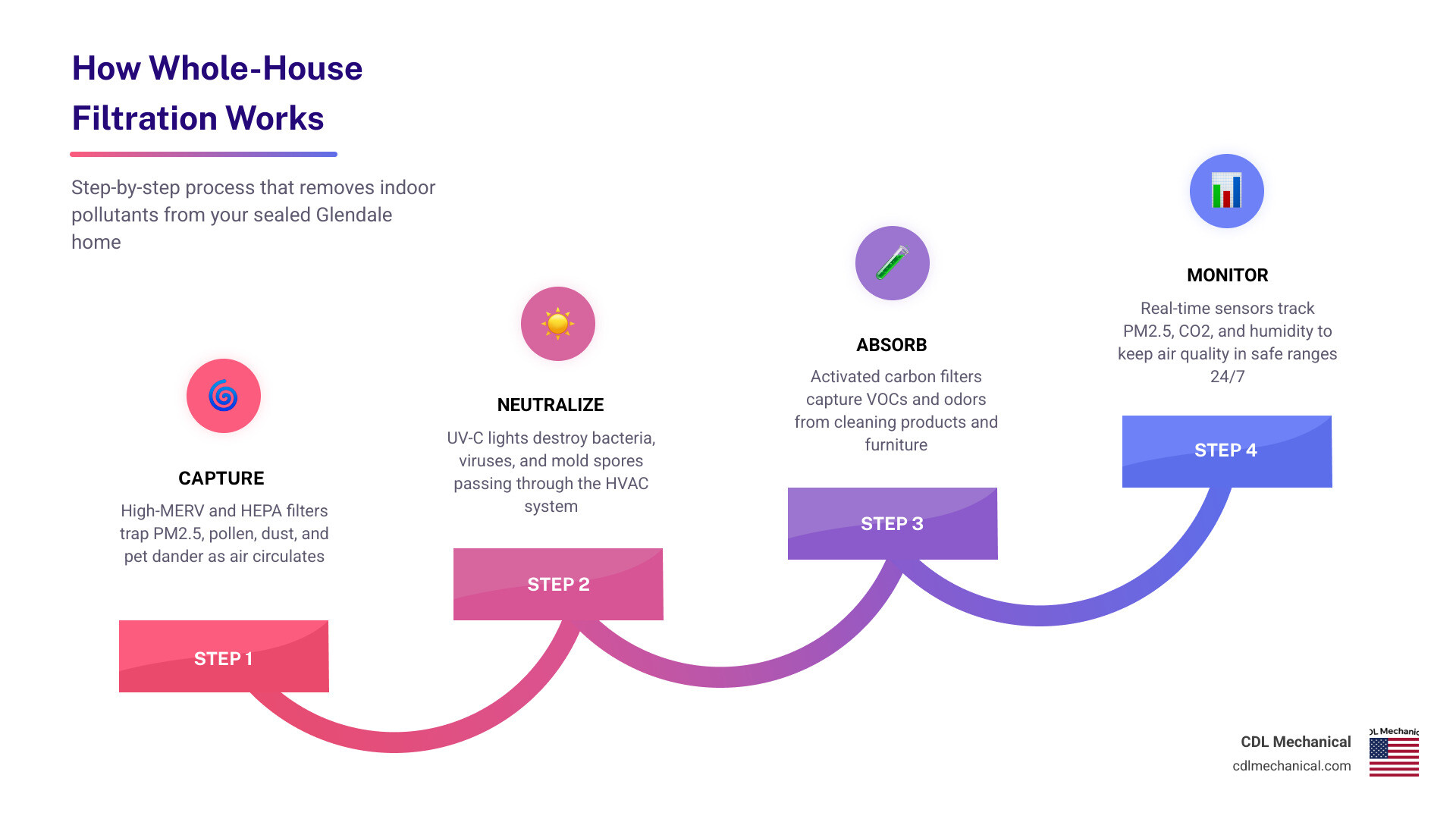
- Filtration — HEPA and high-MERV filters trap particles like pollen, dust, pet dander, and wildfire smoke before they reach your lungs
- Whole-house integration — Systems tied to your HVAC treat every room continuously, not just one spot
- Pathogen control — UV-C lights and advanced purifiers neutralize bacteria, viruses, and mold spores
- VOC removal — Activated carbon filters absorb harmful gases from cleaning products, paints, and furniture
- Smart monitoring — Real-time sensors track PM2.5, CO2, and humidity so problems get caught early
- Humidity control — Keeping moisture in the right range prevents mold growth and dust mite spikes
Most Glendale families lock their doors, check their windows, and do everything right to keep their household safe. But the threat they rarely think about is already inside — floating in the air their kids breathe during homework, during dinner, and while they sleep. According to the EPA, Americans spend roughly 90% of their time indoors, and indoor air can be anywhere from two to five times more polluted than the air outside. In a desert climate like Glendale, where homes stay sealed against intense heat for much of the year, that trapped air carries dust, allergens, VOCs from household products, and fine particles that standard HVAC filters simply weren’t designed to catch.
This isn’t a minor inconvenience. Poor indoor air quality is linked to worsened asthma, allergy flare-ups, cardiovascular strain, and even long-term lung disease. Children, seniors, and anyone with a respiratory condition feel these effects first and most severely.
I’m Joshua Michael Bartlett, founder of CDL Mechanical and an HVAC professional with over 20 years of hands-on experience helping Texas and Arizona families breathe cleaner, healthier air — and understanding how indoor air quality technology protects your family has become one of the most important parts of that work. In the sections ahead, I’ll walk you through exactly what’s in your air, which technologies address it most effectively, and how to build a system that works quietly in the background so your family stays protected every single day.
The Invisible Threats in Your Home’s Air
Many homeowners we talk to in Glendale, Peoria, and Phoenix are surprised to learn that their indoor environment is often more hazardous than the outdoors. When we ask, Is Your Home’s Air Quality Worse Than Outside?, the answer is almost always a resounding yes. Because modern homes are built to be highly energy-efficient and airtight, they act like sealed boxes. While this keeps our precious air conditioning from escaping during a 115°F July afternoon, it also locks in every airborne pollutant generated inside.
Since we spend about 90% of our lives indoors, we are constantly breathing a concentrated cocktail of airborne particles. These invisible threats generally fall into three major categories:
- Particulate Matter (PM10 and PM2.5): These are microscopic particles suspended in the air. PM10 includes larger particles like desert dust, pollen, and pet dander. PM2.5 refers to fine combustion particles from cooking, candles, fireplaces, or drifting wildfire smoke. Because PM2.5 particles are so small, they can bypass your respiratory system’s natural defense mechanisms and travel deep into your lungs and bloodstream.
- Volatile Organic Compounds (VOCs): These are harmful chemical gases emitted by everyday household items. Cleaning sprays, disinfectants, cosmetic products, new furniture, carpets, and fresh paint all release VOCs.
- Biological Contaminants and Soil Gases: This category includes mold spores, bacteria, viruses, and radon. Radon is a naturally occurring, odorless radioactive gas that seeps into homes through foundation cracks. In the United States, radon exposure is responsible for approximately 21,000 lung cancer deaths annually.
Understanding these threats is the first step toward reclaiming your home’s environment. Securing clean air delivers 5 Benefits of Good Indoor Air Quality, including deeper sleep, reduced dust buildup, lower utility bills from cleaner HVAC components, and long-term protection for your family’s vital organs.
Health Risks for Vulnerable Family Members
While poor air quality affects everyone, it poses severe, immediate risks to vulnerable family members, particularly young children, the elderly, and anyone managing chronic conditions like asthma or allergies.
The medical evidence linking air filtration to cardiovascular and metabolic health is striking. Scientific studies have shown that just 48 hours of consistent indoor air filtration improved microvascular function by 8.1% and was associated with a 7.9 mmHg decrease in systolic blood pressure. This means that reducing the strain on your lungs directly eases the workload on your heart.
Furthermore, researchers have uncovered connections between long-term particulate exposure and systemic metabolic diseases. For every 10-micron increase in particulate pollution, the risk of developing type 2 diabetes increases by 39%.
Cognitive performance is also heavily impacted by what we breathe. High concentrations of carbon dioxide (CO2) and VOCs in poorly ventilated spaces cause drowsiness, headaches, and a decline in decision-making capabilities. In fact, studies show up to a 44% decline in complex task performance when indoor CO2 levels reach 2,500 ppm — a level easily reached in a closed bedroom overnight.
How Indoor Air Quality Technology Protects Your Family
To protect your household from these invisible threats, modern IAQ technology uses two distinct approaches: active and passive purification.
- Passive purification relies on physical filtration. The HVAC system pulls air through a filter medium, trapping particles as they pass through. If the air does not move through the filter, it does not get cleaned.
- Active purification goes a step further. Technologies like ionization, photocatalytic oxidation, and air scrubbers actively send out charged molecules or friendly oxidizers into your living spaces. These molecules seek out and neutralize bacteria, viruses, mold spores, and VOCs in the air and on surfaces (like countertops and doorknobs), rather than waiting for them to pass through your ductwork.
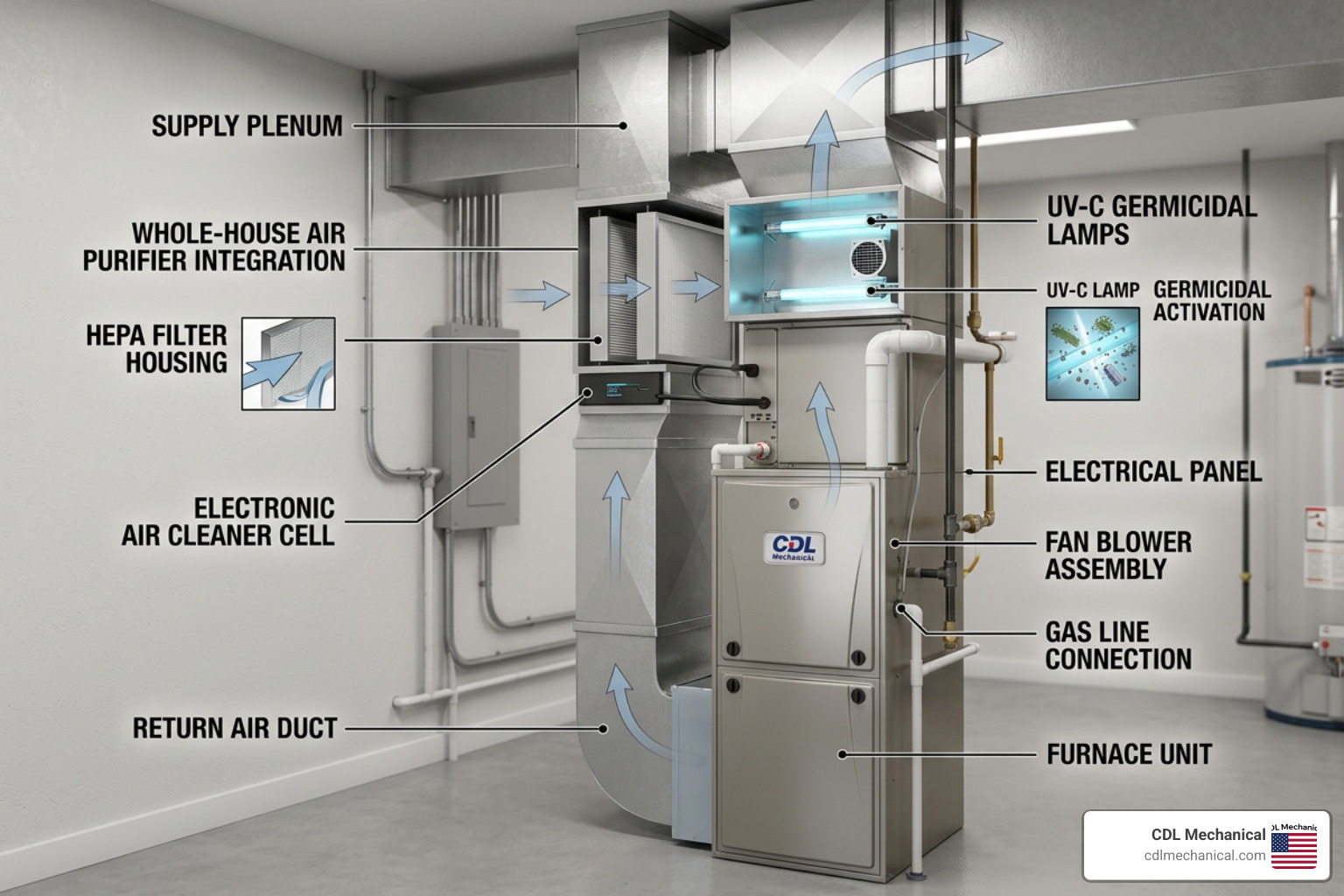
For comprehensive protection, we recommend integrating these technologies directly into your home’s central HVAC system. An integrated Air Purifier treats 100% of the air circulating through your home, providing continuous, quiet, and highly efficient protection.
Whole-House Systems vs. Portable Units: How Indoor Air Quality Technology Protects Your Family Room-by-Room
Many homeowners wonder if they can get by with a few portable room air purifiers instead of installing a whole-house system. While portable units are great for targeted spot treatment (like a small bedroom), they have distinct limitations when compared to whole-house systems.
| Feature | Whole-House IAQ Systems | Portable Room Purifiers |
|---|---|---|
| Coverage | Entire home (every room with a supply register) | Single room or limited square footage |
| Noise Levels | Silent (installed in attic, closet, or garage ductwork) | Moderate to high (fan motor runs in the living space) |
| Energy Efficiency | Extremely high (uses existing HVAC airflow) | Low to moderate (requires multiple plug-in units) |
| Maintenance | Low (filter changes every 6 to 12 months) | High (multiple filters to wash/replace every 3 months) |
| Air Exchange Rate | Refreshes home air up to 125 times per day | Limited to local air circulation |
| Surface Treatment | Yes (when active purification/air scrubbers are used) | No (only filters air that passes directly through the unit) |
Advanced Filtration: How Indoor Air Quality Technology Protects Your Family from Ultrafine Particles
When selecting a physical filtration system, understanding ratings and technologies is crucial. Standard, cheap 1-inch fiberglass filters are designed to protect your HVAC equipment from large dust bunnies; they do almost nothing to protect your lungs. To understand the differences, it helps to look at How HVAC Filters Affect Indoor Air Quality.
Filters are rated using the Minimum Efficiency Reporting Value (MERV) scale, which ranges from 1 to 16 for residential systems:
- MERV 1–4: Standard fiberglass filters. Captures less than 20% of large particles.
- MERV 8–11: Good residential filters. Captures pollen, dust mites, and mold spores.
- MERV 13–16: High-efficiency filters. Recommended for superior health protection.
Upgrading to a MERV-13 filter or higher is one of the most effective ways to reduce pathogen spread. In fact, research shows that utilizing MERV-13 filtration results in a 42% lower chance of COVID-19 transmission compared to lower-rated filters.
For families requiring medical-grade protection, True HEPA (High-Efficiency Particulate Air) filtration is the gold standard, capturing 99.97% of particles as small as 0.3 microns. Even more advanced is Advanced Micro-Fiber (AMF) technology, which uses fibers ten times thinner than standard filters. This allows the system to capture ultrafine particles down to an incredible 0.003 microns — smaller than most viruses — without restricting your HVAC system’s critical airflow. Explore our guide on Top Rated Air Filters to Keep Your Home Fresh to find the perfect fit for your system.
Choosing the Right System: Key Features and Technologies
When designing an IAQ system for your home in Glendale, Peoria, or Phoenix, we often combine multiple technologies to create a layered defense.
One of our favorite tools is ultraviolet germicidal irradiation, commonly known as UV Lights. By installing UV lights inside your HVAC system, we can continuously blast the cooling coil and airstream with high-intensity UV-C light. This destroys the DNA of mold, bacteria, and viruses, preventing them from multiplying. This technology is especially helpful during our milder months when we transition to heating; check out our guide on UV Lights Indoor Air Quality Winter Glendale AZ to see how this keeps your system clean year-round.
When evaluating whole-house systems, look for these key features:
- Smart Integration: Modern systems connect to your home Wi-Fi and smart thermostats, allowing you to monitor PM2.5, VOCs, and CO2 in real-time from your phone.
- Energy Efficiency: Choose systems designed to operate in tandem with your variable-speed HVAC blower to minimize power draw.
- Long-Term Savings: Investing in clean air technology pays off. Clean air measures have historically saved approximately $30 for every $1 spent on compliance by reducing medical expenses, reducing sick days, and extending the lifespan of your HVAC equipment.
- Filter Lifespan: While portable filters need constant replacement, some high-end whole-home electrostatic or AMF filters can last up to 10 years with simple, routine maintenance.
Maintaining Your System for Long-Term Performance
An advanced air purification system is only as good as its maintenance. Neglecting your system can lead to clogged filters, which strain your HVAC blower motor, increase your utility bills, and eventually allow unfiltered air to bypass the system entirely.
For standard high-efficiency media filters, we recommend replacing them every 6 to 12 months, depending on your household (homes with multiple pets or active kids may need changes more frequently).
Another critical element of maintaining pure air is ensuring your ductwork is sealed. Leaky ducts can account for more than 30% of your HVAC system’s energy loss. Worse, they pull dusty, hot attic air, insulation fibers, and pest dander directly into your living spaces, completely bypassing your air purifier. We utilize advanced interior duct sealing technology like Aeroseal, which uses synthetic nanoparticles to seal microscopic ductwork leaks from the inside out.
Finally, filtration must be paired with controlled ventilation and humidity control. Mechanical ventilation reduces indoor CO2 and VOC concentrations by 20% to 30%, while keeping your home’s relative humidity between 30% and 50% prevents dust mites and mold from breeding in the first place.
Frequently Asked Questions About Home Air Purification
How do I know if my home’s air quality is bad?
You might notice physical cues like frequent headaches, morning congestion, dry eyes, or unusually fast dust buildup on your furniture. However, because many pollutants are completely odorless and invisible, the only way to know for sure is through objective testing.
If you’ve asked yourself, Is Indoor Air Quality Testing Worth It?, the answer is yes. Professional monitoring or high-quality smart IAQ monitors track PM2.5, CO2, and TVOC (Total Volatile Organic Compounds) levels over several days, giving you the precise data needed to choose the right solutions.
Can I just open my windows to improve indoor air quality?
While outdoor fresh air is wonderful, opening your windows in the Phoenix metro area is a double-edged sword. On days with high pollen counts, extreme heat, blowing dust storms (haboobs), or drifting western wildfire smoke, opening your windows will actually make your indoor air quality significantly worse.
Instead of relying on open windows, a whole-house mechanical ventilation system (like an ERV or HRV) brings in fresh outdoor air, pre-filters it, balances its humidity, and exchanges it with stale indoor air without wasting energy.
Do whole-house air purifiers remove viruses and odors?
Yes, but it requires the right technology. Standard particle filters cannot trap tiny virus particles or gaseous odor molecules. To neutralize viruses, you need a system equipped with UV-C germicidal lights or active ionization/photocatalytic oxidation (which destroys pathogens at a molecular level). To eliminate odors from cooking, pets, or paints, you must include an activated carbon filter, which chemically adsorbs gas molecules that pass right through standard filters.
Conclusion
At CDL Mechanical, we believe that nothing is more important than the air your family breathes. As a family-owned HVAC company serving Glendale, AZ, and surrounding communities like Peoria, Surprise, Phoenix, and Avondale, we treat our customers like our own family. We don’t believe in one-size-fits-all solutions; we take the time to evaluate your home, your existing HVAC system, and your family’s unique health needs to design a customized, highly effective air defense system.
If you are ready to take control of your home’s air and protect your loved ones from hidden airborne threats, we are here to help. Explore our comprehensive Indoor Air Quality Glendale AZ services to learn more about our local expertise, or Schedule an indoor air quality assessment with CDL Mechanical today. We’ll help you breathe easier, sleep better, and enjoy the ultimate peace of mind.